IIT Roorkee Pioneers Indigenous Solution for Hydroponic Wastewater Challenges
Hydrologists at the Indian Institute of Technology (IIT) Roorkee have unveiled an innovative, low-cost technology designed to tackle the pressing wastewater issues associated with hydroponic farming. This breakthrough addresses a critical environmental concern in modern agriculture.
The Problem with Hydroponic Wastewater
Hydroponics, a method of growing plants without soil by using nutrient-rich water, is gaining popularity for its efficiency and space-saving benefits. However, it generates wastewater laden with high concentrations of nitrate, phosphate, and ammonia. If released untreated, this wastewater can trigger eutrophication in natural water bodies, leading to harmful algal blooms and oxygen depletion that endanger aquatic ecosystems.
Innovative Microalgal Photogranule Technology
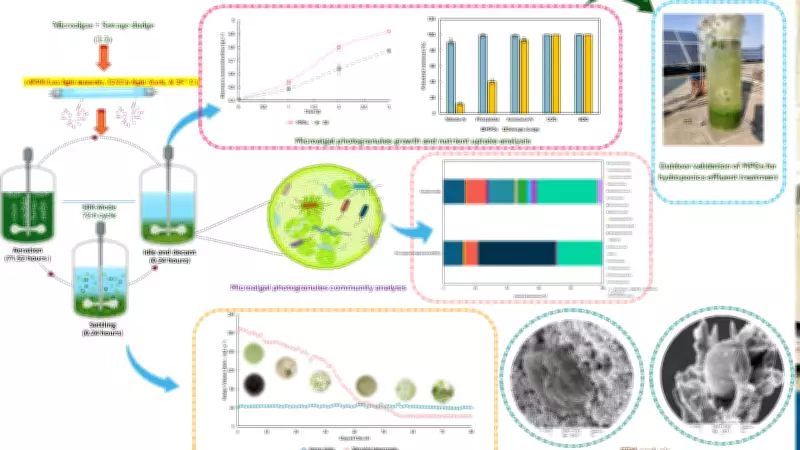
To combat this, researchers from IIT Roorkee's departments of hydrology and renewable energy have developed a cost-effective treatment system based on microalgal photogranules. Their study, published in the international journal ACS ES&T Water, details how this technology overcomes the limitations of conventional microalgae-based systems, which often require energy-intensive harvesting processes like centrifuges or chemical additives.

The team's approach involves inducing microalgae to self-aggregate into dense, spherical granules. These photogranules consist of a symbiotic community of microalgae, bacteria, and cyanobacteria that work together to purify water efficiently.
How the Photogranule Reactor Works
The technology utilizes a light-driven photogranule reactor where microorganisms form these granules under controlled mixing and illumination. In this setup:
- Hydroponic wastewater is introduced into a controlled environment with light and mild agitation.
- Microalgae perform photosynthesis, absorbing carbon dioxide and assimilating nitrate and phosphate as nutrients.
- Associated bacteria degrade organic pollutants, reducing biological and chemical oxygen demand.
- Over time, extracellular polymeric substances bind cells together, forming compact green granules about 4–6 mm in diameter.
A key advantage, as explained by Professor Sanjeev Kumar Prajapati, principal investigator of the project, is that once mixing stops, the granules naturally settle due to their density. This allows clear treated water to be separated easily without expensive mechanical or chemical processes, significantly lowering operational costs.
Impressive Results and Environmental Benefits
Experimental results demonstrated nearly complete removal of biological and chemical oxygen demand, approximately 99% reduction in phosphate and ammonia, and nearly 90% removal of nitrate within a few days of treatment. Professor Prajapati highlighted that the system also shows substantial carbon dioxide fixation potential, adding a climate mitigation benefit.
With its low energy requirements, chemical-free operation, and simplified biomass recovery, this microalgal photogranule-based technology offers a sustainable and scalable solution. It is poised to manage wastewater from the rapidly expanding hydroponics sector effectively, promoting environmental stewardship and resource efficiency.