

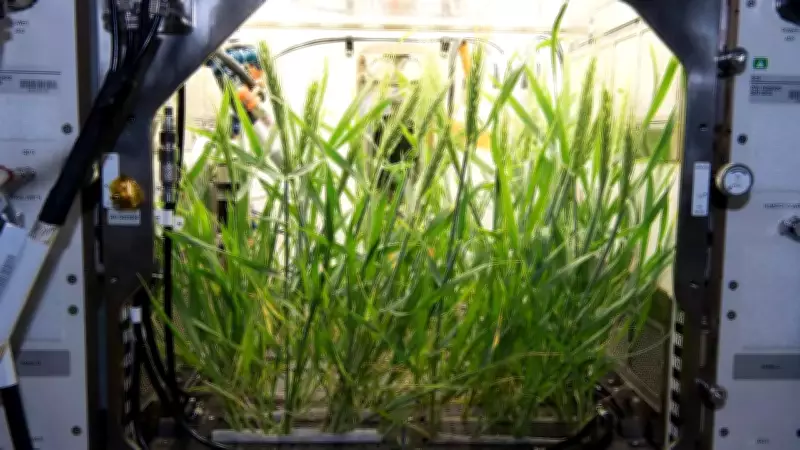
Human Waste Recycling Could Enable Farming on Moon and Mars, Scientists Reveal
Research scientists are proposing a revolutionary approach to long-term human habitation on the Moon and Mars: using recycled human waste to grow crops. This represents a fundamental shift in how we conceptualize extended stays on these celestial bodies, moving from reliance on Earth-supplied resources to creating self-sustaining ecosystems.
The Challenge of Sterile Lunar and Martian Soil
Historically, farming on the Moon or Mars seemed impossible due to the sterile, chemically hostile nature of lunar regolith and Martian soil. These environments lack the essential nutrients and organic matter necessary for plant growth. However, scientists are now developing innovative closed-loop systems that could overcome these barriers.
These systems would process waste materials from astronauts through automated bioreactors to produce high-quality fertilizer. This fertilizer would introduce crucial nitrogen and phosphorus nutrients into the toxic soil, gradually transforming this alien dirt into farmable land. The potential benefits are substantial: eliminating the need to transport heavy food supplies across the solar system and creating regenerative ecosystems that can sustain themselves over time.

Chemical Weathering: Transforming Space Dust into Soil
A key breakthrough comes from research on chemical weathering – the process that could convert Moon and Mars dust into usable farming surfaces. A study conducted by scientist Harrison Coker at Texas A&M University, published in ACS Earth and Space Chemistry, demonstrates how mixing recycled effluent with space dust simulants alters the chemical structure of minerals.
Under microscopic examination, the jagged, glass-like edges of the space dust were observed to become pitted and reduced in size, creating a much smoother surface ideal for plant root growth. Beyond improving soil structure, chemical weathering facilitates chemical reactions that extract essential nutrients – such as calcium, sulfur, and magnesium – from the minerals, making them available for absorption by plant roots.
The BLiSS System: Turning Waste into Agricultural Gold
Central to this endeavor is the Bioregenerative Life Support System (BLiSS), developed by scientists at NASA's Kennedy Space Center. This space refinery employs anaerobic bioreactors to break down solid human waste and advanced filtration units to collect nutrient-dense liquid effluent.
The BLiSS system does more than produce fertilizer; it establishes a critical safety barrier for crop cultivation. It utilizes specific microbial colonies to neutralize toxic perchlorates and salts found in Martian soil, ensuring that crops grown with BLiSS are safe for human consumption. This technology enables a closed-loop economy where every ounce of biological output is reclaimed to produce the next generation of food, fostering long-term sustainability.
Safety of Food Grown in Recycled Waste
Naturally, concerns arise about the safety of consuming crops fertilized with processed human waste. The reassuring answer lies in the rigorous treatment processes involved. When human waste undergoes proper bio-thermal processing – combining anaerobic and aerobic methods at temperatures exceeding 55 degrees Celsius – harmful pathogens and parasites are effectively eliminated.
NASA's Biological and Physical Sciences Division endorses this method, noting that the treatment employed at Texas A&M University leverages both anaerobic and aerobic conditions to achieve the necessary sanitization. Plants grown in these systems further act as natural filters, absorbing nutrients while leaving solid impurities behind.
Thus, a tomato or head of lettuce grown in a Martian greenhouse would undergo sanitation comparable to produce grown with traditional manure on Earth. In fact, such space-grown produce may be more biologically intact, having been treated to equivalent or higher standards of cleanliness.

Implications for Future Space Colonization
As space agencies worldwide prepare for missions lasting over twelve months, this bio-recycling technology is poised to become the cornerstone of establishing permanent colonies. Astronauts could potentially grow and consume their own fresh food, reducing dependence on Earth and making life among the stars a tangible reality. This innovation not only addresses practical challenges but also redefines our relationship with extraterrestrial environments, turning them from barren landscapes into potential homes.





