

Historic Tennessee Coal Plant Site Transforms Into Fusion Energy Hub
The iconic twin smokestacks of the Bull Run Fossil Plant in Claxton, Tennessee, have been demolished after over sixty years of operation. This coal-fired facility, which once generated electricity through fossil fuels, is now making way for a revolutionary energy project that could change the future of power generation.
From Coal to Fusion: The Infinity One Project
On January 29, 2026, Type One Energy, a nuclear fusion company backed by Microsoft co-founder Bill Gates, submitted its first major licensing application to Tennessee state regulators. The company is collaborating with the Tennessee Valley Authority (TVA) on this groundbreaking initiative called Infinity One.
Infinity One represents a fundamental shift in energy technology. Unlike traditional nuclear fission plants that split atoms, this fusion reactor aims to replicate the process that powers the Sun by joining light atoms together. When these atoms fuse, they release enormous amounts of energy without the radioactive waste associated with current nuclear plants.

The Stellarator: Engineering the Sun on Earth
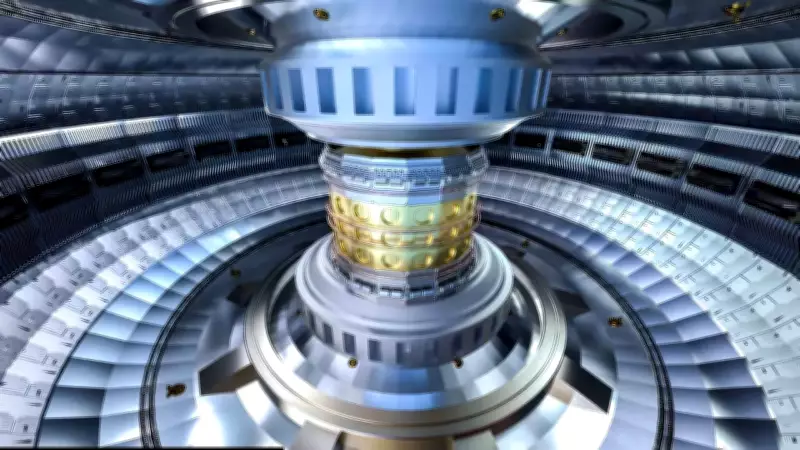
Type One Energy plans to construct a specific type of fusion device known as a stellarator. This advanced machine uses incredibly powerful magnetic fields to contain plasma—a superheated gas that represents a fourth state of matter—within a confined space.
The engineering requirements are extraordinary. The plasma must reach temperatures of approximately 100 million degrees Celsius to enable atomic fusion. At these extreme conditions, atoms gain the ability to merge and release energy.
While many fusion research projects worldwide focus on tokamaks—doughnut-shaped fusion machines—the stellarator takes a different approach:
- It employs twisted, precisely engineered magnetic coils instead of simple ring shapes
- These complex coils are designed to maintain plasma stability for extended periods
- Stellarators aim to overcome stability problems that can challenge tokamak designs
- The trade-off is that stellarators are more difficult to construct due to their intricate geometry
New Regulatory Framework for Fusion Energy
The licensing application in Tennessee marks a significant milestone under new U.S. regulatory guidelines. In 2023, the U.S. Nuclear Regulatory Commission determined that fusion energy systems would not be regulated like traditional nuclear power plants.
Instead, fusion projects fall under the byproduct materials framework—the same regulatory system used for particle accelerators and medical radiation facilities. This reflects the scientific consensus that fusion carries substantially lower risks than fission-based nuclear energy.
Type One Energy, TVA, and Tennessee state regulators have been collaborating since early 2024 to prepare this comprehensive application. The submission demonstrates how the Infinity One design meets rigorous safety and environmental standards required for approval.
A Symbolic Energy Transition
If approved and successfully constructed, Infinity One would achieve several historic firsts:
- It would become Tennessee's inaugural commercial fusion energy project
- It would transform the Bull Run site from coal-powered electricity generation to experimental, next-generation energy production
- It would demonstrate the practical transition from legacy energy infrastructure to cutting-edge technology
The project remains in its early developmental stages, but the direction represents a profound change in how humanity approaches energy generation. From the demolition of coal plant smokestacks to the planning of a fusion reactor that mimics stellar processes, the Bull Run site embodies the evolving energy landscape.
This transition from fossil fuels to fusion energy at the same physical location symbolizes both technological progress and environmental responsibility. As Type One Energy advances its licensing process, the world watches what could become a blueprint for future energy transformations across the globe.






