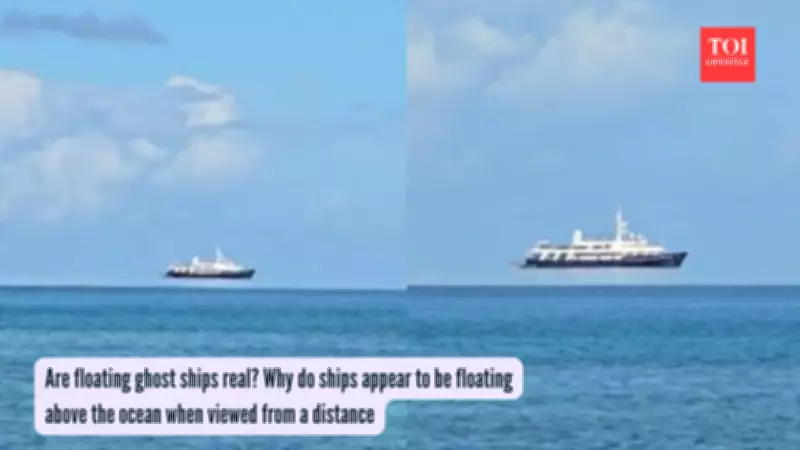
The Science Behind Floating Ships: Superior Mirages and Fata Morgana Explained
Have you ever heard eerie pirate tales of mysterious objects hovering over the ocean, often attributed to ghosts or sinister forces? What if these stories are not supernatural but rooted in fascinating scientific phenomena? From ancient sailors witnessing ghost ships to modern photographers capturing floating islands, the sea manipulates our perception in ways that blur the line between reality and illusion.
Superior Mirages: The Physics of Floating Vessels
When ships appear to float high above the water from a distance, it is due to superior mirages. These optical effects lift distant objects into the sky, sometimes presenting them upside-down or out of focus. Unlike the common shimmering "water" pools seen on hot roads, superior mirages operate differently. They occur when cold air rests near the sea or ground, with warmer air above, causing light rays to bend downward and making objects seem elevated.
This phenomenon is not magic but physics at work, shaped by factors like temperature, air density, and distance. Light bends through varying air layers, creating illusions that can deceive even the sharpest observers. For instance, off Cuba's coast, boats and islands have been reported to appear as if taking flight, showcasing how these mirages can transform familiar scenes into surreal spectacles.

Fata Morgana: The Ultimate Mirage
The Fata Morgana represents the most advanced form of superior mirage, named after the sorceress from Arthurian legend who was said to conjure fake castles and islands to mislead sailors. This complex illusion distorts far-off objects such as icebergs, ships, or landmasses into hovering, multi-layered images that can appear right-side up, inverted, or stacked.
In the early 1800s, Scottish whaler William Scoresby documented a striking example in the Arctic, where he spotted his father's ship upside-down from 35 kilometers away, with enough detail to identify it. His crew described seeing "innumerable collections of spires and pinnacles, or in the form of a thick forest of naked trees," highlighting the vivid and often bewildering nature of Fata Morgana.
According to experts like John Greivenkamp from the University of Arizona, weather conditions create layers of air with different temperatures and refractive indices, bending sunlight to produce sharp or fuzzy effects. When air layers differ significantly in temperature, an "atmospheric duct" forms, warping images into combinations of upright and inverted forms based on the viewer's distance. These mirages can shift or vanish within seconds, adding to their elusive and captivating quality.
Understanding these optical illusions not only demystifies age-old maritime myths but also underscores the intricate interplay between atmospheric physics and human perception. Next time you hear a tale of floating ships, remember it is likely a superior mirage or Fata Morgana at play, revealing the hidden science behind the sea's visual tricks.