The February Planet Parade Explained: Why Six Planets Don't Mean Six Easy Sightings
From Jupiter shining bright to elusive Mercury near the horizon, the much-talked-about planet parade may be subtler than expected. February is shaping up to be an exciting month for skywatchers, thanks to growing buzz around what is being widely described as a rare planetary alignment or, more dramatically, a planet parade. The phrase has quickly joined a long list of astronomy buzzwords that have captured public attention in recent years, alongside supermoons, meteor showers, and solar eclipses. This time, the focus is on several planets appearing in the sky around the same time, encouraging people to look up after sunset.
What the February Alignment Really Looks Like
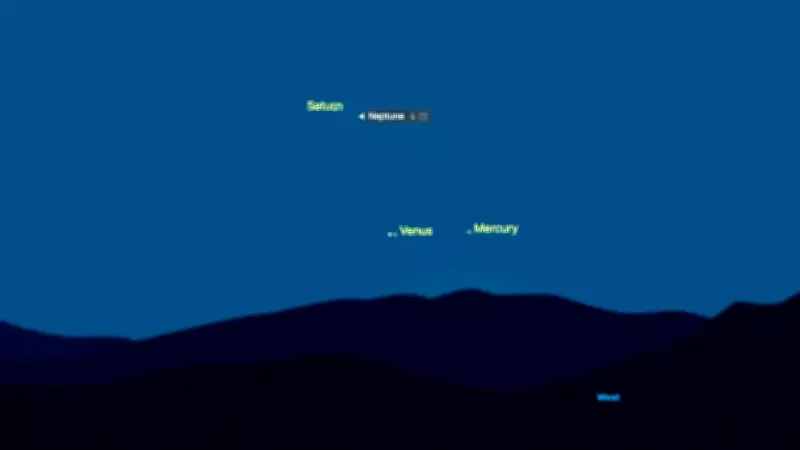
Astronomers point to Saturday, February 28, as the key date for this month's planetary alignment. Shortly after sunset, six planets—Mercury, Venus, Saturn, Jupiter, Uranus, and Neptune—will all be positioned in the evening sky. While this sounds impressive, experts caution that the word see can be misleading. Several of these planets will be sitting very low on the western horizon and close to the Sun's lingering glow. As a result, clear skies, an unobstructed western view, and careful timing will be essential. Even then, most casual observers are unlikely to spot all six planets with the naked eye.
Challenges in Spotting the Planets
Venus and Mercury will be the lowest and among the first to disappear into twilight. Venus will shine brightly, but close to the horizon, while Mercury, though much dimmer, may be slightly easier to find earlier in the month. Saturn will be nearby, but its fading brightness makes it less striking than it once was. Neptune and Uranus are even more difficult to spot; you will need binoculars or a small telescope to see them. Jupiter, bright in the sky and shining brightly, will be the easiest planet to spot and will probably be the highlight of the show for most observers. Adding to the spectacle, the bright Moon will rise later in the evening, illuminating the eastern sky. Although it may be a nuisance for observers trying to spot the planets, it will still be a sight to behold for most viewers.

Historical Context of Planet Parades
The idea of a planet parade is not entirely new. A similar wave of excitement swept through social media in early 2025, when Mars, Jupiter, Saturn, Venus, Uranus, and Neptune were all technically above the horizon on the same nights. In reality, only a few of those worlds could be seen clearly without special equipment. February 2026 brings a comparable setup, with Mercury replacing Mars in the lineup, and once again raising questions about what observers can realistically expect to see. This highlights the importance of managing expectations and understanding the practical aspects of astronomical events.
Tips for Skywatchers
- Plan your observation for February 28, shortly after sunset.
- Ensure you have a clear, unobstructed view of the western horizon.
- Use binoculars or a telescope to spot Neptune and Uranus.
- Look for Jupiter as the easiest and brightest planet to identify.
- Be patient and allow your eyes to adjust to the twilight conditions.
In summary, while the February planet parade offers a fascinating celestial event, it requires preparation and realistic expectations to fully appreciate. Skywatchers should focus on enjoying the visible highlights rather than striving to see all six planets with the naked eye.