

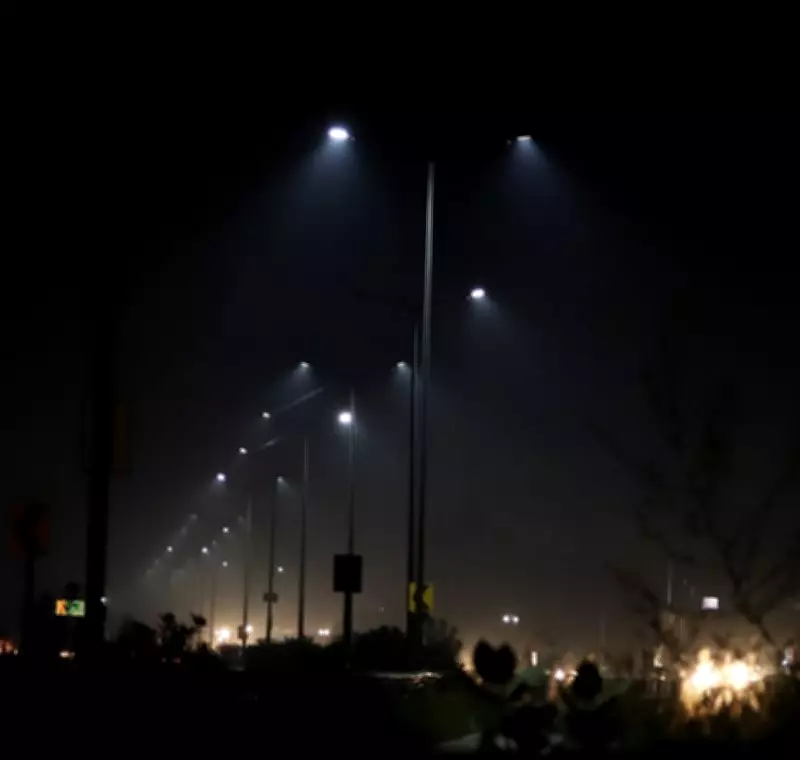
The Delhi government has proposed a Rs 473.24 crore project to replace existing High Pressure Sodium Vapour (HPSV) and conventional LED street lights on PWD roads with energy-efficient smart LED lights. This ambitious initiative will cover approximately 96,000 street lights installed on 51,160 poles, along with the installation of 5,000 additional poles to address missing infrastructure and future requirements.
Project Details and Timeline
The total cost of the project is estimated at Rs 473.24 crore, with implementation targeted within 180 days from the award of work, followed by five years of operation and maintenance. According to the proposal, the current street lighting network faces several challenges, including the absence of real-time monitoring, reliance on complaint-based maintenance, delayed identification of dark spots, inadequate illumination, high electricity consumption, and non-uniform lighting that contributes to light pollution.
Benefits of Smart LED System
The planned smart LED system aims to improve public safety by eliminating dark stretches, enhancing visibility for motorists and pedestrians, and strengthening security, particularly for women. A centralised command centre (CCC) will enable real-time monitoring and individual control of street lights, allowing authorities to quickly detect non-functional lights and undertake data-driven maintenance.

Delhi PWD Minister Parvesh Sahib Singh emphasised that Delhi's roads are "vital public spaces" that must be safe, well-lit, and accessible for every citizen. He described the smart street lighting project as a major step towards building modern urban infrastructure that prioritises public safety, technological innovation, and energy efficiency.
Energy Savings and Environmental Impact
Singh stated that the project is expected to save nearly 40 million units of electricity annually and generate energy savings of approximately Rs 25 crore every year. In addition to reducing operational costs, it will contribute significantly to lowering Delhi's carbon footprint and promoting environmental sustainability. To ensure long-term accountability and quality, the project incorporates strong contractual safeguards, including a seven-year warranty on lighting fixtures, five years of operation and maintenance responsibility, strict service-level agreements, and performance-linked incentives and penalties.






