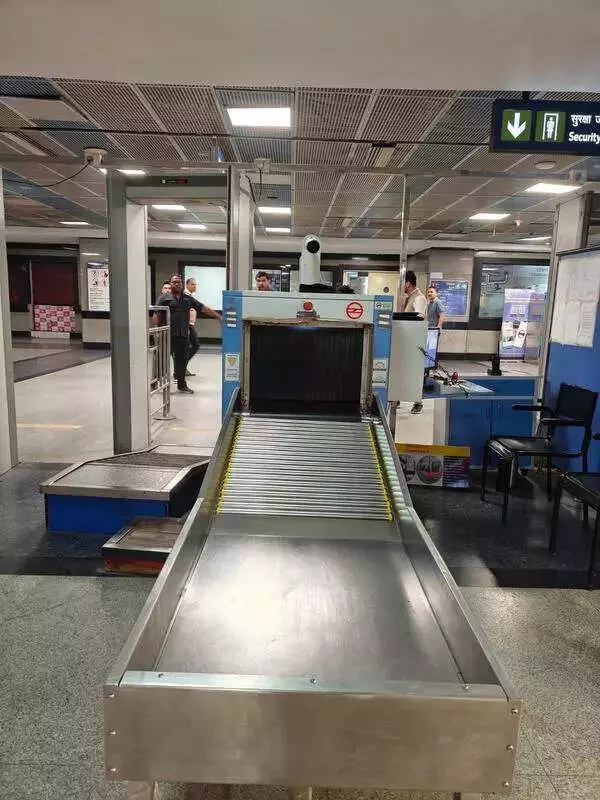
In a major technological upgrade to bolster commuter safety, the Delhi Metro Rail Corporation (DMRC) has rolled out a new generation of artificial intelligence-powered security systems across its network. The initiative includes the installation of advanced baggage scanners and a massive surveillance network of thousands of cameras.
AI-Powered Scanners for Enhanced Threat Detection
The centerpiece of this upgrade is the deployment of 76 AI-enabled X-BIS baggage scanners at major stations. These sophisticated devices are equipped with high-resolution cameras at both entry and exit points to monitor the handling of luggage. A DMRC official explained that the integrated artificial intelligence can accurately identify prohibited items like knives, firearms, and explosives.
"This technology not only strengthens surveillance but also prevents unauthorised removal of baggage," the official stated. When the system detects a suspicious item, it automatically marks and labels it on the display screen, enabling security personnel to take immediate action. The scanners also have built-in memory to store inspection footage for later review.

Key stations such as Barakhamba Road, Chandni Chowk, Central Secretariat, Chawri Bazar, Hauz Khas, and Vishwavidyalaya have already received these new scanners. Furthermore, the DMRC has confirmed that all 84 stations being constructed under the ongoing Phase IV expansion will be equipped with these upgraded systems from the outset.
A Comprehensive Surveillance Network
Beyond baggage screening, the Delhi Metro is significantly expanding its electronic eye across the network. The corporation revealed that its fleet of over 350 coaches is already outfitted with dedicated women's compartments, emergency alarms, and nearly 11,000 CCTV cameras inside the trains.
An additional 13,000 cameras are installed at stations, monitoring critical areas like entry gates, ticket counters, platforms, and escalators. These CCTV systems are being progressively upgraded to advanced Internet Protocol-based technology featuring video analytics for superior image clarity.
As part of mid-life upgrades, the DMRC is also retrofitting the 70 trains procured under Phase I that did not originally have CCTV cameras. This systematic rollout is aimed at replacing older equipment while simultaneously improving safety and the overall passenger experience.
Phase IV Expansion and Future Commitments
This security overhaul coincides with the massive Phase IV expansion of the Delhi Metro. The DMRC is constructing nearly 103 km of new metro lines across six corridors. Currently, three corridors are under active construction: the Janakpuri West–RK Ashram Marg (Magenta Line extension), the Majlis Park–Maujpur (Pink Line extension), and the Aerocity–Tughlakabad (the new Golden Line).
The Pink Line extension is expected to be operational by the end of this year, with the other two corridors scheduled for completion in the following year. The integration of AI and advanced surveillance from the beginning of these new lines underscores DMRC's proactive approach.
"Through consistent technological improvements, Delhi Metro remains committed to providing a safe, secure and seamless travel environment," emphasized the DMRC official. This comprehensive strategy, blending AI baggage scanners with an extensive camera network, marks a significant step forward in public transport security for India's capital.