Burj Khalifa Lightning Strikes: Engineering Marvel vs. Nature's Fury
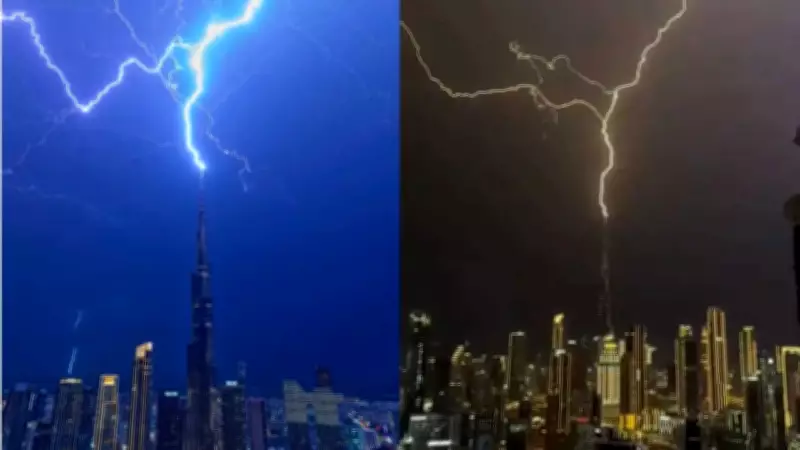
Recent thunderstorms and heavy rainfall across the United Arab Emirates have flooded social media platforms with dramatic visuals of lightning bolts striking the iconic Burj Khalifa in Dubai. These awe-inspiring images have left many viewers worldwide asking the same critical question: How can the world's tallest building survive a direct lightning strike? The answer lies not in luck but in cutting-edge engineering specifically designed for such moments.
Dubai Crown Prince's Viral Post Captures Nature's Spectacle
Amid dramatic thunderstorms sweeping across Dubai, Sheikh Hamdan bin Mohammed Al Maktoum, the Crown Prince of Dubai and Deputy Prime Minister of the UAE, took to his Instagram account to share a now-viral picture of the moment. Widely known as "Fazza," he captured an instant that resonated across social media platforms globally, sharing a striking image of the Burj Khalifa illuminated by lightning and thunder.
The prince captioned his post, "A moment worth pausing for #Dubai," creating a powerful blend of Dubai's signature architectural grandeur with the raw, untamed power of nature. More than just a photograph, this viral moment reflects the city's remarkable ability to transform even turbulent weather conditions into breathtaking visual spectacles, where human engineering marvels meet fleeting but awe-inspiring natural phenomena.

Why Lightning Strikes Pose No Danger to Burj Khalifa
The viral clips may appear terrifying with bolts of electricity tearing through the sky and striking the 828-meter tower, but experts confirm this is precisely what the building is engineered to handle. In fact, lightning striking Burj Khalifa is normal, expected, and part of the building's sophisticated design. Tall structures naturally attract lightning, and Burj Khalifa, being the tallest building globally, effectively functions as a massive lightning rod.
The Science Behind Burj Khalifa's Lightning Protection System
Powerful Lightning Arrester at the Peak: At the very top of the tower sits an advanced lightning arrester system. This system detects electrical activity in the atmosphere, intercepts lightning before it can spread unpredictably, and directs the energy safely into the building's comprehensive protection network. Think of it as a controlled entry point specifically designed for lightning.
The "Faraday Cage" Protective Effect: One of the most crucial safety features is what engineers call a Faraday cage. The building's steel structure, metal façade, and reinforced framework work together to create a protective shell that channels electricity around the exterior, preventing it from entering interior spaces. This ensures that people inside remain completely safe and that electrical systems stay protected from surges.
Down Conductors Provide Safe Escape Routes: Once lightning strikes the building, the energy doesn't remain trapped. It travels through carefully designed conductive pathways and metal frameworks, being safely guided downward to the ground through specialized systems. This prevents potential fire hazards, structural damage, and dangerous power surges inside the building.
Advanced Earthing System at the Base: At the foundation of the tower lies a sophisticated earthing system that absorbs the electrical charge and disperses it safely into the ground. Without this critical component, the energy would have nowhere to dissipate, rendering the entire protection system incomplete.
Smart Sensors That Anticipate Lightning: What makes Burj Khalifa particularly advanced is its sensor-based system that detects atmospheric changes, identifies developing lightning conditions, and adjusts electrical polarity to attract and control strikes. In simpler terms, the building doesn't merely react to lightning; it predicts and actively manages it.

What Actually Happens During a Lightning Strike
Despite the dramatic visuals captured in recent footage, the actual impact on Burj Khalifa is minimal. When lightning strikes the tower, the energy is absorbed at the top, flows along the exterior through controlled pathways, and dissipates into the ground within seconds. There is no explosion, no fire, and absolutely no danger to occupants. The system ensures that the interior remains completely unaffected by these powerful natural events.
Burj Khalifa isn't unique in having lightning protection—all major skyscrapers include lightning rods, grounding systems, and surge protection—but its extraordinary height and global prominence required a far more sophisticated, multi-layered system. This makes it a frequent lightning target while simultaneously making it one of the world's safest structures during severe storms.
The Real Risks During UAE Storms
While Burj Khalifa remains safe during lightning strikes, the broader weather conditions during UAE storms still pose significant risks. These include flooded roads, reduced visibility, potential traffic accidents, and flight disruptions. Authorities consistently advise residents to:
- Avoid unnecessary travel during severe weather
- Stay indoors during thunderstorms
- Follow official weather updates and advisories
The danger lies not in the building itself but in the environment surrounding it. The lightning strikes serve as powerful reminders of nature's unpredictable, dramatic, and awe-inspiring power—and of human engineering's remarkable capability to anticipate and control that power. Burj Khalifa stands precisely at this intersection of natural force and human ingenuity.
Recent unstable weather patterns across the UAE have made lightning more noticeable due to strong storms, cloud buildup, dust, humidity affecting atmospheric charge, and increased rainfall events. This combination leads to more visible, dramatic lightning, particularly around tall structures. As seen in recent footage, the strikes often appear brighter, longer-lasting, and more photogenic—but not more dangerous.
The reason these lightning strikes go viral isn't about danger; it's about spectacle. Recent clips show lightning bolts dramatically illuminating the Dubai skyline, strikes hitting the spire with cinematic intensity, and storm clouds amplifying the visual effect. As one recent report described, the lightning was "safely diverted through the tower's system" despite the chaos caused by storms across the city. This striking contrast between visual drama and actual safety is what continues to fascinate global audiences.
Yes, lightning can and does strike Burj Khalifa regularly. But no, it doesn't pose any threat because behind every dramatic flash captured on camera is an intricate system specifically designed to catch it, control it, and safely return it to the earth.