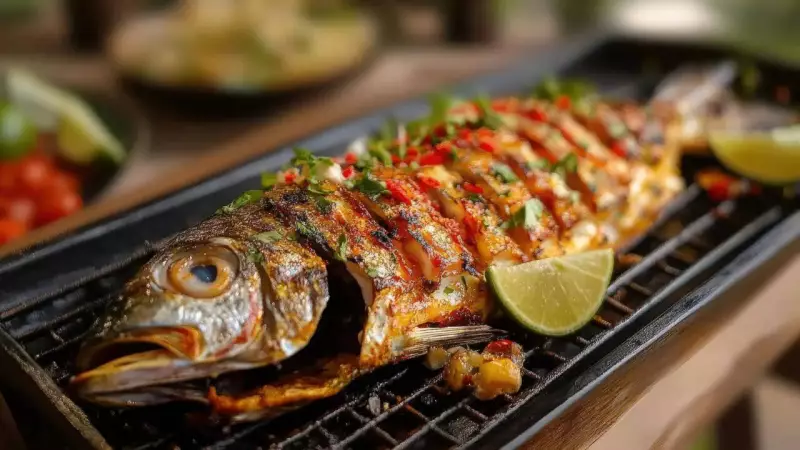
For countless families, especially across Asia, the simple pleasure of eating freshwater fish has always come with a side of caution. The familiar ritual involves eating slowly, chewing carefully, and pausing mid-bite, all to avoid the sharp, hair-like bones hidden within the flesh. This inherent risk often leads people, particularly those cooking for children or elderly relatives, to quietly avoid fish at home. The issue isn't flavour—it's fear. Now, a groundbreaking scientific achievement from China aims to eliminate that fear entirely by creating a fish without those troublesome bones.
The Science Behind the Boneless Breakthrough
Researchers at the Chinese Academy of Sciences have successfully developed a bone-free strain of the common gibel carp, a popular and affordable freshwater fish in China. The key to their innovation lies in advanced CRISPR gene editing technology. The team identified a specific gene, runx2b, which is responsible for triggering the formation of intermuscular bones—the fine, needle-like bones embedded in the fish's flesh.
By precisely editing this gene, scientists were able to switch off its bone-forming function. The peer-reviewed study, published in the journal Aquaculture, confirms that the genetically edited fish grows normally, maintains a healthy skeletal structure, and has standard survival rates. Crucially, the development of the problematic fine bones is completely halted. This is not an alteration of taste or texture; it is the surgical removal of the most frustrating and dangerous aspect of eating this type of fish.

Why This Innovation Matters for Everyday Families
The implications of this development extend far beyond the laboratory. Fish bones are a leading cause of food-related throat injuries globally. For parents, the fear of choking often delays the introduction of nutritious fish to children's diets. Similarly, older adults may reduce their fish intake despite knowing its health benefits, due to the serious risks associated with swallowing injuries.
A bone-free fish quietly lowers these barriers. It transforms cooking and mealtime from a cautious exercise into a relaxed experience. There would be no need for constant warnings at the dinner table or meticulously checking every bite. This innovation could encourage more people to incorporate affordable, protein-rich freshwater fish into their regular meals without anxiety, preserving cultural culinary traditions while enhancing safety.
Broader Impact on Farming and Food Security
The benefits of this scientific advance ripple through the entire food system. In traditional fish processing, removing bones requires significant manual labour, skill, and time, often leading to waste. A fish that is bone-free from birth simplifies processing, potentially reducing costs and waste.
Furthermore, the research indicates that the edited fish exhibits better disease resistance and faster growth rates. For farmers, this translates to fewer losses, more efficient use of feed and water resources, and potentially higher yields. In a world facing rising protein demand and limited natural resources, such efficiencies are critically important for sustainable food production.
This creation is more than a novelty; it represents a thoughtful solution to a generations-old problem. It retains the nutrition, taste, and cultural value of freshwater fish while removing a hidden discomfort. For seafood lovers, it promises the possibility of enjoying fish more often and with greater confidence. True progress isn't always loud; sometimes, it's simply about making a staple food smoother, safer, and infinitely easier to swallow.