

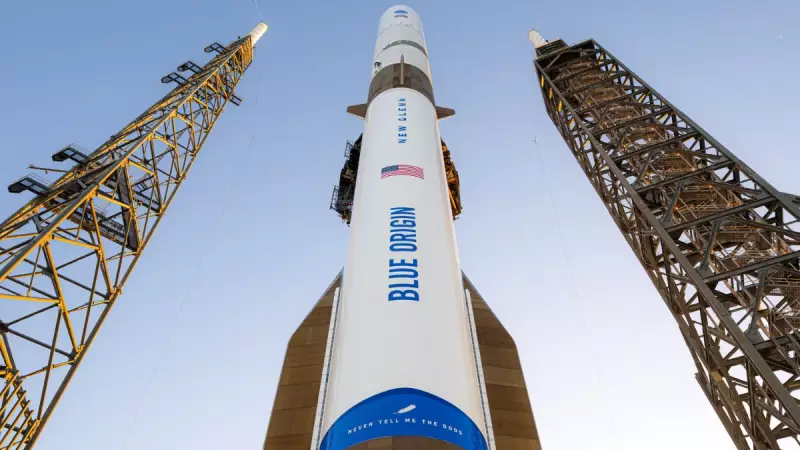
In a significant development for space exploration, Blue Origin has announced the postponement of NASA's highly anticipated ESCAPADE Mars mission. The delay comes as a result of unfavorable weather conditions at the launch site, pushing back what was scheduled to be a landmark moment in planetary science.
Weather Forces Launch Rescheduling
The private space company founded by Jeff Bezos confirmed that the launch of NASA's ESCAPADE (Electrostatic Charging and Particle Escape to Space) mission has been officially postponed. The decision was made primarily due to adverse weather conditions that posed potential risks to the successful deployment of the mission.
According to official statements, the launch team determined that weather parameters fell outside acceptable safety margins. The postponement affects the mission timeline, though specific details about the duration of the delay remain under assessment. Mission controllers are closely monitoring weather patterns to identify the next available launch window that meets all safety criteria.

ESCAPADE Mission Objectives and Significance
The ESCAPADE mission represents a crucial step in understanding Mars' atmospheric dynamics and space environment. This NASA-funded project aims to deploy twin spacecraft that will study how solar wind interacts with the Martian atmosphere and how charged particles escape into space.
The mission's scientific goals include investigating Mars' magnetosphere and atmospheric escape processes, which could provide vital insights into the planet's climate evolution and potential for past habitability. This research is particularly significant as it may help scientists understand why Mars transformed from a potentially habitable world to the arid planet we observe today.
ESCAPADE stands as part of NASA's smaller, more focused planetary science missions designed to deliver high-quality scientific returns at lower costs. The mission's success could pave the way for more frequent and affordable interplanetary missions in the future.
What Comes Next for the Mission
Blue Origin has assured that both the spacecraft and launch vehicle remain in stable condition, awaiting more favorable weather conditions. The launch team continues to work closely with NASA officials to determine the optimal reschedule date.
Mission controllers are maintaining round-the-clock monitoring of weather systems affecting the launch site. The team emphasized that while delays are disappointing, safety remains the paramount concern for all space missions, particularly those involving complex interplanetary trajectories.
The space industry has been closely watching this mission as it represents another significant step in Blue Origin's expanding role in planetary science missions. The successful deployment of ESCAPADE would mark an important milestone for both NASA's scientific objectives and the growing capabilities of commercial space companies.
As the space community awaits further updates, all eyes remain on weather forecasts and mission readiness. The postponement, while temporary, underscores the complex challenges of space launch operations and the importance of patience in ensuring mission success.






