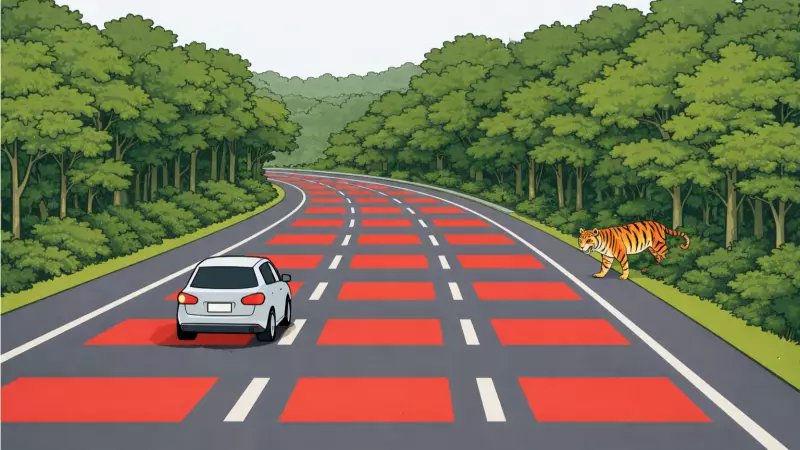
In a pioneering move to protect its precious wildlife, India has unveiled its first integrated "wildlife-safe" road corridor on a national highway cutting through a critical tiger habitat. The initiative, launched by the National Highways Authority of India (NHAI), aims to drastically reduce fatal collisions between speeding vehicles and animals forced to cross roads for survival.
A Red Alert for Drivers on Forest Highways
The core of this innovative project lies on a 12-kilometre stretch of the Bhopal-Jabalpur national highway (NH-45). This section passes directly through the heart of the Veerangana Durgavati Tiger Reserve in Madhya Pradesh. Historically, highways slicing through forested areas have posed a severe threat to animals, leading to frequent and often deadly accidents as creatures attempt to reach different parts of their fragmented habitat.
To combat this, authorities have implemented a multi-pronged strategy. One of the most visually striking features is the use of speed-calming design, where the road surface itself "turns red" in sensitive zones. This colour change acts as a powerful visual cue for drivers, signaling them to immediately slow down and be alert for potential animal crossings. The measure directly addresses the root cause of many accidents: excessive vehicle speed.

Beyond Colour: An Integrated Safety Ecosystem
The red roadway is just one component of a comprehensive safety system. The NHAI's corridor represents a holistic approach to human-wildlife coexistence on transport networks. Alongside the coloured pavement, the project includes strategically placed specialised fencing that guides animals away from the road surface and towards safe crossing points.
The most crucial of these points are the specially constructed animal underpasses. These structures allow wildlife to traverse beneath the highway safely, reconnecting habitats without the danger of traffic. To ensure the system's effectiveness and gather valuable data, the corridor is also equipped with electronic monitoring systems. This technology helps track animal movement patterns and monitor driver behaviour.
Announced on December 28, 2025, this project marks a significant shift in infrastructure planning. Instead of focusing solely on human convenience, it prioritises ecological connectivity and animal welfare. By tackling both where wildlife crosses and how vehicles move, the initiative sets a new national standard for road construction near protected areas.
A Blueprint for the Future of Conservation
The implications of this successful pilot on NH-45 are far-reaching. If proven effective, the model could be replicated on other highways that intersect with India's numerous wildlife sanctuaries and reserves. The integrated approach offers a sustainable solution to a growing conflict, ensuring the safety of both endangered species and motorists.
This initiative underscores a growing recognition that development and conservation must go hand-in-hand. By investing in intelligent engineering like animal underpasses and psychological tools like coloured roads, India is taking a definitive step towards safeguarding its natural heritage for future generations, one highway at a time.