NASA's Artemis II Mission Revives Lunar Exploration After Half a Century
For the first time in over 50 years, humanity is embarking on a journey back to the Moon. NASA's Artemis program has launched four astronauts aboard the Orion spacecraft on a nearly 10-day mission, blending scientific discovery, technical trials, and human resilience. This modern endeavor reflects the pioneering ethos that propelled Apollo astronauts into space decades ago. As the mission concludes with a precise splashdown in the Pacific Ocean, a profound sense of historical recurrence emerges. New rockets, fresh astronauts, and ambitious goals are taking shape, yet the path forward is deeply rooted in lessons from one of history's most iconic space missions: Apollo 13.
The Harrowing Saga of Apollo 13: A Fight for Survival
Apollo 13, launched on April 11, 1970, was intended as the United States' third lunar landing. However, it swiftly transformed into a desperate struggle for survival when an oxygen tank in the service module exploded. The mission began smoothly, with the Saturn V rocket lifting off from Kennedy Space Center in Florida and entering Earth orbit before setting course for the Moon. At 56 hours into the journey, Commander James A. Lovell, Lunar Module Pilot Fred W. Haise, and Command Module Pilot John L. Swigert heard a loud bang. Oxygen levels plummeted, power failed, and what was meant to be a lunar expedition became a battle to stay alive.
Apollo 13 had been meticulously planned, with an experienced crew and the spacecraft—comprising the command module 'Odyssey,' service module, and lunar module 'Aquarius'—representing engineering marvels. Every detail had been calculated and verified, but in an instant, all plans were shattered. The launch had proceeded with a thunderous roar, flames and smoke engulfing the pad, and the initial days followed routine paths akin to Apollo 11 and 12. Mission Control monitored systems diligently, ensuring flawless performance until the crisis struck.

The Crisis Unfolds: 'Houston, We've Had a Problem'
On the evening of April 13, Swigert flipped a switch to stir the oxygen tanks, triggering a deafening explosion. Oxygen levels dropped rapidly, power faltered, and alarms blared across the command module. Swigert's report, "Houston, we've had a problem here," signaled the end of lunar landing plans and the start of a survival mission. Commander Lovell observed gas venting into space, immediately grasping the severity. He recalled, "The light came on. Something was wrong with the electrical system. We eventually lost two fuel cells. We couldn't get them back. Then we saw our oxygen being depleted. One tank was completely gone. The other tank had started to go down. Then I looked out the window, and we saw gas escaping from the rear end of the spacecraft."
Improvisation and Ingenuity in the Face of Adversity
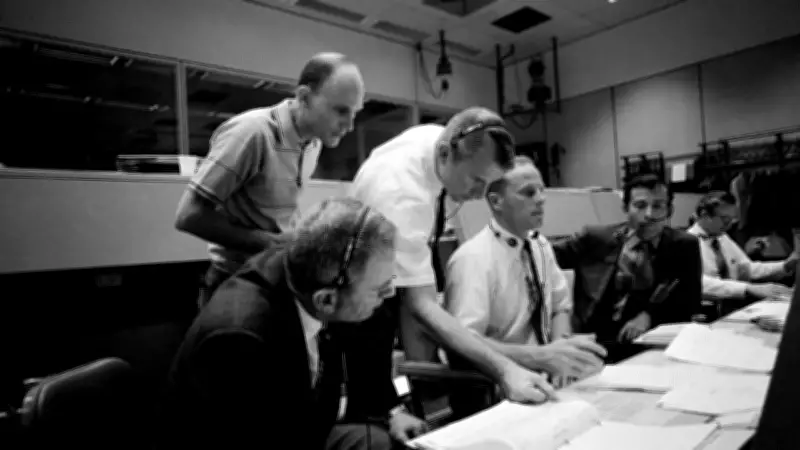
The lunar module Aquarius, designed for two astronauts on a two-day lunar stay, became an impromptu lifeboat for three people over nearly four days. Power was restricted to essentials, water was rationed to mere ounces daily, cabin temperatures neared freezing, and sleep was nearly impossible. A rising carbon dioxide threat added urgency, as command module filters didn't fit Aquarius. Engineers at Mission Control devised a makeshift solution using onboard materials: plastic bags, cardboard, and duct tape, guiding the astronauts step-by-step to adapt—a successful improvisation.
Navigation posed another challenge, with Apollo 13 off its safe trajectory. Using the lunar module engine, the crew executed a precise free-return maneuver around the Moon, leveraging gravity to pull them back toward Earth. With minimal computer assistance and Earth as a reference, this critical maneuver succeeded. On April 15, Apollo 13 passed behind the Moon, reaching the farthest distance from Earth any human had traveled at that time, turning the Moon into a pivot point rather than a destination.
The Heroic Crew of Apollo 13: Profiles in Courage
Apollo 13 is celebrated as a tale of bravery and survival, centered on three men whose expertise, skill, and composure under extreme pressure averted tragedy. Each astronaut brought unique backgrounds and training, forming a team capable of confronting the unimaginable.
James A. Lovell Jr.: The Calm Commander

Jim Lovell, a seasoned astronaut selected by NASA in 1962, had participated in Gemini missions 7 and 12 and Apollo 8, the first human lunar orbit. As Apollo 13 commander, his leadership was pivotal during the emergency. Lovell's calm demeanor and methodical problem-solving helped convert Aquarius into a lifeboat, managing power conservation and water rationing. After logging 715 hours in space, he retired in 1973 and passed away on August 7, 2025.
John 'Jack' Swigert: The Adaptable Pilot
John Swigert, the command module pilot, joined the crew just three days before launch due to an illness in the prime team. Selected by NASA in 1966, he quickly adapted, exemplifying readiness. Swigert first reported the problem to Houston and played a key role in system operations and navigation maneuvers. His post-NASA career included government service and politics; he died on December 27, 1982.
Fred W. Haise: The Technical Backbone
Fred Haise, the lunar module pilot, brought extensive technical expertise as a research and fighter pilot. Selected by NASA in 1966, he managed Aquarius's life-support systems during the crisis, overseeing water rationing and critical engine burns. With over 9,000 flight hours, Haise operated under unprecedented stress. He later contributed to Space Shuttle tests and served as vice president at Grumman Aerospace.
Comparative Analysis: Apollo 13 vs. Artemis II
While Apollo 13's story is one of near-disaster, Artemis II offers a modern reflection of its achievements without life-threatening crises. Key comparisons include:
- Distance Record: Artemis II broke Apollo 13's record of 248,655 miles from Earth.
- Mission Scope: Apollo 13 aimed for a lunar landing but aborted; Artemis II follows a planned lunar orbit test with a free-return trajectory.
- Crew Diversity: Artemis II features a woman, a person of color, and a Canadian among four astronauts, contrasting Apollo 13's three male Americans.
- Technology: Apollo 13 relied on improvisation; Artemis II's Orion spacecraft has advanced life-support, larger capacity, and safety redundancies.
- Trajectory and Safety: Both use free-return paths, but Apollo 13's was contingency-based, while Artemis II's is pre-planned.
- Landing: Both missions end with ocean splashdowns, showcasing enduring safe reentry procedures.
In essence, Artemis II honors Apollo 13's legacy while advancing human spaceflight with greater safety, inclusivity, and technological sophistication.
Enduring Lessons from Apollo 13
Apollo 13 transcended being merely a mission; it underscored vital human factors: teamwork, clear communication, improvisation, and calm decision-making under pressure can overcome even the most unexpected threats. The crisis revealed that space travel is never routine, and meticulously planned missions can falter. Apollo 13 remains a benchmark for risk management, problem-solving, and resilience in exploration. Today, as Artemis II orbits the Moon, the same spirit drives a new generation of explorers, propelling humanity further into the unknown.