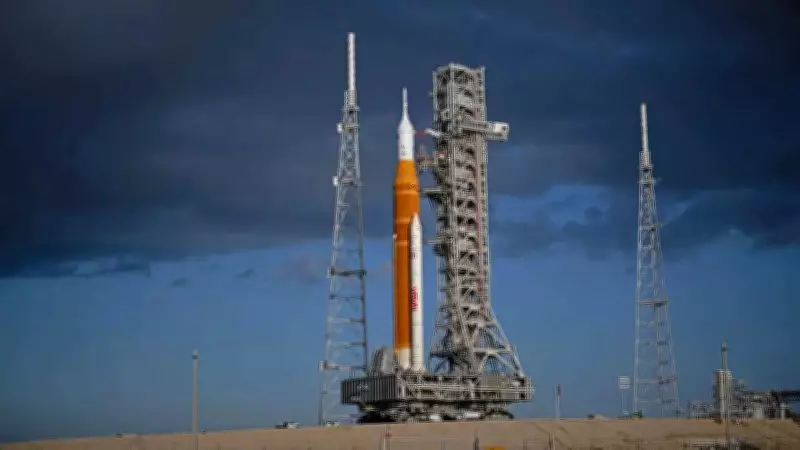
NASA's Artemis II Mission: A Historic Return to the Moon
NASA's Artemis II mission is set to end decades of silence since the Apollo era by returning humanity to the lunar frontier. This groundbreaking mission, scheduled for launch on April 1, 2026, from the Kennedy Space Centre, represents the first crewed flight to the moon in more than 50 years. It will be a long-duration, 10-day journey aboard the Orion spacecraft, flown by a multinational crew of four astronauts, including the first woman and the first astronaut of colour to travel to the moon.
Mission Objectives and High-Risk Testing
During this high-risk Artemis II crewed lunar flight, NASA will rigorously test the Space Launch System (SLS) for its capabilities and reliability. These evaluations are crucial as they will determine the feasibility of the Artemis III mission, which aims to land astronauts on the lunar surface. Beyond paving the way for a potential moon landing, Artemis II is a bold step toward establishing a sustainable human presence on the Moon and, ultimately, exploring Mars.
Artemis II: A 10-Day Deep Space Test Mission
Although Artemis II will not land on the Moon, it is designed to test the viability of deep space systems. Following launch from Launch Complex 39B at Kennedy Space Centre, the flight crew will engage in a series of operations:

- Earth Orbit Operations: The first 24 hours will be spent in a high-orbit position, approximately 230 miles above Earth, to test life support and communication systems.
- Lunar Flyby: The spacecraft will then perform a free-return mission, flying around the far side of the Moon and reaching a distance of about 248,655 miles from Earth, breaking the record set by Apollo 13.
- Splashdown: The mission will conclude with a high-velocity re-entry and splashdown in the Pacific Ocean around April 10, 2026, after travelling a total distance of approximately 685,000 miles.
Launch Schedule and Live Coverage Details
NASA has officially announced that Artemis II will launch on Wednesday, April 1, 2026, with a two-hour launch window opening at 6:24 PM EDT (22:24 UTC). Daily backup launches are planned through April 6 in case of weather or technical issues. Extensive live coverage will be available on various NASA platforms:
- NASA+ and NASA TV: Ad-free coverage starting at 12:50 PM EDT on April 1.
- YouTube: A 24/7 live stream featuring views of the Orion spacecraft and commentary from mission control.
- Social Media: Real-time updates and highlights on NASA's X (formerly Twitter), Facebook, and Instagram pages.
Historic Crew and Their Roles
Artemis II ushers in a new era of diversity in space exploration with its four-person crew:
- Commanding Officer Reid Wiseman: Responsible for leading the first crewed lunar flight in over fifty years.
- Pilot Victor Glover: Serves as the pilot of record and will be the first person of colour to fly to the moon.
- Mission Specialist Christina Koch: Set to become the first woman to travel to the moon.
- Mission Specialist Jeremy Hansen: Represents the Canadian Space Agency as mission engineer, making him the first Canadian and non-American to go to the moon.
This mission not only marks a significant milestone in space exploration but also highlights NASA's commitment to inclusivity and international collaboration as humanity takes its next giant leap toward the stars.