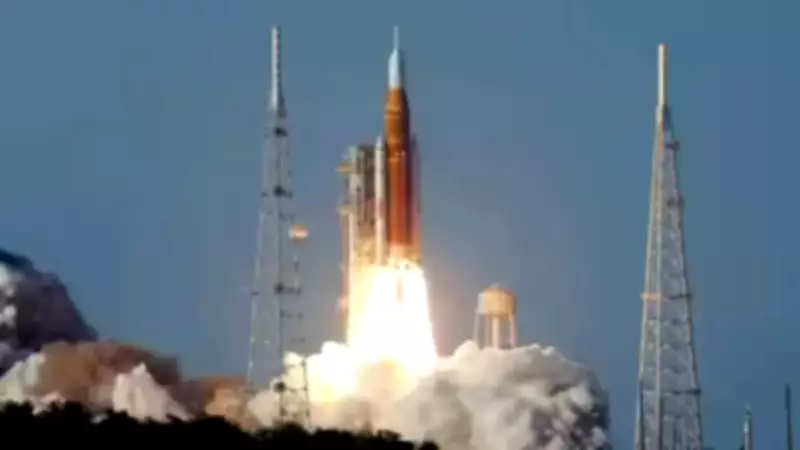
Artemis II Astronauts Successfully Launch and Begin Orbital Checkouts
On April 1, 2026, NASA's Artemis II mission achieved a flawless launch from the Kennedy Space Centre, propelling four astronauts into high Earth orbit. The crew, comprising Reid Wiseman, Victor Glover, Christina Koch, and Jeremy Hansen, is currently engaged in a critical 23.5-hour checkout period of the Orion spacecraft. This phase involves rigorous testing of life support systems and auxiliary thrusters, essential for ensuring operational safety and functionality during the upcoming deep space journey.
Manual Piloting and Proximity Operations Underway
During their initial hours in orbit, the astronauts are conducting manual piloting demonstrations to verify the handling qualities of the Orion spacecraft. A key aspect of this testing includes manoeuvring Orion near the Interim Cryogenic Propulsion Stage (ICPS) to assess proximity operations. These tests are vital for confirming that all systems are performing optimally before proceeding with more complex manoeuvres.
Trans-Lunar Injection Burn Scheduled After Checkout
Once the checkout phase is completed and all systems are confirmed operational, Orion will execute a Trans-Lunar Injection (TLI) burn using its service module engine. This manoeuvre will provide the necessary thrust to escape Earth's gravity, setting the spacecraft on a four-day trajectory toward the Moon. The astronauts will continue to monitor Orion's performance and conduct pre-planned scientific observations during this transit period.

Historic Lunar Flyby and Deep Space Exploration
Orion is planned to fly by the Moon at a minimum altitude of approximately 4,600 miles (7,400 kilometres), utilizing a 'free-return' trajectory that leverages the Moon's gravitational field for the return journey to Earth without additional engine burns. This mission marks NASA's first crewed deep space expedition in nearly 50 years, offering invaluable data for future lunar landings, including the Artemis III mission aimed at landing the first woman and first person of colour on the lunar surface.
Significance of Artemis II for Future Space Exploration
The Artemis II mission represents a pivotal step in human space exploration, testing technologies and procedures essential for sustained lunar presence and eventual Mars missions. By conducting these thorough checkouts and manoeuvres, NASA is paving the way for more ambitious endeavours, reinforcing its commitment to advancing scientific knowledge and international collaboration in space.