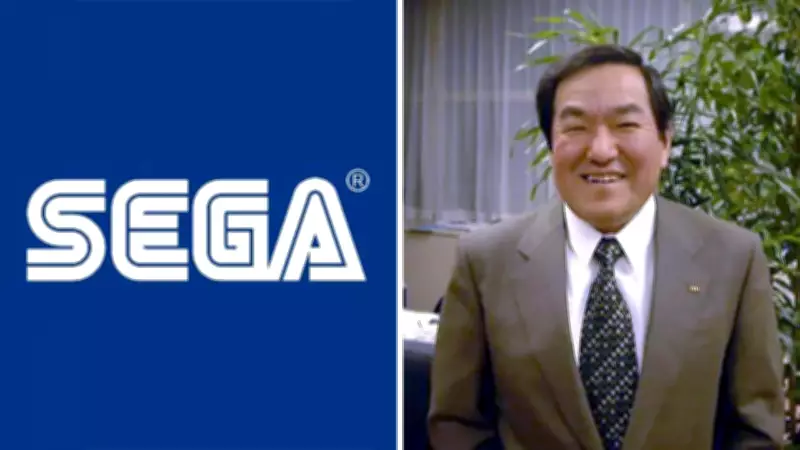
Legendary Sega Engineer Hideki Sato, Architect of Gaming Consoles, Passes Away at 75
The video game industry has lost one of its most influential pioneers. Hideki Sato, widely celebrated as the "Father of Sega Hardware," passed away on February 13, 2026, at the age of 75. His death marks the end of an era for Sega and gaming enthusiasts worldwide, removing a foundational figure whose engineering vision shaped decades of interactive entertainment.
A Career Defining Sega's Hardware Legacy
Hideki Sato's journey with Sega began in 1971, launching a monumental career that spanned over three decades. He served as the acting president of the company from 2001 to 2003 before ultimately departing in 2008. However, his most enduring legacy lies in his role as the chief architect behind virtually every Sega home console starting from 1983.
As the director of Sega's Research and Development department from 1989 onward, Sato led the engineering teams responsible for creating the company's arcade and home console hardware. His portfolio includes some of the most beloved systems in gaming history:

- The SG-1000 – Sega's inaugural home console that entered the market.
- The Master System – A competitor to the Nintendo Entertainment System.
- The Genesis / Mega Drive – The console that made Sega a household name and seriously challenged Nintendo's market dominance.
- The Sega Saturn – A pioneering 3D and CD-based console that pushed technical boundaries.
- The Dreamcast – Sega's final home console, remembered as a machine ahead of its time despite commercial challenges.
The Dreamcast: A Beautiful Failure Ahead of Its Time
While Hideki Sato's final design, the Dreamcast, did not achieve commercial success, it remains a cult classic celebrated for its innovation. The console introduced groundbreaking features that were revolutionary for its era, including the Visual Memory Unit (VMU) that functioned as both a memory card and a secondary display, along with early online functionality that foreshadowed modern gaming networks.
The Dreamcast's library of games is still revered by collectors and fans, cementing its status as what many consider "gaming's most beautiful failure." Sato's vision for the console demonstrated a forward-thinking approach that influenced subsequent generations of hardware design.
Cause of Death and Industry Tributes
As of now, no specific cause of death has been officially announced regarding Hideki Sato's passing. The news was initially reported by the Japanese outlet Beep21, which described him as "a great figure who shaped Japanese gaming history and captivated Sega fans all around the world."
Sega itself released an official statement honoring his contributions, noting that "his leadership helped lay the foundation of SEGA, and his contributions had a significant and lasting impact on the entire gaming industry." This sentiment echoes throughout the gaming community, where Sato is remembered not just as an engineer, but as a visionary who helped define an entire medium.
An Immeasurable Legacy in Gaming
Hideki Sato's influence extends far beyond the consoles he built. His work at Sega represented a crucial counterbalance to Nintendo's dominance during the 1980s and 1990s, fostering healthy competition that drove innovation across the industry. The consoles he engineered introduced millions to gaming and created memories that span generations.
Although he has passed, Sato's legacy lives on through the enduring popularity of Sega's classic systems and the continued admiration of gamers worldwide. His contributions to hardware design, team leadership, and technological advancement have left an indelible mark on video game history—one that will be studied and celebrated for years to come.