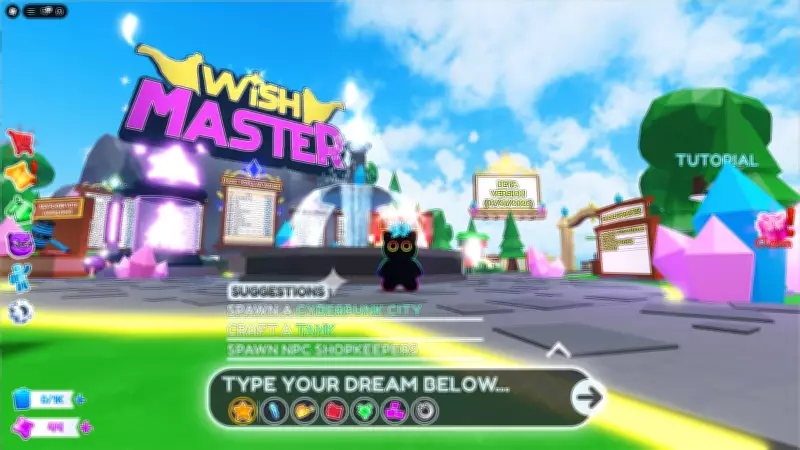
Online gaming platform Roblox has unveiled its latest innovation in generative artificial intelligence with the beta release of 4D generation tools. Powered by the company's in-house Cube foundation model, this feature represents a significant evolution from static 3D asset creation to dynamic, interactive content development within games and experiences.
From Static Objects to Interactive Experiences
Roblox's 4D generation technology enables players and creators to produce fully functional in-game objects using simple natural-language prompts. This marks a substantial leap beyond traditional 3D modeling, where assets typically remain static without additional programming.
According to Roblox engineers, the system works by combining object meshes with specialized rulesets called schemas. These schemas define how different parts assemble together and how behavioral characteristics apply to the created objects.

Practical Applications and Examples
The practical implications of this technology are substantial. For instance, when a player generates a car through a text prompt, the resulting vehicle comes complete with turning wheels and pre-attached scripts that allow immediate driving functionality. This eliminates the need for manual scripting or complex modeling that previously required specialized technical skills.
Roblox envisions this technology opening new domains of creative freedom for both developers building experiences and players participating in them. The 4D generation allows real-time creation of various entities ranging from simple vehicles and tools to potentially more complex machinery and interactive elements.
The Cube Foundation Model Evolution
The Cube foundation model, first announced in March 2025 with text-to-mesh generation capabilities, has evolved significantly from its initial focus on creating static 3D objects. While Cube 3D served as a backend for numerous tools in Roblox Studio and in-experience APIs, the new 4D generation represents the next logical step in this technological progression.
Roblox's development team emphasizes that the ultimate goal is to add functionality that allows generated objects to behave exactly as users expect them to during gameplay. This user-centric approach to AI development could potentially unlock novel gameplay types and allow creators to focus more on high-level design rather than repetitive modeling tasks.
Community Response and Early Adoption
Early adopters within the Roblox developer community have already begun experimenting with the new 4D generation feature. The technology aligns with Roblox's broader strategy of deeply embedding artificial intelligence into its creation ecosystem, which the company describes as a method to democratize content creation and accelerate development cycles.
With over 85 million daily active users comprising independent developers, hobbyists, and professional studios, Roblox's platform stands to benefit significantly from tools that streamline the creation process. The Cube foundation model and 4D generation capabilities could dramatically shift how quickly experiences are prototyped and brought to market, potentially lowering barriers to entry for creators who lack advanced art or programming skills.
Future Vision and Development Roadmap
Roblox emphasizes that the beta release represents just an early step in their AI development journey. The company's longer-term vision for the Cube foundation model and related AI tools includes eventually generating entire scenes from natural language descriptions.
This announcement follows several recent AI-focused initiatives from Roblox, including the rollout of age verification systems in India and open-source AI systems designed to protect younger users from potential predators in chat environments. Together, these developments demonstrate Roblox's commitment to leveraging artificial intelligence both for creative enhancement and user safety.
The 4D generation beta represents a significant milestone in gaming technology, potentially transforming how virtual worlds are created and experienced by millions of users worldwide.