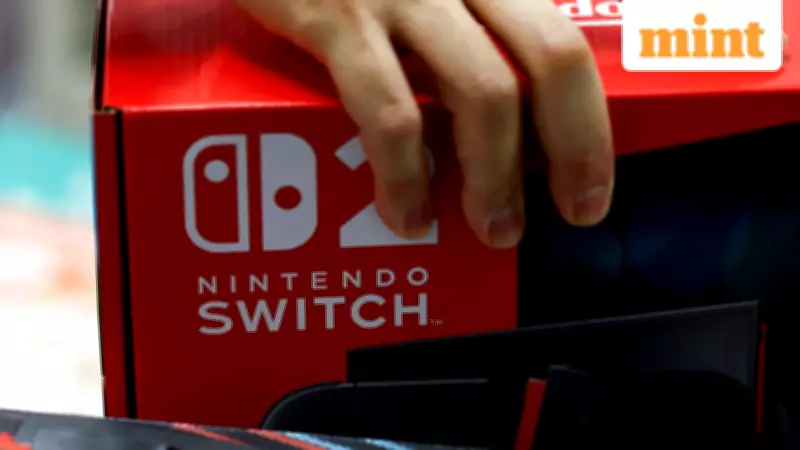
The unprecedented success of Nintendo's Switch 2, which has become the fastest-selling game console in history, may not be sufficient to protect the company's stock from mounting investor anxieties. These concerns are primarily centered around the dramatic surge in memory chip prices, a situation exacerbated by the insatiable global demand for artificial intelligence hardware.
Earnings Report Amidst Growing Challenges
Nintendo is scheduled to announce its third-quarter financial results in the coming week. While many analysts anticipate impressive revenue figures following robust holiday sales data from the United States, a significant cloud looms over these expectations. The memory chip supply shortage, intensified by AI sector investments diverting production from consumer electronics, poses a serious threat to the profitability of the new console.
Pelham Smithers, a UK-based equity analyst specializing in the gaming industry, expressed grave concerns. "The company appears to be looking at an absolute horror show on the cost of building a console, unless memory prices come down sharply," he stated. This sentiment reflects a broader industry issue where profit margins for manufacturers worldwide are under severe pressure.

Impact on Nintendo's Financial Performance
Nintendo's shares have already experienced substantial volatility, declining more than 30% from their peak in August. This downturn marked the worst monthly performance for the stock since the global financial crisis of 2008. The timing of the memory chip crunch is particularly unfortunate for Nintendo, coinciding with the critical launch phase of the Switch 2—a console that represents a pivotal opportunity to attract new users and solidify market position.
According to data from TrendForce, prices for dynamic random access memory (DRAM) and flash-storage modules, essential components in Nintendo's devices, saw dramatic increases during the December quarter. Projections indicate this trend will worsen. Analysts from Citigroup, including Peter Lee, Jayden Oh, and Josh Yang, forecast that the average selling price of DRAM could surge by 120% in 2026, with NAND prices potentially rising by 90%.
Potential Price Hikes and Consumer Impact
Bloomberg Intelligence analyst Nathan Naidu estimates that Nintendo might need to increase the retail price of the Switch 2 by approximately 15% to counterbalance the escalating memory costs. "Once Nintendo has exhausted its memory stockpile and any fixed-price contracts, the crunch will put pressure on the Switch 2's margin and hence the company's profitability," he explained.
Nick McKay, a senior analyst at Freedom Capital Markets, highlighted the consumer sensitivity to price changes. The Switch 2, already Nintendo's most expensive hardware at $450 in the US, faces significant demand risks if prices climb further. "If they go above $500, it could be a decision they don't look back on fondly," McKay cautioned.
Comparative Vulnerability in the Gaming Sector
While rising memory prices affect rival console manufacturers like Sony Group Corp., Nintendo finds itself in a uniquely precarious position. The memory shortage is impacting the Switch 2 during its initial launch cycle, whereas Sony's PlayStation 5, being a more mature product, benefits from established profit margins and greater flexibility to absorb additional costs.
"The Switch 2 is brand new, so it's basically sold at cost, and Nintendo might even lose money on it," noted Smithers. "Sony has more leeway to absorb extra costs on its PlayStation 5."
Strategic Responses and Market Sentiment
Despite these challenges, Nintendo retains some strategic options to mitigate the impact of higher memory costs. McKay suggested the company could reduce the internal memory size of the Switch 2, shifting storage expenses to consumers who may need to purchase external cards. He also anticipates that Nintendo's management will address memory concerns in their upcoming earnings commentary, potentially providing a temporary boost to investor confidence.
Market data indicates a decline in short interest for Nintendo's stock, suggesting reduced expectations for negative news from the earnings report. According to S&P Global, short interest has halved to about 1% of the free float from nearly 2% in mid-August.

Long-Term Outlook and Catalysts
Citigroup analyst Tokiya Baba pointed out that Nintendo's "short-term investment appeal" could improve if quarterly results surpass market predictions. He projects that Nintendo sold approximately 7 million Switch 2 units on a sell-in basis during the October-December period. Additionally, the upcoming release of the Super Mario Galaxy Movie is viewed as a potential positive catalyst for the company's shares.
However, the long-term perspective remains cautious. A prolonged memory crisis could hinder a sustained rally for Nintendo's stock. "They're selling tons of consoles now—that's not the problem," Smithers concluded. "This is a memory problem, and it's only getting nastier with every dollar the price goes up."
The global memory chip shortage, driven by AI advancements, continues to reshape the landscape for consumer electronics, with Nintendo's Switch 2 serving as a prominent case study in navigating these turbulent market conditions.