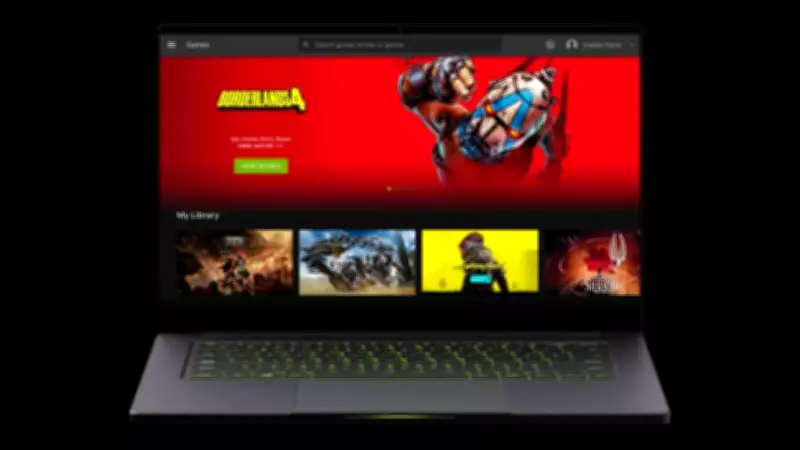
Nvidia GeForce NOW Ultimate Tier Delivers Stunning Cloud Gaming Performance Across India
My Windows work laptop typically struggles with Chrome when more than six tabs are open, relying on an integrated Intel GPU to render basic spreadsheets. When I launched Cyberpunk 2077 recently, I expected laughter from the machine. Instead, it delivered the game at 4K resolution with path tracing enabled and DLSS 4 active, maintaining over 120 frames per second without even spinning up the fan.
This single paragraph encapsulates the entire GeForce NOW proposition. While cloud gaming's premise is widely understood, experiencing it firsthand on your everyday work device creates a different level of appreciation.
Real-World Testing from Delhi to Mumbai Servers
Back in February, I experienced a wired-ethernet preview of GeForce NOW in Mumbai under ideal conditions—same city as the servers. While everything functioned perfectly in that controlled demo, the true test awaited at home. For the past week, I've rigorously tested the Ultimate tier from my Delhi apartment using that same modest work laptop, a Mac, and an Android phone—all in uncontrolled environments.

Remarkably, everything performed better than anticipated. The connection remained stable throughout testing, which was never guaranteed given the circumstances.
Nvidia operates just one Indian data center located in Mumbai. Testing from approximately 1,400 kilometers north on an inconsistent Wi-Fi connection, the built-in network test consistently showed ping times between 25 and 35 milliseconds to the Mumbai server, typically hovering around 27 ms. Packet loss remained at or near zero during almost every session. The only noticeable spike occurred around 9 PM on a Wednesday during peak family streaming time—even then, the game adapted seamlessly rather than crashing.
Adaptive Streaming Technology That Impresses
The adaptive behavior proved particularly surprising. GeForce NOW's encoder dynamically scales bitrate and resolution when connection quality fluctuates. Users notice this as slight texture softening for brief periods rather than stuttering or disconnections—similar to a driver feathering a clutch, barely noticeable unless actively monitoring the overlay.
I monitored extensively using Ctrl+N to access Nvidia's streaming statistics panel, which displays real-time game FPS, stream FPS, ping, bitrate, and packet loss—a habit I developed and maintained throughout testing.
Mac MiniLED Display Showcases Cinematic Quality
I spent most testing time on the Mac due to its miniLED screen providing the optimal scenario for Nvidia's new Cinematic Quality Streaming mode. This Ultimate-tier feature delivers 10-bit HDR, 4:4:4 chroma subsampling, and up to 100 Mbps bitrate—elements that typically distinguish cloud gaming from local gaming on premium displays.
Cyberpunk 2077 at 4K/60 with CQS enabled genuinely appeared as if running locally on high-end hardware. Night City's neon maintained clarity without smearing, in-game menu text remained sharp thanks to Nvidia's added HUD sharpness filter, and black levels preserved detail in dark interiors where cheaper cloud streams typically degrade into grey sludge. Even chromatic details on wet pavement—often lost to compression in inferior streams—remained intact.
Important bandwidth consideration: At these settings, GeForce NOW consumes approximately 30 GB per hour. Metered connection users or those sharing bandwidth with 4K streaming should calculate carefully before committing to Cinematic mode. For general play, I switched to the Balanced preset maintaining 1440p at excellent quality between 12 and 20 Mbps.
The Data Saver mode operates at roughly 12 Mbps for 1080p, sufficiently low for mid-tier 4G connections. That Nvidia engineered for this bandwidth floor indicates their target audience within India.
Android Mobile Gaming Excellence
This represents the most compelling use case: owning an Android phone with a quality screen and a Bluetooth controller (available for around Rs 2,500) without owning or planning to purchase a gaming PC.

With this setup, I successfully ran Apex Legends and Counter-Strike 2 on my phone throughout the week. While Ultimate unlocks competitive modes at higher frame rates, my phone's 120 Hz cap delivered consistently locked performance. Both games maintained stable 120 fps during matches with sufficiently low input latency that I stopped noticing it—the ultimate metric for shooter games.
The native Android app proves genuinely excellent rather than a dressed-up web client. Controller pairing requires just one tap, cloud saves roam seamlessly, and users can alt-tab out of matches to respond to messages before returning to the same lobby. For existing phone and controller owners, this creates a quietly exceptional portable gaming setup unmatched on price within India.
Expanded Game Library Through Blackwell Update
The most meaningful quality-of-life improvement since February involves library expansion. Historically, GeForce NOW featured approximately 2,300 Ready-to-Play games that Nvidia pre-configures on servers. The Blackwell update introduces Install-to-Play, allowing users to bring their Steam libraries for on-demand installation into cloud storage—effectively doubling the catalogue to around 4,500 games.
In practice: I added a Steam game not on the R2P list, which installed in about three minutes—impressive for a 100+ GB title thanks to Nvidia's data-center internet speeds.
Important limitation: Performance and Ultimate tiers include 100 GB of single-session cloud storage that resets upon closing. Games supporting Steam Cloud saves preserve progress; others do not. Nvidia offers 200 GB of persistent storage for Rs 299 every 90 days as a workaround, stacking neatly with subscriptions for serious gamers maintaining installed games.
Competitive Pricing Structure
Pricing ultimately determines adoption for most users. Performance tier costs Rs 999 for 90 days while Ultimate tier is Rs 1,999 for 90 days—equating to Rs 333 and Rs 666 monthly respectively. Adding persistent storage brings Ultimate to approximately Rs 766 monthly.
For context, Xbox Game Pass Ultimate in India costs Rs 1,389 monthly including a rotating game catalogue (whereas GeForce NOW requires separate Steam purchases). Despite this difference, GeForce NOW undercuts Game Pass by more than half—significant in markets where gaming cafés charge Rs 30-50 hourly.
Nvidia labels these introductory prices with the service technically in open beta. Even with a potential 50% increase post-beta, Ultimate would approximate Rs 1,000 monthly—still cheaper than all console gaming subscriptions in this market.
The currently missing free tier available in other countries will arrive "in the coming weeks" according to Nvidia, worth awaiting for genuinely curious users.
Persistent Considerations and Limitations
The Mumbai demo occurred on ethernet in the server city while my week-long home testing used Wi-Fi 1,400 km away. Both performed well but neither represents every Indian user's situation.
Users on 4G connections, located in Northeast or deep South regions, or with problematic last-mile fiber infrastructure will experience variations. While Nvidia includes lower-bandwidth modes, basic physics of distance and packet loss remain unavoidable. The Low Latency Streaming mode available in the US relies on L4S protocol unsupported by Indian ISPs, making this optimization unavailable at launch.
Standard cloud gaming warnings persist: internet outages disrupt gameplay, data caps deplete rapidly (30 GB hourly on Cinematic mode is substantial), and beta status means potential pricing adjustments, feature changes, and server capacity challenges once invitations expand nationwide.
Target Audience and Market Position
Existing gaming PC owners with recent Nvidia cards need not overthink this service—GeForce NOW won't replace their rigs, and they're not the primary target.
For those without gaming PCs, unwilling to spend Rs 1.5 lakh on hardware, but possessing reasonable internet connections, this represents India's most compelling cloud gaming offering yet. It's the first service where I stopped thinking about the stream and simply played—the ultimate benchmark that no other market offering currently achieves, including Xbox Cloud Gaming or previous Jio attempts.
The crucial question involves sustainability six months post-open-beta when servers face full capacity. I'll revisit then. Currently, Rs 999 purchases three Performance months while Rs 1,999 secures Ultimate—sufficiently affordable for personal experimentation.