GeForce NOW Cloud Gaming Review: Ultimate Tier Delivers 4K Gaming on Basic Laptops in India
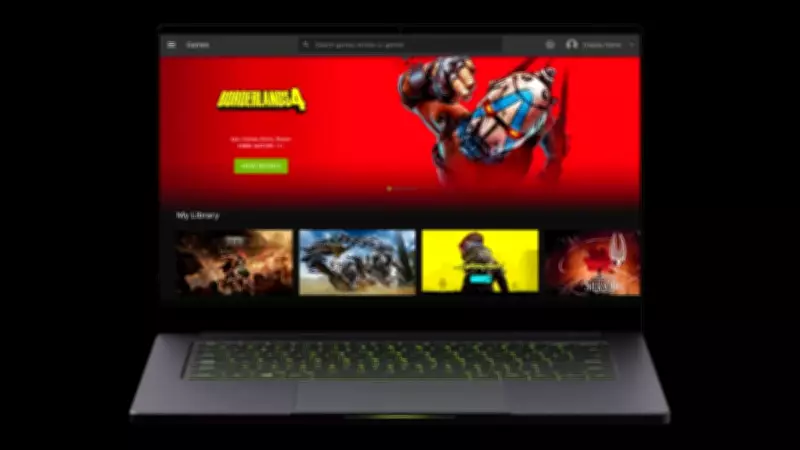
My Windows work laptop struggles with Chrome when six tabs are open, relying on an Intel iGPU to render spreadsheets. Yet, when I launched Cyberpunk 2077 recently, it ran at 4K resolution with path tracing enabled and DLSS 4 active, achieving over 120 frames per second without the fan even spinning up. This is the power of GeForce NOW cloud gaming in a single paragraph—a concept known in theory but astonishing to witness on everyday hardware.
Real-World Testing Across Multiple Devices
In February, I experienced a wired-ethernet preview of GeForce NOW in Mumbai under ideal conditions near the servers. The true test, however, was at my home in Delhi, approximately 1,400 kilometers north. Over the past week, I subscribed to the Ultimate tier and tested the service on my modest work laptop, a Mac, and an Android phone—all in uncontrolled environments. Remarkably, everything performed better than anticipated.
The connection remained stable, which was never guaranteed. Using Wi-Fi that is often inconsistent, my ping to the Mumbai server consistently ranged between 25 and 35 milliseconds, typically around 27 ms, with near-zero packet loss. The only spike occurred around 9 PM on a Wednesday during family streaming time, yet the game adapted seamlessly without crashing.

Adaptive Streaming and Cinematic Quality
What truly impressed me was the adaptive behavior. GeForce NOW's encoder dynamically adjusts bitrate and resolution during connection fluctuations, resulting in slightly softened textures for brief moments rather than stutters or disconnections. It's akin to a driver feathering the clutch—barely noticeable unless monitoring the stats overlay with Ctrl+N, which displays real-time game FPS, stream FPS, ping, bitrate, and packet loss.
On my Mac with a miniLED screen, the new Cinematic Quality Streaming mode—an Ultimate-tier feature—delivered 10-bit HDR, 4:4:4 chroma subsampling, and up to 100 Mbps bitrate. Cyberpunk 2077 at 4K/60 fps with CQS enabled looked indistinguishable from local gameplay on high-end hardware. Neon lights in Night City remained crisp, in-game text stayed sharp thanks to a HUD sharpness filter, and black levels in dark interiors avoided the grey sludge typical of inferior streams.
A significant caveat: at these settings, GeForce NOW consumes about 30 GB per hour. For metered connections or shared households, the Balanced preset offers excellent 1440p quality at 12-20 Mbps, while Data Saver mode runs at roughly 12 Mbps for 1080p, suitable for mid-tier 4G connections.
Accessible Gaming Setup
The most compelling use case is simplicity: you likely already own an Android phone with a good screen and a Bluetooth controller (or can purchase one for around Rs 2,500). Without a gaming PC, I played Apex Legends and Counter-Strike 2 on my phone this week. Ultimate tier unlocks competitive modes at 1080p/360 fps or 1440p/240 fps, though my phone capped at 120 Hz. Both games maintained locked 120 fps with minimal input latency, making it a viable portable gaming setup unmatched in India's market.
The native Android app excels with one-tap controller pairing, cloud saves, and the ability to alt-tab during matches without losing progress.
Expanded Library and Pricing
Since February, GeForce NOW's library has grown substantially. Beyond the curated list of approximately 2,300 Ready-to-Play games, the Blackwell update introduced Install-to-Play, allowing users to install titles from their Steam library into cloud storage, doubling the catalogue to around 4,500 games. In testing, a 100 GB Steam game installed in about three minutes.
Performance and Ultimate tiers include 100 GB of single-session cloud storage that resets upon logout, though Steam Cloud saves preserve progress. For persistent storage, Nvidia offers 200 GB for Rs 299 every 90 days.

Pricing is a decisive factor: Performance costs Rs 999 for 90 days (Rs 333 monthly), while Ultimate is Rs 1,999 for 90 days (Rs 666 monthly). With persistent storage, Ultimate rises to approximately Rs 766 monthly. Comparatively, Xbox Game Pass Ultimate in India is Rs 1,389 monthly, though it includes a rotating game catalogue whereas GeForce NOW requires separate Steam purchases. These are introductory prices during the open beta, with potential increases upon full launch, but even a 50% hike would keep Ultimate around Rs 1,000 monthly—still cheaper than console subscriptions in India.
A free tier, available in other countries, is promised "in the coming weeks."
Caveats and Considerations
While my experience in Mumbai and Delhi was positive, results may vary with 4G connections, locations in the Northeast or deep South, or poor last-mile fibre infrastructure. Nvidia's low-bandwidth modes help, but distance and packet loss remain challenges. The Low Latency Streaming mode using L4S protocol is unavailable in India as no ISPs support it yet.
Standard cloud gaming warnings apply: internet outages disrupt gameplay, and data caps are quickly reached with high-bandwidth modes. As a beta service, pricing and features may change, and server capacity in Mumbai will face rigorous testing as usage grows.
Final Verdict
If you own a gaming PC with a recent Nvidia card, GeForce NOW isn't necessary. However, for those without a gaming PC, unwilling to spend Rs 1.5 lakh on one, and with decent internet, this service represents the most compelling cloud gaming option in India. It's the first where I stopped focusing on the stream and simply enjoyed playing. The real test will be in six months as the open beta expands, but for now, Rs 999 for three months of Performance or Rs 1,999 for Ultimate offers an affordable way to explore cloud gaming firsthand—or wait for the upcoming free tier.