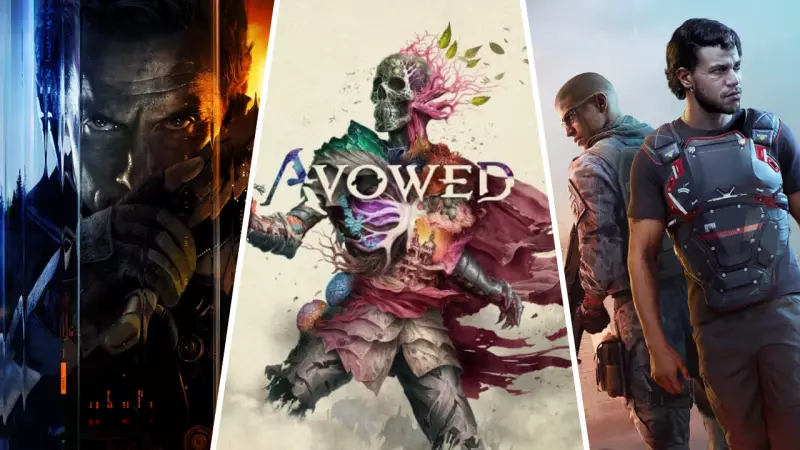
The year 2025 delivered incredible gaming experiences like Clair Obscur: Expedition 33 and Ghost of Yotei. However, it also served as a stark reminder that massive financial investment and hype do not automatically translate to success. Several highly-anticipated, big-budget titles crashed spectacularly at launch, disappointing critics and players alike. These failures highlight that polish, vision, and player connection matter more than money alone.
High-Profile Disasters: The Biggest Flops of 2025
From technical catastrophes to identity crises, the year's most expensive failures shared a common thread: they failed to meet player expectations. Below is a detailed look at five major games that stumbled badly.
1. MindsEye: The "GTA Killer" That Killed Itself
Developed by Build a Rocket Boy under former Rockstar North president Leslie Benzies, MindsEye was touted as a potential Grand Theft Auto competitor. Its launch, however, was a technical disaster. Players encountered a barrage of bugs, poorly functioning AI, and uninspired mission design. The game was panned for its lack of polish and distinctive personality, earning a devastatingly low Metacritic score. The backlash was so severe that it triggered a wave of refunds on Steam and PlayStation, with many calling it one of the worst game launches of the decade.

2. Call of Duty: Black Ops 7's Campaign Misstep
Activision's decision to release back-to-back Black Ops titles in 2024 and 2025 backfired with Call of Duty: Black Ops 7. The game faced fierce criticism for radically reinventing its single-player campaign. Developers made the story mode always-online and focused on co-op play, stripping away the series' signature cinematic pacing. The inability to pause even during solo sessions, coupled with a lack of proper checkpoints, resulted in a frustrating experience. Fans and reviewers widely panned it as one of the worst campaigns in the franchise's long history.
3. Monster Hunter Wilds' Troubled PC Port
While Monster Hunter Wilds was a content-rich hit on consoles, its PC version became a case study in poor optimization. Months after release, the port continued to suffer from severe performance issues like heavy stuttering and blurry visuals, regardless of how powerful the player's hardware was. It became overly dependent on aggressive upscaling technologies like DLSS to achieve barely playable frame rates. This led to overwhelmingly negative feedback from the PC community. Although initially a commercial success, word of the technical problems caused a significant drop-off in sales on the platform.
4. Avowed's Identity Crisis
Obsidian Entertainment's Avowed endured a turbulent development cycle marked by multiple creative reboots and a change in director. Initially teased as a dark, expansive open-world RPG akin to Skyrim, the final product was a scaled-down, zone-based adventure with a surprisingly colorful palette. This shift left many fans feeling the game lacked depth and soul. While technically functional, Avowed was criticized for its shallow dialogue and repetitive combat, failing to engage players as deeply as the studio's previous titles.
5. FBC: Firebreak - A Misstep for Remedy
Known for narrative-driven hits, Remedy Entertainment stumbled with FBC: Firebreak. Marketed as a multiplayer co-op successor to the acclaimed Control, the game landed as a generic shooter devoid of inventive mechanics. It notably lacked the narrative magic and connective tissue of the Remedy Connected Universe, leaving fans deeply disappointed. The game failed to retain players, evidenced by a very low active player count on Steam shortly after launch, struggling to justify its place among Remedy's more prestigious works.

The Bottom Line: Budget Isn't Everything
The failures of 2025 underscore a critical lesson for the gaming industry: a colossal budget cannot compensate for a lack of creative vision, technical polish, or understanding of what players want. Games like MindsEye and Black Ops 7 show that even the most established names and ambitious projects can falter without execution that matches the hype. For players, it serves as a reminder to temper expectations, even for the most heavily marketed blockbusters.