

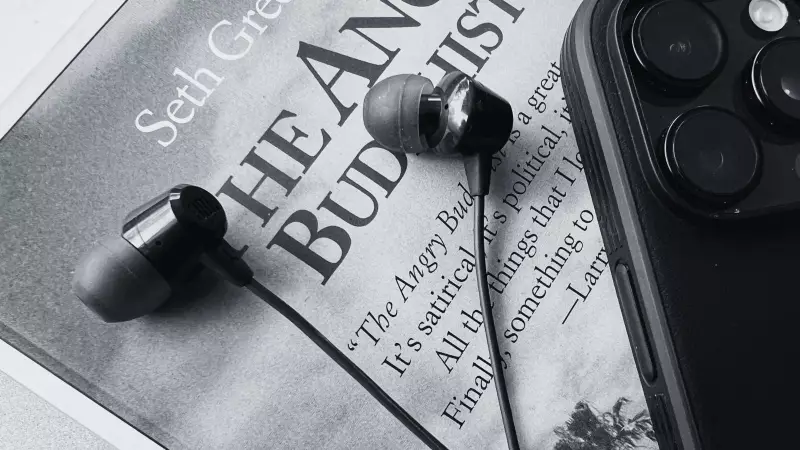
In an era dominated by wireless earbuds and seamless connections, a surprising trend is emerging across India. The humble wired headphone, once considered a relic of the past, is quietly finding its way back into daily routines. This shift is not driven by major marketing campaigns but by a growing user fatigue with the constant demands of modern wireless technology.
The Nostalgic Discovery and a Shift in Sentiment
The trend often begins with a simple discovery. For many, a weekend cleaning session unearths old wired headphones, tangled and forgotten. These artifacts, like those from the summer of 2018, evoke a sense of nostalgia. In 2025, their physical cable feels oddly out of place in a world of invisible Bluetooth pairings. Yet, this anachronism is now being reinterpreted as a choice for authenticity and simplicity.
This sentiment is visible far beyond dusty drawers. From global celebrities like Paul Mescal and Bella Hadid to Bollywood stars such as Varun Dhawan and Shahid Kapoor, the thin wired headphones are being spotted as a subtle fashion statement. They represent a push for individuality and a coded nod to the Y2K aesthetic, moving away from the uniform look of wireless pods.

From Ubiquity to Obsolescence: The Journey of the Headphone Jack
The resurgence of wired headphones marks a fascinating full circle. For over a decade, from the mid-2000s to the late 2010s, wired headphones were a personal tech staple, often found tangled in bags. They were light, universally compatible via the legendary 3.5mm jack, and reliably simple.
The shift began with Bluetooth headsets entering the Indian market in the mid-2000s, initially for calls. By 2015-2016, Bluetooth neckbands and headphones became common, promising freedom from tangled wires and restricted movement. The digital revolution made this shift seem inevitable.
The true inflection point, however, was the death of the jack. Apple's iPhone 7 launch, which removed the port, was defended as a future-facing design. Soon, many smartphone makers followed suit throughout 2017-2019. The default feature became a premium add-on, forcing users into the wireless ecosystem.
The Hidden Friction of Wireless Convenience
While modern True Wireless Stereo (TWS) earbuds offer seamless switching between devices and a minimalist aesthetic, they introduced new layers of friction. Users have traded mechanical reliability for software dependence. The promise of convenience now comes with conditions: pairing prompts, firmware updates, and the constant shadow of battery anxiety.
The act of listening itself has changed. With wired headphones, the experience is physical and performative—the cable tugs, it brushes against the skin, it signals a direct source for the sound. A failure is obvious and immediate. In contrast, wireless listening is managed by batteries and algorithms. Interruptions are unpredictable: connections sputter, latency is felt, and low-battery warnings cut through important calls.
Trust, in this context, is not about superior sound quality but about predictability. Wired headphones work identically every time they are plugged in. Wireless ones are in constant negotiation with software, operating systems, and battery cycles, each layer adding a chance of failure.
The Unmarketed Comeback: Driven by Fatigue, Not Romance
The return of wired headphones is not a marketed movement. It is a practical, grassroots response piling up around everyday tech. It runs parallel to calls for digital detox and a preference for analogue tools that are easier to use and free from threats like data leaks.
Fans swear by the absence of pairing rituals and battery warnings. For long editing sessions or crucial calls that must not drop, the wire offers a certainty that wireless technology cannot guarantee. This is not a wholesale rejection of wireless convenience but a conscious choice to reduce the cognitive load and friction that has become synonymous with smarter, more connected devices.

Ultimately, the quiet comeback of the wired headphone symbolizes a subtle rebellion. It reflects users choosing to disengage from technology that constantly demands updates, upgrades, and attention. In a culture that mandates embracing the new, opting for the simple, reliable wire is a small but significant act of reclaiming control.





