

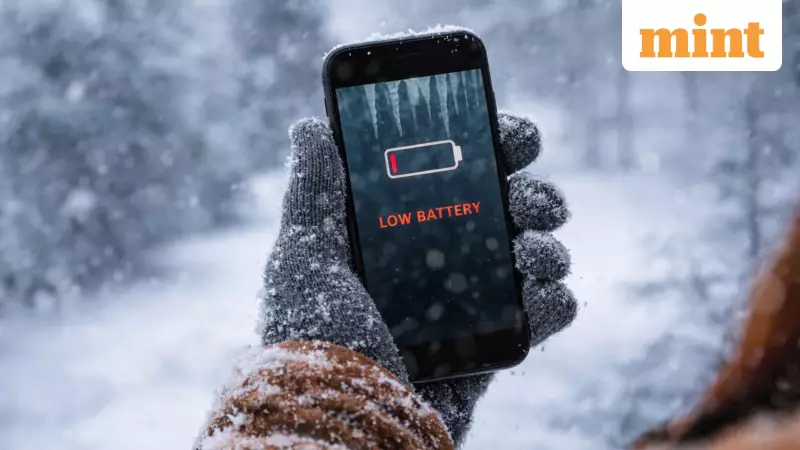
As winter tightens its grip, many smartphone users face a familiar and frustrating problem: a phone that was perfectly reliable just days ago suddenly starts shutting down outdoors, only to magically revive once back indoors. This isn't a sign of a faulty battery, but rather a predictable reaction of modern technology to plummeting temperatures.
The Cold, Hard Science Behind Your Dying Phone
Published on 29 December 2025, 05:34 PM IST, tech journalist Bharat Sharma explains this widespread phenomenon. The core issue lies with the lithium-ion batteries that power virtually all smartphones. These batteries rely on chemical reactions to generate power, and cold temperatures dramatically slow these reactions down.
The result is not that your battery has lost its charge overnight, but that it temporarily cannot deliver that charge effectively. This is why you might see 40% battery indoors, experience a sudden shutdown in the cold, and then find the phone working again with 30% battery once it's warm. The charge was always there; the cold simply locked it away.

Furthermore, cold increases the battery's internal resistance. When you ask the phone to perform a demanding task—like using GPS for navigation, making a video call, or recording a video—the required voltage can dip suddenly. To prevent damage, the phone's safety mechanism triggers an automatic shutdown. It's an act of caution, not drama.
Smart Habits That Help Your Phone Cope
Instead of blaming an old battery or rushing to a charger, effective management focuses on temperature. One of the most powerful yet overlooked tactics is to use your own body heat. Keeping your phone in an inner jacket pocket, close to your body, is far superior to leaving it in an outer pocket or a bag. Even a few degrees of warmth can keep the battery chemistry in a workable range.
Your choice of phone case also matters. A thick, insulating case can help retain heat, while a thin metal case can actually make the problem worse by conducting cold. A simple rule: if the back of your phone feels cold to your touch, the battery inside is certainly cold too.
It's also crucial to adjust your usage habits when outdoors in the cold:
- Reduce screen brightness from the maximum setting.
- Avoid constant use of power-hungry features like GPS and the camera.
- Close unnecessary background apps to reduce overall strain on the struggling battery.
What to Avoid: Common Mistakes That Make It Worse
Certain instinctive reactions can quietly cause more harm. Fast charging a cold battery is a risk, as lithium-ion batteries do not like being charged at low temperatures. Most modern phones will manage this by slowing the charging speed automatically until the device warms up. It's better to let your phone acclimatize to room temperature for a few minutes before plugging it in.
Another counterproductive habit is repeatedly trying to turn the phone back on immediately after it shuts down from the cold. This start-up cycle places additional stress on the already constrained battery. Patience is key.
In essence, winter does not ruin healthy phone batteries; it merely exposes their physical limits. The solution isn't necessarily new hardware. By understanding the science, keeping your device warm, reducing strain during outdoor use, and allowing it to stabilize before charging, you can ensure your phone remains a reliable companion even on the coldest days.






