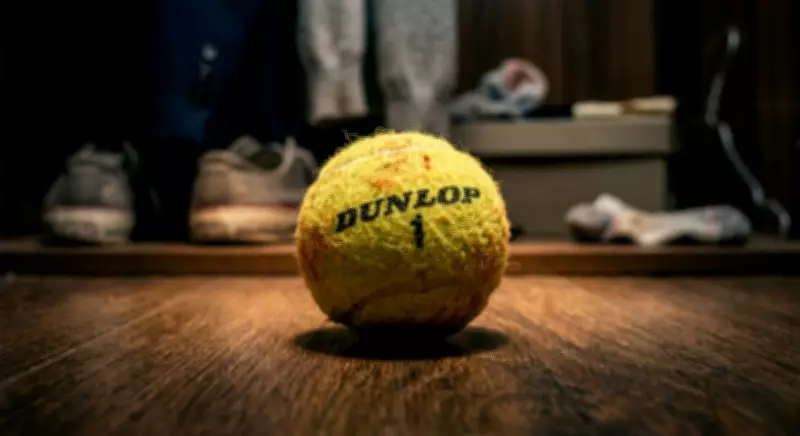
You have triple-checked your carry-on. Portable charger? Packed. AirPods? In. Neck pillow? Absolutely. However, there is one more thing you are probably leaving behind. It sits in the back of your closet right now, forgotten since your last half-hearted attempt at a workout. A tennis ball. Yes, really. Before you scroll past, hear this out, because if you have ever stepped off a five-hour flight to Denver or a red-eye to London feeling like your spine aged twenty years in the process, this is for you.
Why Your Body Hates Flying
Flight seats are not designed for human comfort. They were built to accommodate as many passengers as possible inside a pressurized metal tube. The outcome is that you remain in the same slightly reclined position for hours, with limited legroom, no lumbar support, and cabin pressure that reduces circulation throughout your body. The last point is more critical than most people realize. A study in Applied Ergonomics found that lumbar support in a seat directly affects spinal and pelvic alignment. Thus, the degree of curvature or flatness you build into your seat back can have real, measurable consequences for your posture. Economy class seats, designed for density rather than ergonomics, offer almost none of that support. Sit in one for five hours, and your lower back is not merely sore; it has been fighting against a structurally unsupportive surface the entire time. That stiffness you feel upon landing is not imaginary. Your muscles are simply responding to hours of compression and inactivity. For anyone with a history of back issues, tight hips, or even a desk job that already strains the lower back, flying economy is essentially an extension of the worst parts of your workday, but at 35,000 feet with nowhere to go.
Where Does the Tennis Ball Fit In?
It serves as a massage tool on the go that fits in a side pocket. It is excellent for applying light, targeted pressure to areas that tend to tense up during a flight, such as your thighs, calves, shoulders, and even your lower back. The method is simpler than it sounds. You press the ball into a cluster of muscles and move it slowly to relax the tension. Think of it like a foam roller, but one that actually fits in your bag. There is real science behind why this works. A study titled Effects of self-myofascial release: A systematic review found that self-myofascial release, which involves applying sustained pressure to soft tissue using a tool, can meaningfully reduce muscle tension and improve range of motion. This occurs partly by stimulating mechanoreceptors in the fascia that signal the nervous system to ease up on tightness. If you are concerned about the ball sliding around, roll it into the center of a small hand towel and then wrap the towel around it like a sausage. The towel keeps the ball from slipping.

Where to Use It Specifically
If your lower back is the problem area, and for many people who sit at desks all day, it is, place the ball between the seat and the bottom of your spine, just above the tailbone. You do not need to do anything fancy. It is the gentle, consistent pressure while you are seated that matters. Similarly, you can use the ball against the seat or headrest for shoulder and neck tension. There is a simple neck stretch you can do in your seat: turn your chin toward your armpit and gently press to stretch the opposite side of your neck. No equipment is needed, and you will not look any stranger than the passenger next to you in compression socks and an eye mask.
The Bigger Picture: Flying Does Not Have to Wreck You
The tennis ball is part of a smarter in-flight routine. Walking the aisle, doing seated stretches, and actually drinking water (not just coffee) every hour or so all contribute, but the ball is the easiest and cheapest addition to your carry-on that most people have not tried yet. It costs next to nothing and weighs nothing. So, the next time you step off the jet bridge feeling like a functioning person, that tennis ball deserves the credit.