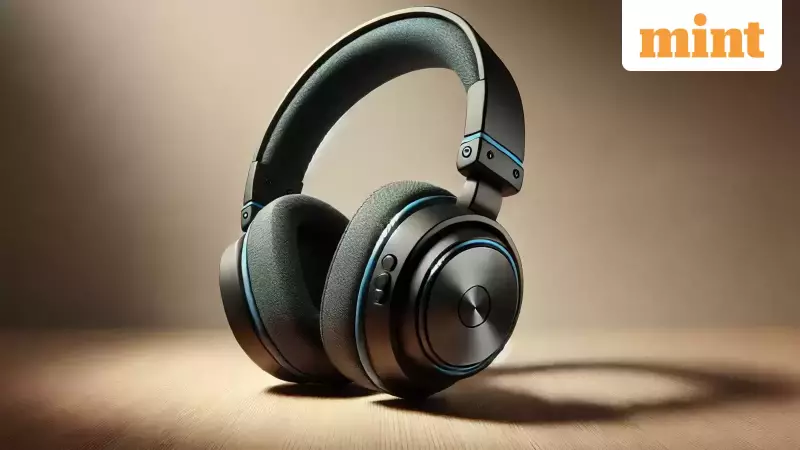
For many music lovers and professionals in India, finding peace and quiet with a pair of over-ear headphones is a top priority. However, a common misconception persists that the silence we crave comes primarily from advanced electronics or software magic like Active Noise Cancellation (ANC). The truth is far more fundamental. The majority of effective sound blocking is a physical and mechanical achievement, rooted in design and fit, long before any circuit is powered on.
The Foundation of Silence: Fit, Seal, and Physical Barriers
Passive noise isolation is the unsung hero of a quiet listening experience. It begins the moment you put the headphones on. Over-ear models are designed to encase the entire ear, creating a physical barrier against external sound. The effectiveness of this barrier hinges almost entirely on the quality of the seal formed by the ear cushions against your head.
This crucial seal is influenced by several tangible factors. Firstly, the thickness and material of the padding are critical. Thin cushions compress too easily, breaking the seal, while memory foam adapts better to individual head shapes than standard foam. The ear cup material also plays a role; synthetic leather often provides superior isolation compared to breathable fabric, though it may retain more heat.

Clamping force is a delicate balancing act. Headphones need to apply gentle, consistent pressure to maintain the seal without causing discomfort. If they are too loose, sound leaks in. If they are too tight, users will constantly readjust them, inadvertently breaking the seal they are trying to create. Personal factors like wearing glasses, hairstyle, and even jaw movement can create tiny gaps, which is why the same pair can feel perfectly isolating to one person and inadequate to another.
When executed correctly, this physical isolation is remarkably effective against mid to high-frequency noises—the chatter of a cafe, keyboard clatter, or office conversations. This makes a well-sealed pair useful immediately, even with the power switched off.
Beyond the Cushions: How Cup Design and Materials Work
The engineering of the ear cup itself is a sophisticated exercise in sound management. It's not just an empty shell; it's a multi-layered system designed to absorb, dampen, and block.
The outer shell's rigidity is vital. Flimsy, cheap plastics can transmit vibrations, allowing noise to travel through the structure itself. Better designs incorporate reinforced plastics or metal elements to prevent this. Inside the cup, damping materials are used to absorb vibrations and reduce internal reflections and echoes, which can otherwise muddy the sound and weaken isolation.
Depth matters too. Shallow ear cups place the driver too close to the ear, reducing the space needed for effective sound absorption and often leading to a weaker seal. Deeper cups offer better control over sound waves and accommodate larger ears more comfortably. Even the placement of vents, which are used for pressure equalization and sound tuning, must be meticulously designed to prevent them from becoming direct portals for noise.
Isolation vs. Cancellation: Partners, Not Replacements
It's easy to confuse passive noise isolation with Active Noise Cancellation (ANC), but they tackle different problems in complementary ways. Isolation is a physical barrier; it blocks sound from ever reaching your eardrum. It excels at mitigating unpredictable, higher-pitched sounds like voices or clattering dishes.
ANC, on the other hand, is an electronic solution. It uses microphones and processors to generate "anti-noise" sound waves that cancel out consistent, low-frequency drones like airplane engines, AC hum, or train rumble. However, ANC cannot work effectively if the physical seal is poor. Too much sound leaks in uncontrollably, overwhelming the cancellation technology and often resulting in an unnatural, pressurized feeling.
The synergy between the two is what defines top-tier headphones. Premium ANC relies on a strong foundation of passive isolation to handle the higher frequencies, allowing it to focus its power on the lower end of the spectrum. Furthermore, a proper seal enhances audio quality, particularly bass response, by preventing low-frequency sound waves from escaping.

Ultimately, comfort is intrinsically linked to long-term isolation. An uncomfortable headphone will be shifted and adjusted, constantly compromising the seal. For the Indian user navigating noisy commutes, open-plan offices, or busy households, understanding this physical foundation of silence is key to choosing a pair that offers true, immersive respite.