The Consumer Electronics Show (CES) 2026 in Las Vegas, which wrapped up earlier this week, was a playground for the next generation of wearable technology. Among the most intriguing reveals were two new pairs of smart glasses from emerging brands, Even Realities and Rokid. As a journalist who has been wearing Meta Ray-Ban smart glasses daily, I was keen to see how these newcomers stack up. After braving long queues at the Las Vegas Convention Center, I spent over 30 minutes testing each device, and the experience was revealing.
Even Realities G2: The Discreet, Camera-Free Companion
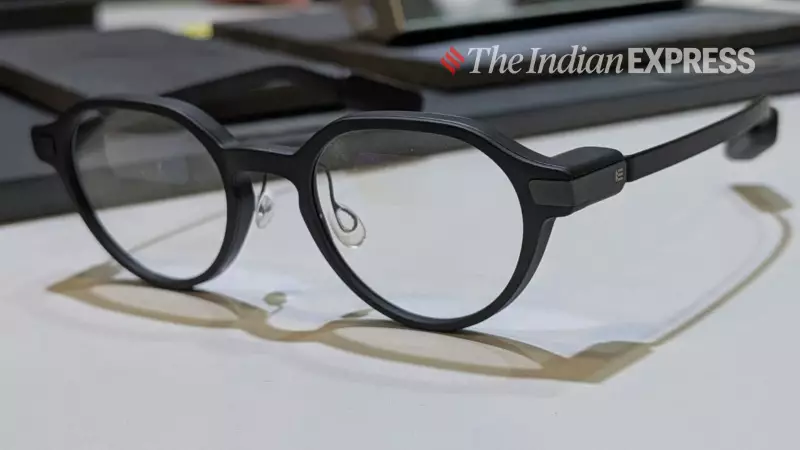
My first stop was the Even Realities booth to try the Even G2 display glasses. The moment I put them on, I was struck by how unassuming they felt. They resembled ordinary, oval-shaped spectacles with a traditional, almost minimalist design. The lightweight frames, crafted from titanium and magnesium alloy, felt almost imperceptible. The design subtly echoed the iconic, rimless glasses made famous by Steve Jobs—a fitting inspiration, given that Even Realities' CEO, Will Wang, is an Apple Watch team alumnus.
The only hints of their smart capabilities are the pill-shaped modules at the end of each stem and a subtle waveform display embedded in one lens. Crucially, the G2 takes a bold design stance by omitting a camera and speakers entirely. This focus on privacy and core utility is a direct response to surveillance concerns often associated with face-worn cameras.

The heart of the experience is the Even HAO 2.0 (Holistic Adaptive Optics) display. It projects a sharp, monochrome green, dual-display image that feels larger and offers more depth than some competitors. All processing is handled by a paired smartphone, which keeps the glasses light and efficient. Control is managed via touch-sensitive pads on the stems or an optional $249 smart ring.
Focused Features for Everyday Use
The G2 doesn't try to do everything. Instead, it excels in a few key areas displayed in a simple menu: Conversate, Translate, Teleprompt, and Navigate.
Conversate acts as a live assistant, listening to conversations and highlighting interesting words or phrases with definitions on-screen. The Translate feature supports 29 languages, displaying real-time subtitles—a boon for travelers. The Teleprompter mode scrolls notes, and the Navigation provides visual turn-by-turn cues, ideal for walking tours.
The most impressive spec is the battery life, touted to last up to two days on a single charge—a rarity in the category. Priced at $599, the G2 is a premium, fashion-forward device that champions discretion and longevity over a sprawling feature set.
Rokid Glasses: The Feature-Packed Contender
Later, I navigated to the bustling Rokid booth. The Rokid Glasses have a more familiar aesthetic, reminiscent of the Meta Ray-Bans, with glossy black plastic and a camera lens in the upper-left corner. They were comfortable and came with prescription inserts, a thoughtful touch for demo purposes.
Like the G2, they feature a dual micro-LED display that projects information in a distinctive Matrix-style green. The image was sharp, bright, and stable. The menu is basic, and the glasses work with a companion smartphone app.
AI and Translation at the Forefront
The demo highlighted powerful translation capabilities, accurately converting spoken English to Hindi text on the display. The teleprompter function was equally practical. A voice assistant, activated by saying "Hi, Rokid," allows users to interact with ChatGPT or Qwen AI models. The built-in camera can, for instance, read a menu in a foreign language.
Rokid's philosophy aligns with Even Realities: creating smart glasses for all-day wear that handle specific tasks efficiently, reducing phone dependency. However, by including a camera, Rokid offers a broader, if more familiar, set of features.
The Verdict: A Niche Taking Shape
My hands-on time with both the Even G2 and Rokid Glasses at CES 2026 confirmed that the smart glasses arena is heating up beyond the big players. Both devices carve a unique space between display-less models and full-color AR headsets.

They share core strengths: a lightweight, everyday design, a focus on AI-powered utilities like live translation, and that distinctive monochrome display. The Even G2's camera-free, two-day battery approach is a compelling privacy-centric proposition, while Rokid offers a more feature-inclusive package.
However, with price tags in the higher range, they remain a niche purchase for early adopters. Smart glasses today remind me of the feature phone era—excellent at specific tasks but not yet the all-in-one solution. Brands like Even Realities and Rokid are wisely honing in on the features that make the most sense on your face, paving a thoughtful, if gradual, path toward mainstream adoption.