

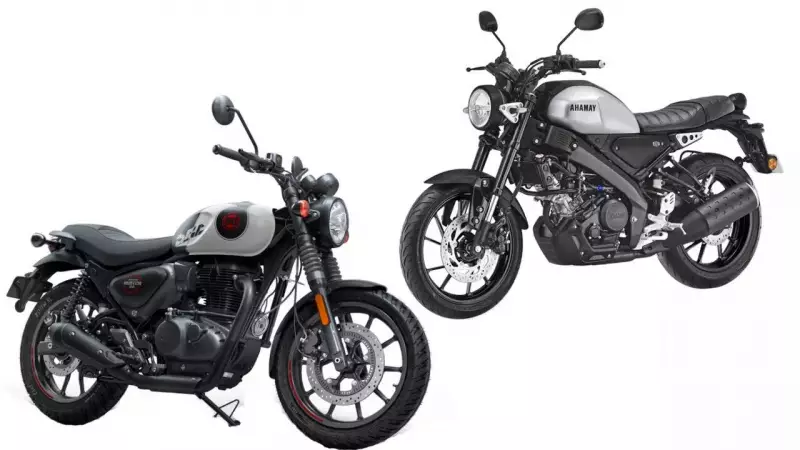
Royal Enfield Hunter 350 vs Yamaha XSR 155: A Clash of Retro Titans in India
The retro-style motorcycle segment in India has witnessed remarkable growth over the past few years, evolving into a vibrant and competitive market. Today, enthusiasts and buyers are presented with a diverse array of options that blend classic aesthetics with modern engineering. Among the standout contenders in this space are the Royal Enfield Hunter 350 and the recently launched Yamaha XSR 155. While both motorcycles exude a nostalgic, retro-inspired design, they diverge significantly in terms of technical specifications, performance characteristics, and overall riding experience. Their overlapping price brackets, typically ranging from Rs 1.5 lakh to Rs 2 lakh, position them as natural rivals for consumers seeking a blend of style and substance in this popular category.
Engine Specifications: Power and Performance Compared
The Royal Enfield Hunter 350 is powered by the brand's renowned 349 cc air-oil-cooled single-cylinder engine. This robust powerplant delivers approximately 20.2 horsepower and a substantial 27 Nm of torque, providing a torquey and relaxed riding feel that is characteristic of Royal Enfield motorcycles. It is coupled with a 5-speed gearbox that features an assist and slip clutch, enhancing smooth gear shifts and reducing rider fatigue.
In contrast, the Yamaha XSR 155 employs a more compact 155 cc liquid-cooled single-cylinder motor. This engine generates around 18.4 horsepower and a notably lower torque output of 14.2 Nm, emphasizing agility and efficiency over raw power. The Yamaha is equipped with a 6-speed gearbox and also benefits from an assist and slipper clutch, offering precise gear changes and improved control during aggressive downshifts.

Dimensions and Physical Attributes: Weight, Height, and Capacity
When it comes to dimensions, these two motorcycles present distinct profiles. The Yamaha XSR 155 features a seat height of approximately 810 mm, which may suit taller riders or those preferring a more upright stance. On the other hand, the Royal Enfield Hunter 350 offers a lower seat height of about 790 mm, making it more accessible for shorter riders and enhancing stability at stops.
Weight is another critical differentiator. The Yamaha XSR 155 is significantly lighter, tipping the scales at around 137 kg, which contributes to its nimble handling and ease of maneuverability. Conversely, the Royal Enfield Hunter 350 weighs close to 181 kg, lending it a solid, planted feel on the road but potentially affecting agility in tight spaces.
Fuel tank capacity also varies between the models. The Yamaha XSR 155 is equipped with a 10-litre fuel tank, while the Royal Enfield Hunter 350 boasts a larger 13-litre unit, offering extended range between refuels and appealing to riders who prioritize long-distance touring.
Features and Technology: Modern Amenities Explored
On the features front, the Yamaha XSR 155 comes loaded with contemporary amenities. It includes a fully digital LCD instrument cluster that provides comprehensive ride data, traction control for enhanced safety in varying conditions, Bluetooth connectivity for smartphone integration, LED lighting for improved visibility, and a gear position indicator for added convenience.
The Royal Enfield Hunter 350 adopts a more minimalist approach. It features a semi-digital instrument cluster that combines analog and digital elements, LED lighting for modern illumination, USB Type-C charging ports on select variants for device connectivity, and Bluetooth-based navigation on higher trims, offering turn-by-turn directions directly on the display.
Suspension and Braking Systems: Handling and Safety Details
The Royal Enfield Hunter 350 utilizes telescopic front forks and twin rear shock absorbers with preload adjustment, providing a comfortable and customizable ride suited for Indian road conditions. Braking is handled by larger discs, with a 300 mm front disc and a 270 mm rear disc, complemented by dual-channel ABS as standard for reliable stopping power and safety.

The Yamaha XSR 155, in comparison, features a more advanced suspension setup. It is equipped with USD (Upside Down) front forks and a rear monoshock, offering superior damping and handling precision. Braking duties are managed by a 282 mm front disc and a 220 mm rear disc, also with dual-channel ABS standard, ensuring confident braking performance across various scenarios.
Pricing and Value Proposition: Cost Analysis in India
In terms of pricing, the Yamaha XSR 155 is positioned at around Rs 1.49 lakh, ex-showroom, making it a premium offering in its segment. The Royal Enfield Hunter 350, following recent GST-related adjustments, has become more competitively priced. It now starts at approximately Rs 1.37 lakh and can go up to nearly Rs 1.62 lakh, ex-showroom, depending on the variant and color options chosen. This pricing strategy allows the Hunter 350 to appeal to a broader audience, from budget-conscious buyers to those seeking higher-spec models.
This comparison highlights how the Royal Enfield Hunter 350 and Yamaha XSR 155 cater to different preferences within India's retro motorcycle market. Whether prioritizing torque and presence or agility and technology, buyers have compelling choices that reflect the segment's dynamic growth and innovation.





