Nvidia Introduces DLSS 5 with Advanced AI Rendering, Faces Mixed Reactions from Gaming Community
This week, Nvidia launched the next generation of its Deep Learning Super Sampling (DLSS) platform, DLSS 5, marking a significant leap in AI-powered upscaling technology. The announcement has generated a polarized response, with some gamers embracing the innovation while others label it a potential 'disaster' for game authenticity.
What DLSS 5 Brings to the Table: Real-Time Neural Rendering
DLSS 5 introduces a groundbreaking 'real-time neural rendering model' that leverages artificial intelligence to enhance game visuals by infusing them with photorealistic lighting and materials. In simpler terms, the AI actively repaints in-game scenes in real-time, transforming them into crisp and natural-looking renders. This represents a major evolution from previous DLSS versions, which primarily focused on upscaling lower-resolution images to boost performance with minimal visual compromise.
According to Nvidia, the new AI model analyzes each frame individually and applies its own interpretation of complex elements such as lighting, skin textures, hair details, fabric sheen, and environmental conditions. The company emphasizes that the model is 'trained end-to-end to understand complex scene semantics,' enabling it to handle advanced effects like subsurface scattering on skin and dynamic light interactions. Essentially, DLSS 5 makes creative decisions about how scenes and characters should appear, aiming for heightened realism.

Gamer Backlash: Concerns Over Loss of Authenticity and 'Instagram Filters'
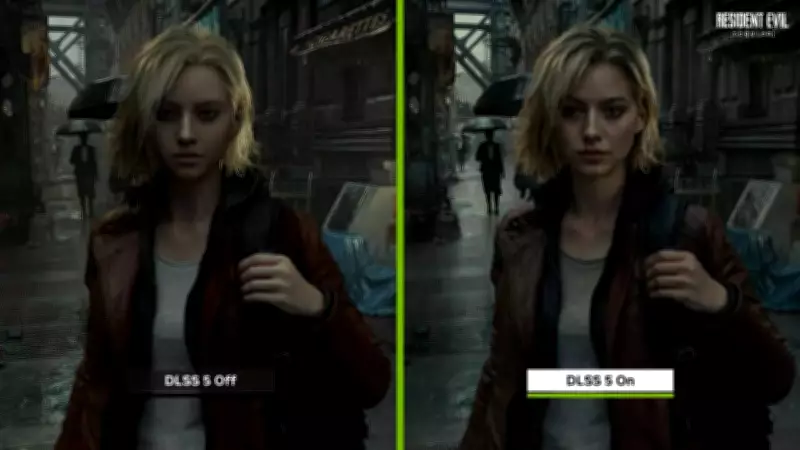
Despite the technological promise, practical implementation has sparked controversy. A side-by-side image from Resident Evil Requiem, showcased by Nvidia, drew significant backlash. Gamers argue that the protagonist, Grace Ashcroft, appears noticeably altered, with changes to her cheekbones, washed-out hair color, and different lip appearance, deviating from the developers' original intent.
Beyond character models, the background visuals have also been modified in ways that extend beyond improved lighting, leading some to criticize the effects as overly artificial. On social media platforms like YouTube, Reddit, and X (formerly Twitter), users have expressed dissatisfaction, with comments ranging from comparisons to 'Instagram filters' to claims that games are shifting from 'raytracing to sloptracing.'
The Performance Dilemma: Balancing Visuals and Frame Rates
Traditionally, DLSS has been widely adopted by gamers for its ability to deliver substantial performance boosts with little downside, making it a default setting for many. However, DLSS 5 presents a new challenge: turning it off may result in lower frame rates, while keeping it on requires accepting AI-altered visuals that some find inauthentic. This dilemma has fueled fears within the gaming community about compromising on either performance or artistic integrity.
Nvidia has confirmed that DLSS 5 is set to arrive this Fall, leaving gamers to anticipate how these changes will impact their gaming experiences. As the debate continues, the launch highlights broader questions about the role of AI in creative industries and its potential to reshape visual storytelling in games.