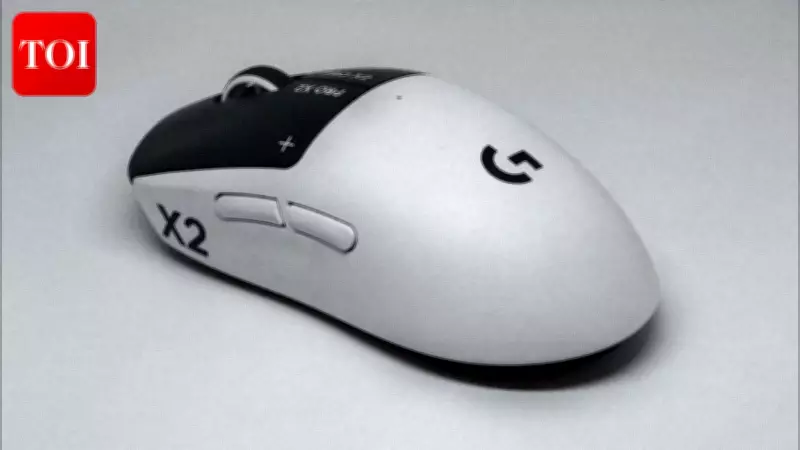
The Logitech G PRO X2 SUPERSTRIKE eliminates the traditional click. Instead, it delivers a press, a haptic pulse, and an electrical signal to the PC. The mouse stitches these three events together so convincingly that for hours, you don't notice they are separate. Then you do. Once you feel the seams, the click stops being the small, obvious thing it always was.
Inside the Mouse: Haptic Inductive Trigger System
Inside each main button resides a small magnet, a copper coil, an inductive sensor monitoring the magnet's movement, and a haptic motor that produces the click your finger expects. This system, called HITS (Haptic Inductive Trigger System), debuts in the X2, making it the first mouse to ship with this technology. Priced at Rs 23,995 in India, it targets enthusiasts who already understand rapid trigger and have opinions on reset distances. Here is a week with the X2, chronicled in the order it happened.
Day One: Your Finger Argues with the Mouse
You keep mashing the button because that is what fingers do, but the X2 fires the click well before you finish pressing. The default actuation is cautious, and your first instinct is to think the mouse is broken. It is not. You are. The press the X2 demands is shorter, lighter, and more deliberate than the one your hand has rehearsed for twenty years. By the second day, I set the left button to level two on a ten-step actuation slider, the right to five, haptics to three of five, and rapid trigger on for the left only. By the fourth day, I stopped fiddling. Around the third evening, the X2 transitions from feeling like a tool you picked up to one that has adjusted to you. This small but specific shift is the entire experience the marketing tries to describe but cannot quite reach.

Haptic Feedback: The Clever Half
The haptic feedback is the smarter part of the trick. On low, it is a precise tick. On high, it is a chunky thump your brain accepts as a click within seconds. Turning haptics off entirely in software makes the mouse faintly horrible. You fire shots into the void with no idea your finger has done anything. The motor is not garnish; it is how the mouse talks back. One real annoyance: HITS settings reside in G HUB, not on the mouse. Moving to a different PC without G HUB installed causes the X2 to revert to defaults. For a Rs 24K mouse aimed at LAN travelers and event-goers, this is a small but baffling oversight.
Counter-Strike Performance
Logitech's headline number is up to 30 milliseconds of click latency reduction. That figure does most of the marketing's heavy lifting, and I entered testing prepared to be cynical. I am not going to be cynical. The effect is real and palpable. After a week of CS2, Battlefield 6, and Valorant ranked games, the cleanest description is this: every shot leaves the barrel a frame earlier than your nervous system expects. Corner duels resolve in your favor at a noticeably higher rate. AK single-taps land cleaner. The first shot in a fight—the shot that decides most fights—comes out before you finish thinking about firing it. It is not magic. It will not turn a casual player into a pro, which I can say with the authority of someone whose CS2 rank politely declines discussion. It does not fix your aim, positioning, map sense, or any actual reasons you lose. What it does is shave a small, real lag from the only part of the chain Logitech can reach: the moment between your finger committing and the game receiving. In tactical shooters where one shot wins the round, that gap matters. In tracking-heavy games like Apex Legends or Overwatch, where you hold a click and aim smoothly, the X2 does almost nothing. Logitech knows this; the marketing leans on Counter-Strike for a reason.

Everyday Use Surprise
Outside games, the X2 turns out to be unexpectedly graceful for everyday work. The clicks are nearly silent at low haptic settings. The shallow actuation, which I expected would cause misfired emails or accidental retweets, produced no such chaos in a week of writing and editing. The press is softer on the finger across a long day. No spring to fight, no return travel to wait for, no haptic event the mouse has not agreed in advance to deliver. The rest of the mouse keeps quiet: a gently sloped, almost-symmetrical shape that suits palm and claw grips and tolerates most fingertip use. Weight is 61 grams. The HERO 2 sensor reaches 44,000 DPI nobody uses, with 8000Hz wireless polling that mostly matters to people who notice 1ms differences. No Bluetooth, no DPI button, no RGB. Battery life is rated at 90 hours but comes closer to 35-40 once you crank the haptics and polling rate, which you will. Black buttons, white shell, crash-test markings across the clicks: the Lunar Eclipse colour looks better in hand than on a product page. The UHMWPE feet are noticeably slow on a fabric pad, and you will probably swap them within a month.
The Price Question
By the end of the week, the question stops being about the mouse. Rs 23,995 is the number you eventually have to sit with. A mouse at this price needs to make a clear case for itself or become very hard to recommend. The case the X2 makes is narrow but unusually well-built. If you play competitive shooters seriously enough that 30 milliseconds of click latency would have changed how some fights ended, this is the most interesting peripheral on sale right now. The technology is real, the customization is meaningful, and after a week with the X2, going back to a normal mouse leaves the click feeling late, like the signal is catching up to your finger instead of leaving with it. If that is not you, the case dissolves quickly. What you are paying the premium for is the inductive switches, and the switches only earn their cost back in games where rapid clicks decide outcomes. For everyone else, the X2 is a tool whose best feature has nothing to do with how they actually play. Cheaper options will get you most of the way to the same daily experience without asking you to think about it.
Final Thoughts
What sticks with me, a week in, is the move underneath the engineering. Logitech has taken the mouse click—an event that has been a small mechanical thump since the 1960s—and broken it into pieces a software slider can rearrange. Three things that used to be one. The technology will land in cheaper mice in a year or two, and when it does, what counts as a normal mouse click will quietly change. For now, this is the only mouse selling the idea, and it sells it convincingly enough that the people it was built for should stop reading and go buy one. Our rating: 4/5