

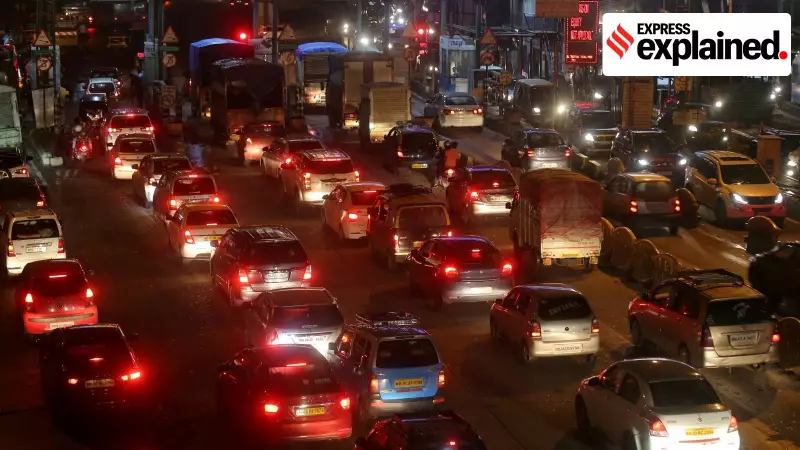
India's Ambitious Plan: Making Cars Talk to Prevent Road Accident Deaths
In a significant move to address India's alarming road safety record, the government is preparing to launch Vehicle-to-Vehicle (V2V) communication technology. This innovative wireless system will enable vehicles to "talk" to each other, sharing critical real-time information that could prevent collisions and save thousands of lives annually.
The Urgent Need: India's Disturbing Road Safety Statistics
India holds the unfortunate distinction of ranking first globally in total road accident fatalities, with numbers far exceeding those of other major nations. China accounts for just 36% of India's road deaths, while the United States represents only 25% of India's staggering fatality figures. This grim reality has prompted urgent action from transportation authorities seeking technological solutions to this persistent public safety crisis.
How V2V Communication Technology Works
Vehicle-to-Vehicle communication represents a wireless technological advancement that allows vehicles to exchange real-time data including speed, location, acceleration patterns, and braking status. As part of the broader Vehicle-to-Everything (V2X) framework within the Intelligent Transport System, V2V functions similarly to aviation sector technology where aircraft broadcast their position, speed, and altitude to nearby aircraft and ground stations.

According to Ministry of Road Transport and Highways (MoRTH) officials, the system will involve installing On Board Units (OBUs) in vehicles at an estimated cost of Rs 5,000 to Rs 7,000 per unit. These devices will enable wireless information exchange between vehicles within approximately 300 meters, alerting drivers about:
- Black spots and hazardous road sections
- Stationary obstacles and parked vehicles
- Adverse weather conditions like fog
- Sudden braking by vehicles ahead
- Other potential collision threats
MoRTH Secretary V Umashankar emphasized the system's potential impact: "Many times, trucks and cars are parked on the roadside, and speeding vehicles collide with them, which leads to casualties. We will be able to reduce such accidents, since OBU will automatically issue the warning."
Government Initiatives and Implementation Timeline
The development gained momentum during a January 22 parliamentary consultative committee meeting in New Delhi, where Union Minister Nitin Gadkari announced that the Department of Telecommunications has allocated 30 GHz radio frequency for V2V communication systems. While no specific rollout date has been announced, the technology represents a key initiative in MoRTH's road safety program for the year.
The Ministry is currently preparing technical standards in collaboration with original equipment manufacturers (OEMs), with a joint task force established with the telecom department. Initial implementation will focus on new vehicles, followed by retrofitting older vehicles. The Department of Telecommunications will provide free spectrum under the National Frequency Allocation Plan, enabling OEMs to incorporate the technology without spectrum costs.
Global Context and Adoption Patterns
The United States leads in V2V research and implementation with strong regulatory frameworks, while European nations including Germany, France, and the United Kingdom are incorporating the technology into new vehicles and smart city projects. Specific car models like the Volkswagen Golf 8 and various Cadillac models in the US already feature V2V safety systems.
China represents another major adopter, and Japan has launched ITS connect programs providing real-time traffic signal data, blind spot warnings, and emergency vehicle alerts through V2V systems. Like India, countries including the UAE, Saudi Arabia, Brazil, and Mexico are in early pilot stages of V2V implementation.
Challenges and Considerations
Despite its promising potential, V2V technology faces several implementation challenges:

- Technical limitations: The allocated frequency band might not support all vehicles simultaneously, potentially leading to information miscommunication that could ironically cause accidents.
- Privacy concerns: The system will collect substantial data about vehicles, locations, and driver information, creating potential misuse risks that require robust government regulations.
- Cybersecurity threats: The system's vulnerability to cyber attacks represents a significant concern, as malicious control could create major regional security threats.
- Implementation complexity: Coordinating between multiple government departments, manufacturers, and vehicle owners presents logistical challenges.
As India moves forward with this ambitious road safety initiative, balancing technological innovation with practical implementation considerations will be crucial. The successful deployment of V2V communication systems could mark a transformative moment in India's efforts to reduce its disproportionately high road accident fatalities and create safer transportation infrastructure for all road users.





