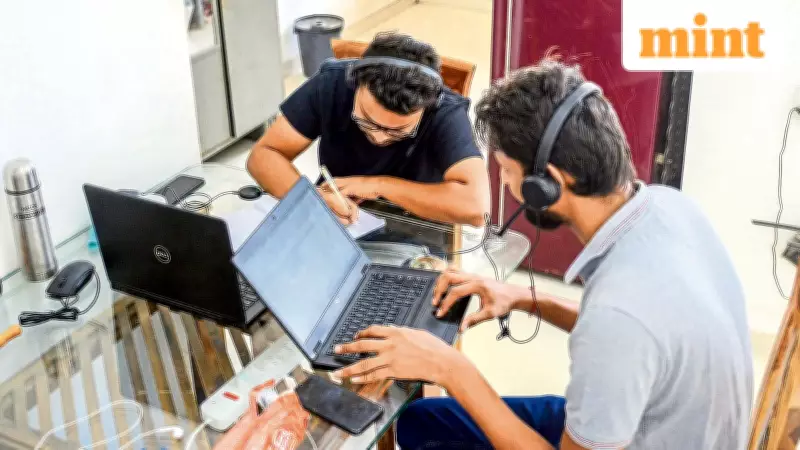
India's Personal Computer Market Achieves Historic Sales Milestone in 2025
Computer manufacturers achieved a remarkable milestone in India during 2025, selling a record-breaking 15.9 million personal computers, according to comprehensive data from Counterpoint and other leading market research firms. This impressive figure includes 11.4 million laptops, marking a significant recovery and growth in the PC segment that had previously peaked during the pandemic years.
Pandemic-Era Upgrades Drive Unprecedented Demand
The surge in computer sales represents a substantial increase over previous years, surpassing the previous high achieved during the COVID-19 pandemic when many Indians purchased devices to facilitate remote work and online education. IDC data compiled by industry analysts reveals that total PC sales in India spiked to 14.8 million devices in 2021, up from 10.4 million in 2020 and 11 million in 2019, which was India's best year for PC sales before the pandemic.
While PC sales remained largely flat in 2022 and experienced a 7% dip in 2023, the market demonstrated resilience with a 4% recovery in 2024 before achieving this historic high in 2025. This growth trajectory highlights the evolving consumer behavior and technological needs in post-pandemic India.

Contrasting Trends in Consumer Electronics
The remarkable surge in laptop sales presents a stark contrast to the muted demand for smartphones, which remains India's largest consumer electronics category. Smartphone sales have consistently remained below their COVID-induced peak of more than 160 million units in 2021, with 2025 figures showing approximately 154 million units sold according to market researcher Omdia.
This diverging trend is further evidenced in the financial performance of India's top electronics manufacturers. Syrma SGS, which assembles laptops for multiple brands in India, reported a healthy 10% revenue growth, while Dixon Technologies, which derives nearly 70% of its revenue from mobile phone assembly, experienced a significant 28% revenue decline.
Market Dynamics and Consumer Behavior Shift
Navkendar Singh, associate vice-president at International Data Corporation (IDC) India, provided crucial insights into this market transformation. "If you look at the pandemic buying craze, there were multiple market shortages due to the supply chain being hit, and people bought whatever laptops they could buy within tight budgets. That was a very different economy," Singh explained. "Now, almost five years since then, buyers are looking to upgrade to better laptops at higher price points, which is fuelling a strong market for PCs in India."
Singh further elaborated on the market's potential, noting that "there is ample room for laptop sales to grow as it has a net base of about 250 million users in the country. With this level of penetration, there is definitely enough room for organic buyers, in addition to those replacing their hastily purchased devices from five years ago."
Diverse Demand Drivers and Market Leadership
Anshika Jain, senior research analyst at Counterpoint, identified multiple segments contributing to the fresh demand for laptops. "The fresh demand for laptops has come from segments like students, gaming users, content creators and small businesses that are becoming more digitally dependent," Jain stated. "Enterprise and government digitization initiatives have also played an important role in boosting demand. Overall, the market growth has been healthy, and supported by both cyclical replacement and new demand drivers."
Laptops typically account for approximately 75% of PC sales in India, with American technology giant HP maintaining its position as India's biggest laptop seller with a market share ranging between 27-29%. Lenovo follows in second place with an 18% market share in the September quarter of 2025, trailed by US company Dell and Taiwanese manufacturers Acer and Asus.

Challenges and Cautions for Future Growth
Despite the current celebratory mood among PC companies, industry experts have highlighted several challenges that could potentially impact future sales. Rising costs of memory chips have already increased laptop prices by 10-20%, according to Singh, with additional expected hikes potentially dampening sales in 2026.
Jain added a note of caution regarding pricing pressures: "Average selling prices in India could increase by 8% this year. Entry-level buyers may delay purchases or opt for lower-spec models, while premium and professional segments such as gamers, creators and enterprise users are less price-sensitive and will continue to drive demand."
The AI PC Phenomenon: Reality Versus Marketing
Singh also provided critical perspective on the much-discussed 'AI PC boom', suggesting that while sales numbers are climbing, customers aren't specifically seeking AI features when making purchases. Instead, because AI chips have become standard hardware in mid-to-high-end laptops, every purchase at that price point automatically qualifies as an AI PC sale, regardless of whether the buyer prioritizes AI capabilities.
"It's a bit like saying 5G smartphone sales are growing in a market where all smartphones have 5G connectivity," Singh analogized, highlighting the marketing versus reality gap in the current PC landscape.
The record-breaking PC sales in 2025 demonstrate India's evolving digital landscape, where pandemic-era necessities have transformed into opportunities for technological advancement and market growth, even as the smartphone segment continues to face challenges in regaining its previous momentum.