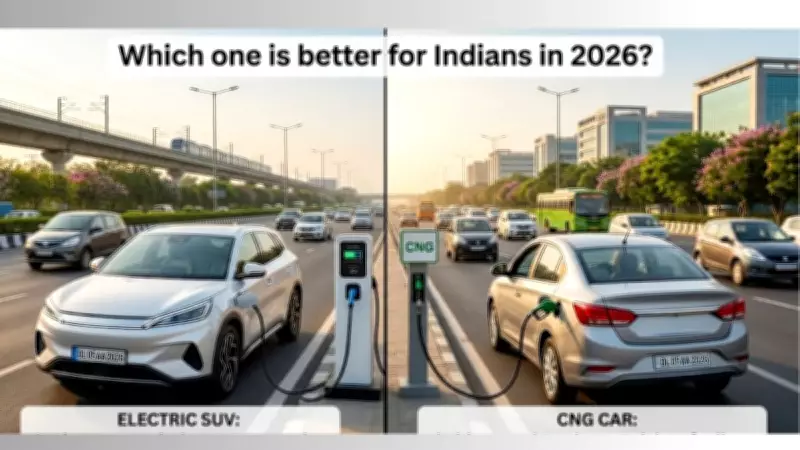
The Indian automotive market is evolving rapidly, with buyers increasingly weighing options between electric vehicles (EVs) and CNG cars. As we approach 2026, both fuel types present unique advantages and challenges for the Indian consumer. This article provides a comprehensive comparison to help you decide which powertrain makes more sense for your needs.
Cost of Ownership
Electric cars have a higher upfront cost compared to CNG vehicles. However, running costs are significantly lower for EVs. Electricity costs about Rs 1-2 per km for home charging, while CNG costs around Rs 3-4 per km. Maintenance is also cheaper for EVs due to fewer moving parts. Over a 5-year period, an EV can save up to Rs 1.5 lakh in fuel and maintenance costs compared to a CNG car.
Range and Refueling Infrastructure
CNG cars offer a range of 250-400 km on a full tank, with a refueling network of over 5,000 stations across India. EVs, on the other hand, have a range of 200-500 km per charge, but charging infrastructure is still developing. As of 2026, India has about 10,000 public charging stations, with major cities and highways well-covered. However, charging time remains a concern: fast chargers take 30-60 minutes for 80% charge, while home charging takes 6-8 hours.

Environmental Impact
Both options are cleaner than petrol or diesel. CNG reduces CO2 emissions by 25% compared to petrol, while EVs produce zero tailpipe emissions. However, the environmental benefit of EVs depends on the electricity source. India's grid still relies heavily on coal, but renewable energy share is increasing. CNG vehicles also emit small amounts of methane, a potent greenhouse gas.
Government Incentives
The Indian government offers FAME II subsidies for EVs, reducing upfront costs by up to Rs 1.5 lakh for cars. Some states also provide road tax exemptions and registration fee waivers. CNG vehicles benefit from lower GST (5% vs 28% for petrol cars) and priority in some cities for commercial use.
Practicality for Indian Conditions
CNG cars are more practical for long-distance travel due to faster refueling and wider network. They also have a lower initial investment. EVs are ideal for city commuters with access to home charging, offering lower running costs and a smoother driving experience. For buyers in apartments without dedicated parking, charging remains a challenge.
Resale Value
CNG cars have good resale value due to established demand. EV resale value is still uncertain due to battery degradation concerns and rapid technology evolution. However, as EV adoption grows, resale markets are stabilizing.
Conclusion
For Indian buyers in 2026, the choice between electric and CNG depends on individual usage patterns. If you have access to home charging and mostly drive within the city, an EV offers lower running costs and environmental benefits. For those who frequently travel long distances or lack charging infrastructure, a CNG car provides practicality and lower upfront cost. Both options are better than petrol or diesel, and the decision ultimately hinges on your specific needs and budget.