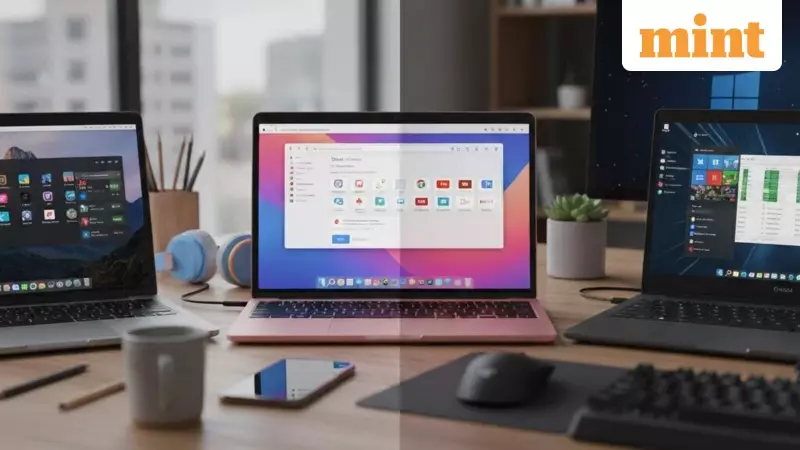
Choosing the perfect laptop in India's crowded market feels like navigating a maze. With countless options across price segments, each promising exceptional performance, buyers often find themselves confused. The burning question many Indian consumers face today: Can Chromebooks genuinely compete with established Windows laptops and premium MacBooks?
The Rising Popularity of Chromebooks
Chromebooks have carved a significant niche in the global computing landscape, and their appeal stems from three core strengths: simplicity, security, and cloud integration. These devices run on ChromeOS, a streamlined operating system that boots rapidly, operates efficiently, and maintains strong resistance to malware threats.
For students, teachers, and professionals deeply embedded in Google's ecosystem, Chromebooks deliver a seamless experience. They feature automatic background updates, native integration with Google Docs and Drive, and quick recovery mechanisms when issues arise. The price advantage cannot be overlooked either—entry-level Chromebooks frequently cost significantly less than comparable Windows and macOS devices, making them particularly attractive for educational institutions and basic computing tasks.

Industry reports and Google's internal data confirm that Chromebooks now lead sales in education sectors across North America and European markets. Their modest hardware requirements ensure that even affordable models remain responsive during daily use. Battery performance represents another consistent advantage, with numerous models capable of lasting throughout an entire day without requiring recharge.
Where Chromebooks Fall Short
Despite their growing popularity, Chromebooks aren't universal solutions. Professionals in graphic design, video editing, and gaming quickly encounter ChromeOS limitations. Resource-intensive applications like Adobe Creative Suite, high-performance games, and specialized development tools either don't run natively or require cumbersome workarounds through cloud streaming services.
Windows maintains its dominance for users who need specific software applications or broad peripheral compatibility. Microsoft's platform supports legacy devices, runs virtually every software title available, and handles demanding creative and gaming workloads effectively. Meanwhile, macOS excels in creative disciplines, offering polished design and tightly integrated hardware-software experiences. Both platforms deliver greater raw power, visual refinement, and out-of-the-box flexibility, particularly for users operating outside Google's ecosystem.
Making the Right Choice for Indian Users
So who should seriously consider purchasing a Chromebook in India? If your computing needs primarily revolve around web browsing, email management, spreadsheet work, and collaborative document editing, Chromebooks present compelling advantages. They promise reduced maintenance hassles, simpler security management, and overall computing simplicity.
However, if your requirements include demanding creative projects, gaming, or specialized business tools, Windows or macOS remains the superior choice. Chromebooks compete effectively in mainstream scenarios like remote work, education, and communication, but they still play a secondary role for high-performance professional applications.
The final decision ultimately depends on how much of your digital life can comfortably exist online and whether you're prepared to fully embrace cloud-centric computing. As the Indian laptop market continues to evolve, understanding these fundamental differences becomes crucial for making informed purchasing decisions that align with both your needs and budget.