Apple Considers Intel for Chip Production, Breaking Long-Standing TSMC Alliance
In a significant strategic shift, Apple is exploring chip suppliers beyond Taiwan Semiconductor Manufacturing Co. (TSMC) for the first time since 2014. This move could potentially end one of the most crucial partnerships in the consumer electronics industry, marking a dramatic reversal for the tech giant.
Evaluating Intel for Lower-End Processors
According to reports from The Wall Street Journal, the iPhone maker is currently evaluating whether companies like Intel could manufacture some of its lower-end processors. This potential collaboration might commence as early as 2028, utilizing Intel's advanced 14A process technology. For nearly a decade, Apple has relied exclusively on TSMC, starting with the iPhone 6, which enabled the company to leap ahead of competitors with cutting-edge chips that delivered superior performance and extended battery life.
TSMC's Shift Towards AI and Nvidia's Dominance
The landscape at TSMC has undergone a substantial transformation. Nvidia has reportedly overtaken Apple as TSMC's largest customer, securing a more significant share of advanced node capacity dedicated to artificial intelligence chips. TSMC's high-performance computing segment, which is dominated by AI processors for Nvidia and various cloud giants, now accounts for an impressive 58% of the company's revenue. This figure far surpasses the smartphone business that Apple had anchored for many years.

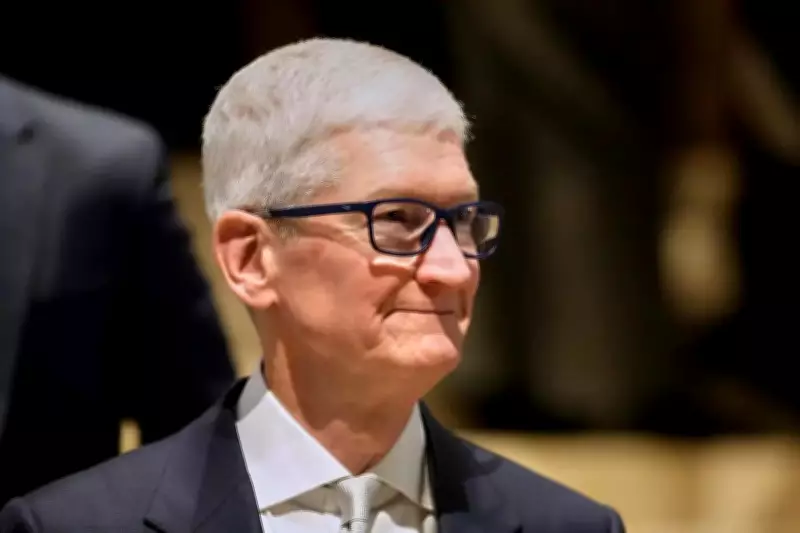
During Apple's Q1 earnings call, CEO Tim Cook acknowledged the ongoing supply constraints. Despite achieving record revenue of $143.8 billion and witnessing a 23% growth in iPhone sales, Apple finds itself in what Cook described as "supply chase mode" with lean inventory levels. The primary constraint revolves around access to 3-nanometer chip production. Cook noted, "We're seeing less flexibility in the supply chain than normal," and declined to predict when the situation might ease.
Changing Dynamics and Priority for AI Customers
The power balance within this partnership has clearly shifted. When TSMC CEO C.C. Wei visited Apple's headquarters in Cupertino last August, he delivered some unwelcome news. According to industry reports, Apple was informed that it would need to accept the largest price increase in years and could no longer count on guaranteed production capacity.
Wei's reasoning behind prioritizing AI customers is straightforward. He recently explained to investors, "They show me the evidence that AI really helps their business. They are very rich." Each GPU from clients like Nvidia occupies more space per wafer compared to smartphone chips, and these companies are willing to secure supply through upfront payments and multi-year contracts.
While Apple still orders chips across approximately a dozen TSMC fabrication plants, giving it a broader manufacturing footprint than Nvidia, the dynamics have changed. When it comes to the most advanced nodes where competition is fiercest, Apple is no longer in a position to dictate terms. The company now finds itself needing to actively compete for capacity rather than setting the conditions.
Additional Supply Chain Challenges with Memory Suppliers
Beyond the challenges with TSMC, Apple is facing additional supply chain headaches with memory suppliers. Companies like Samsung and SK Hynix have gained increased leverage, enabling them to demand higher prices. Reports indicate that Apple's purchasing teams have established extended stays at hotels near these suppliers' factories in South Korea, pushing for multi-year contracts. However, the chipmakers are adhering to quarterly deals, anticipating that prices will continue to climb.
Analyst Mike Howard estimates that Apple could end up paying approximately $57 more per base iPhone 18 model for memory alone compared to the current generation. Although Cook stated that memory had a "minimal impact" on Q1 margins, he expects it to have a more significant effect in Q2. Apple is projecting gross margins of 48% to 49%, remaining roughly flat despite these mounting cost pressures. Analyst Ming-Chi Kuo does not anticipate iPhone price increases, suggesting that Apple may absorb the additional costs through its expanding services business.