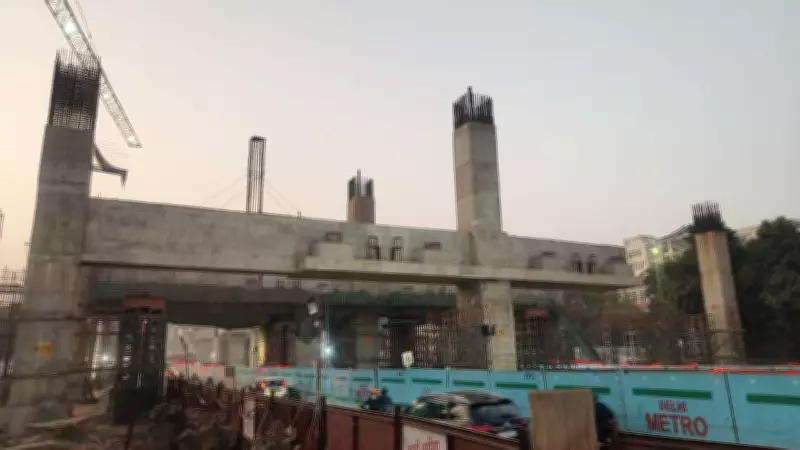
Delhi Metro Pioneers Split-Station Design with 45-Meter Footbridge
The Delhi Metro Rail Corporation (DMRC) has unveiled a groundbreaking split-station design for the first time in the city's metro network. This innovative approach will be implemented at Khanpur and Ambedkar Nagar stations on the upcoming Golden Line, which runs from Tughlaqabad to Aerocity. The design features concourses split on either side of the Mehrauli-Badarpur Road, rather than centrally located, marking a significant shift in station architecture for congested urban environments.
Seamless Connectivity Across Busy Road
Each station will have platforms situated on two separate structures positioned on opposite sides of the road. A 45-meter-long footbridge will link these buildings, ensuring seamless movement for commuters. This setup allows passengers to access platforms from either side without the need to cross the busy road at ground level, thereby enhancing safety and convenience.
Avoiding Large-Scale Land Acquisition
The split-station design enables DMRC to maintain full metro functionality while circumventing the need for extensive land acquisition. By dividing the station across the road, the corporation addresses space constraints in densely populated areas, offering a practical solution to urban development challenges without compromising on service quality.

Three-Level Station Structure
Unlike conventional Delhi Metro stations that typically feature two levels—platform and concourse—Khanpur and Ambedkar Nagar stations will incorporate three levels: platform, concourse, and footbridge. This innovative layout is designed to manage commuter flow more efficiently and integrate pedestrian connectivity across the road, setting a new standard for metro station design.
Enhanced Specifications for Urban Fit
The stations boast unique height and width specifications to accommodate the limited urban space. The distance from road level to platform level is approximately 20 meters, significantly taller than regular stations. Each station has a width of nine meters, compared to the typical three to four meters at other stations. These adjustments were necessary to fit the structures within the constrained environment while upholding operational standards.
Improved Passenger Movement Facilities
To ensure smooth and safe passenger movement, the stations will be equipped with eight escalators and four lifts, providing vertical connectivity from ground to platform level and vice versa. This exceeds the usual three to four lifts found in standard metro stations, emphasizing a strong focus on commuter convenience and accessibility, particularly for elderly and differently-abled passengers.
A Milestone in Urban Adaptation
This design represents a first-of-its-kind milestone for DMRC, demonstrating how metro systems can adapt to the challenges of dense urban settings while prioritizing commuter convenience and safety. The elevated footbridge not only improves the commuter experience but also ensures safe crossing of the busy road, minimizing disruptions to road traffic and setting a precedent for future infrastructure projects.