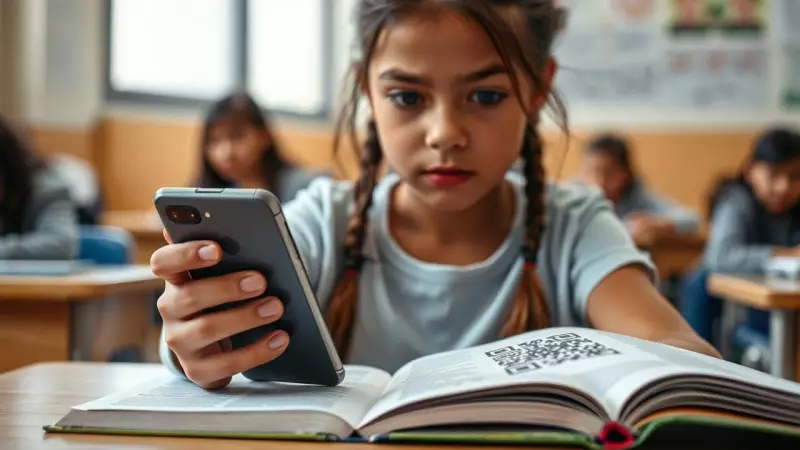
In a groundbreaking move to safeguard students in the digital age, the Madhya Pradesh police have announced a novel initiative to embed QR codes directly into school textbooks. This program is designed to empower children to anonymously report incidents of cyberbullying, online harassment, and other cybercrimes, providing a safe and accessible recourse.
A Direct Line of Help for Students
The plan will initially see these QR codes displayed on notice boards across educational institutions before being integrated into the curriculum itself. This step addresses a critical gap in the current system. Senior Superintendent Pranay Nagvanshi of the Bhopal Cyber Cell revealed a troubling trend: "Not a single institution has ever come forward to report a cybercrime involving student bullying or harassment." This leaves the burden entirely on parents and the victims, as seen in a recent case where a schoolgirl faced relentless cyberbullying, yet her school refused to take responsibility for reporting the crime.
The Alarming Reality of Online Threats
The need for such an intervention is urgent and clear. Statistics from the cyber cell indicate that nearly 15–20% of all complaints now involve women and students, with numbers steadily rising. The threats are varied and severe. Children using chat features on gaming sites are often groomed by adults posing as peers. On social media, harassment can take a vicious turn, with one young K-pop fan being mocked for her ethnicity and skin colour to the extent that she believed her phone was hacked.

Dr. Samikska Sahu, Assistant Professor in the Department of Psychiatry at GMC, linked this increased online exposure to a post-pandemic trend. "Increased dependence on mobile phones in the education system has had significant implications for their mental health," she told TOI. She highlighted issues ranging from body image problems fueled by airbrushed pictures to severe risks like blackmail, early marriage pressures, and even suicide attempts.
Building a Multi-Layered Defense
While technology provides a new tool, experts stress the importance of a comprehensive approach. Nagvanshi also highlighted the national cyber helpline 1930 as a vital resource for anyone facing online threats. Cyberlaw expert Harsh Wadhwani advised users to fully utilize complaint mechanisms on social media platforms and with the police, while emphasizing strong security practices like multi-factor authentication (MFA).
Dr. Sahu powerfully compared the need for cyber hygiene to the hand hygiene emphasized during the COVID-19 pandemic. She opined, "But technology alone is not enough. Parents and schools must be trained, regular workshops should be held, and just as we teach hand hygiene, we must also teach digital hygiene. Only then can we build a safer environment for our children." She added that regular awareness programs can equip students to recognize and report cyber threats effectively.
This initiative, aligning with themes like the UN's '16 Days of Activism against Gender-Based Violence', represents a significant step towards creating a safer digital ecosystem for India's youth, empowering them to seek help anonymously and without fear.