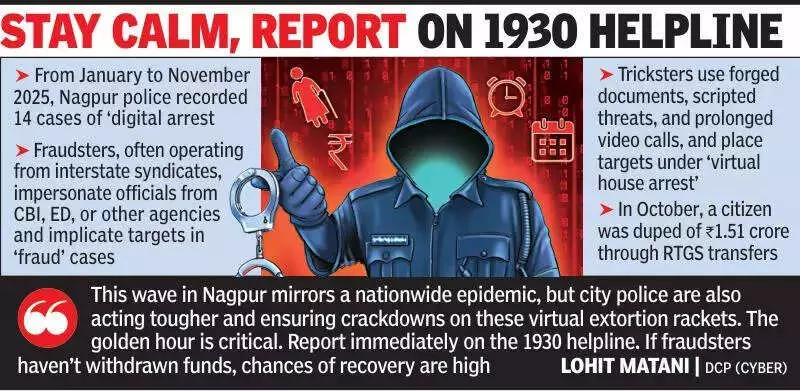
The city of Nagpur is confronting a severe and alarming wave of sophisticated cybercrime, with residents falling prey to a sinister scam known as 'digital arrest'. Throughout the year, fraudsters have weaponized fear and technology to trap and extort money from unsuspecting individuals, leading to massive financial losses.
Scale of the Scam: Rs 6 Crore Lost in 14 Cases
Official data paints a grim picture of the escalating threat. From January to November, Nagpur police registered 14 cases of digital arrest fraud. The collective financial damage from these incidents is staggering, with victims losing approximately Rs 6 crore. This figure underscores a disturbing upward trend in the audacity and success of such cyber frauds within the city.
The losses were not evenly distributed, with several high-value cases causing extreme distress. The most devastating single incident occurred in October, where a resident was manipulated into parting with a colossal Rs 1.51 crore through repeated RTGS transfers. Other major losses recorded by police include Rs 91 lakh in February, Rs 55 lakh in October, Rs 39 lakh in July, Rs 33.8 lakh in September, and Rs 29.95 lakh in January. Several other cases saw losses ranging between Rs 12 lakh and Rs 26.7 lakh.

How the 'Digital Arrest' Scam Operates
These frauds follow a chillingly systematic pattern designed to isolate and terrorize the target. As explained by officials, criminals, often part of interstate or transnational syndicates, impersonate officers from central agencies like the CBI or the Enforcement Directorate (ED).
The initial contact is made via a phone call or a WhatsApp message. The target is abruptly accused of serious offences such as money laundering, drug trafficking, or even terror funding. To lend credibility to their claims, the scammers use forged documents and official-looking logos.
The victim is then subjected to scripted threats and prolonged video calls, during which they are placed under 'virtual house arrest'. They are ordered not to leave their home, disconnect from family, or inform anyone about the situation. Under this intense psychological pressure, victims are coerced into transferring large sums of money to multiple bank accounts for alleged "verification" or to settle fictitious fines or bail amounts.
Police Response and Crackdown
Facing this escalating threat, the Nagpur cyber cell has mounted a proactive counter-operation. Their efforts have yielded significant results in tracking and recovering the stolen funds. The police have successfully frozen or placed liens on suspicious accounts holding a cumulative balance of Rs 15 lakh. More importantly, they have managed to return around Rs 65 lakh to the defrauded citizens.
On the enforcement front, six individuals have been arrested in connection with these scams. A key breakthrough was the busting of a Gujarat-based gang whose members posed as CBI officers to execute their schemes. Chargesheets have been filed in three cases, and ongoing investigations have uncovered links to transnational networks that use cryptocurrencies for laundering the illicit proceeds.
Deputy Commissioner of Police (Cyber) Lohit Matani highlighted that cases spiked from early 2025 onwards, with higher amounts involved in the mid-to-late months. He attributed this rise to fraudsters employing more advanced tactics, including AI-driven voice cloning and deepfake videos to make their impersonations more convincing.
"This wave in Nagpur mirrors a nationwide epidemic, but city police are also acting tougher and ensuring crackdowns on these virtual extortion rackets," stated DCP Matani. He emphasized that public awareness is a critical defense line, and the police are intensifying drives, workshops, and social media campaigns to educate citizens.
The Critical 'Golden Hour' for Victims
DCP Matani issued a crucial advisory for anyone who might fall victim to such a scam. He stressed the importance of the 'golden hour'—the immediate period after the fraud. "The golden hour is critical. Report immediately on the 1930 helpline. If fraudsters haven't withdrawn funds, recovery chances are high," he urged.

The final message from the cyber police is clear: vigilance and verification are the only reliable shields. Residents are strongly advised to independently verify the authenticity of any such threatening calls by contacting the relevant agency through official channels. The paramount rule is to never transfer money under duress or fear. By staying alert and reporting suspicious activity without delay, citizens can protect themselves from falling into these meticulously laid digital traps.