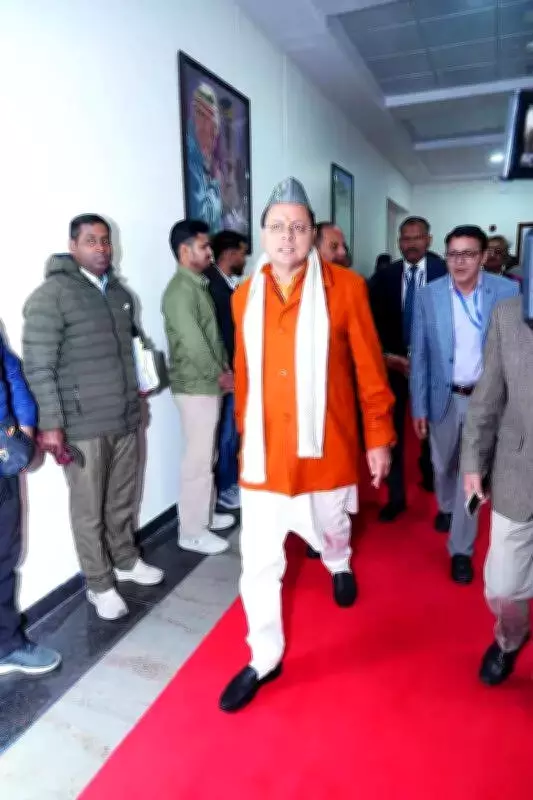
Uttarakhand Legislative Assembly Witnesses Introduction of 11 Crucial Bills
The Uttarakhand state government, under the leadership of the Bharatiya Janata Party (BJP), presented a comprehensive legislative agenda on Tuesday by tabling eleven distinct bills in the state assembly. This significant move encompasses a wide range of policy areas, from welfare administration and legal reforms to social justice and economic regulation, marking a pivotal moment in the state's governance.
Devbhoomi Parivar Bill: A Unified Family Database Initiative
Among the most notable proposals is the Uttarakhand Devbhoomi Parivar Bill, which aims to establish a centralized and unified family database across the entire state. Modeled after Haryana's successful Parivar Pehchan Patra scheme, this initiative will assign a unique identification number to each family unit. This ID will be intricately linked to various government welfare schemes and benefits, facilitating a more streamlined and efficient delivery system.
The primary objectives of the Devbhoomi Parivar Yojana are to enhance transparency in welfare distribution, empower citizens to track their received or pending benefits, and support a proactive, paperless governance model. By reducing record duplication and improving data accuracy, the database is expected to significantly optimize administrative processes and ensure that assistance reaches intended beneficiaries without unnecessary delays or errors.
Key Legal and Social Reform Bills
In a bid to modernize the state's legal framework, the Uttarakhand Jan Vishwas (Amendment of Provisions) Bill proposes to decriminalize minor offenses by eliminating jail terms in several cases. Instead, the bill suggests increasing monetary penalties, a measure designed to alleviate overcrowding in prisons and focus on restorative justice rather than punitive incarceration for less severe infractions.
Simultaneously, the Uttarakhand Prevention of Public Gambling Bill, 2026 seeks to replace the outdated colonial-era Public Gambling Act of 1867. This legislative update, in compliance with directives from the Union Ministry of Home Affairs, introduces stricter provisions to effectively curb and penalize public gambling, the operation of gambling houses, and betting on games within the state, addressing contemporary challenges in law enforcement.
Strengthening Minority Rights and Commission
The Uttarakhand Minority Commission (Amendment) Bill, 2026 aims to fortify the Uttarakhand Minority Commission, which was originally established in 2002. This commission is dedicated to safeguarding the constitutional rights and interests of minority communities, including Muslims, Jains, Christians, Buddhists, Parsis, and Sikhs. The proposed amendments are intended to ensure adequate representation of these diverse communities and expand the commission's tenure, jurisdiction, and functions to better promote their socio-economic development and overall welfare.
Additional Legislative Proposals
The legislative package introduced by the BJP government also includes several other important bills, demonstrating a holistic approach to state governance. These encompass:
- Uttarakhand Goods and Services Tax (Amendment) Bill – focusing on fiscal reforms and tax administration.
- Uttarakhand Prisons and Correctional Services (Amendment) Bill – aimed at improving prison management and rehabilitation services.
- Uttarakhand [Uttar Pradesh Public Service (Reservation for Physically Handicapped, Dependents of Freedom Fighters and Purva Sainiks) Act, 1993,] (Amendment) Bill – addressing reservations in public services for specific groups.
- Uttarakhand Private Universities (Amendment) Bill – regulating and enhancing the private higher education sector.
- Uttarakhand Language Institution (Amendment) Bill – promoting linguistic and cultural preservation.
- Uniform Civil Code (UCC) Amendment Bill – a significant step towards implementing a common set of laws governing personal matters across all communities, aligning with broader national discussions on legal uniformity.
This extensive legislative effort underscores the Uttarakhand government's commitment to progressive governance, administrative efficiency, and social equity, setting a precedent for other states to follow in addressing complex policy challenges through comprehensive legal frameworks.