In a meticulously planned cyber fraud, scammers have outwitted staff and parents at a school in Kheda, Gujarat, making off with lakhs of rupees. The incident serves as a stark warning about the growing sophistication of digital crimes targeting educational institutions.
The Clinical Con: How Parents Were Duped
The fraudsters executed their plan with chilling precision. One mother was tricked into parting with Rs 16,000 after she shared a One-Time Password (OTP) for what she believed was her child's fake report card. Another parent lost Rs 15,000 in a similar manner. The scam impacted around 100 individuals connected to the school, highlighting a significant breach of trust and security.
Study Exposes Alarming Vulnerability Among Educators
This incident gains deeper context from a recent preprint study titled 'Cybercrime Awareness and Its Implications for Digital Transactions'. Conducted by researchers Bhavesh Bharad and Komal Sharma from the University School of Law, Gujarat University, the survey involved 120 educators, including 101 men and 19 women schoolteachers.

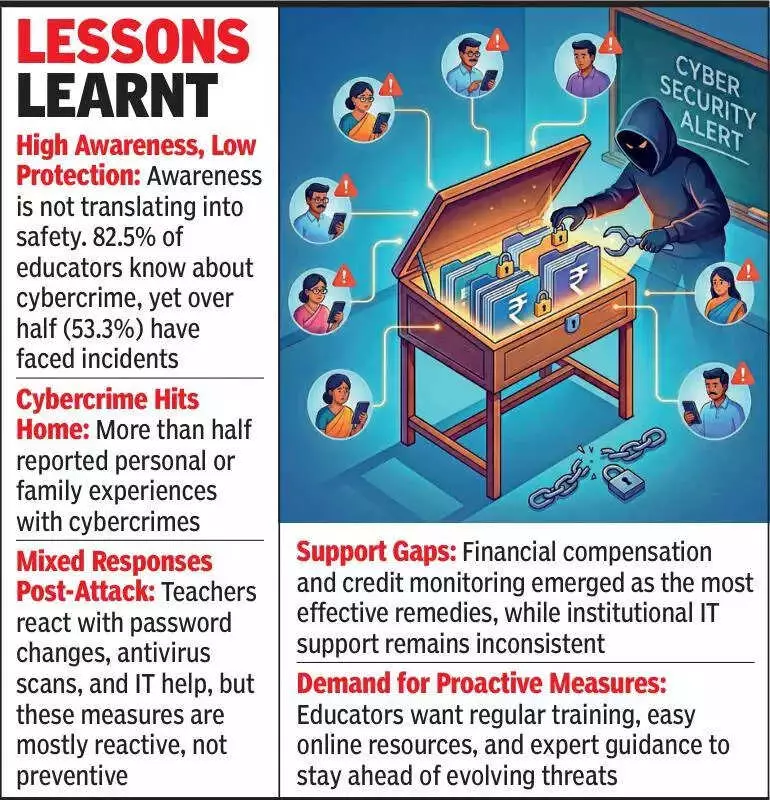
A startling finding emerged: while 82.5% of teachers claimed to understand cybercrime, a massive 53.3% had actually been victims of it. This gap between perceived awareness and actual victimization is a major concern.
Reactive Measures and Lack of Support
The study used statistical methods like Factor Analysis Component Matrix to understand teachers' responses to cyber attacks. It found that cyber hygiene is largely reactive. Most educators only change passwords or run antivirus scans after an incident has occurred, not as a preventive measure.
Furthermore, the "No support provided" section of the research indicated that a large number of teachers receive little to no help after a breach. While many turn to their school's IT team, the study's ANOVA (Analysis of Variance) table revealed that IT department assistance has only a marginal impact on their sense of safety. Financial compensation was found to have the strongest effect.
The demand for better resources is clear. Teachers showed a strong preference for easy-to-access online cybersecurity tools and the presence of dedicated cybersecurity staff within institutions.
The Kheda school scam, coupled with this revealing study, underscores an urgent need for proactive cybersecurity education and robust support systems within India's educational framework. Moving from reactive to preventive measures is crucial to safeguard educators and parents alike from financially and emotionally draining online fraud.