The Hidden Camera Epidemic: India's Private Spaces Under Surveillance
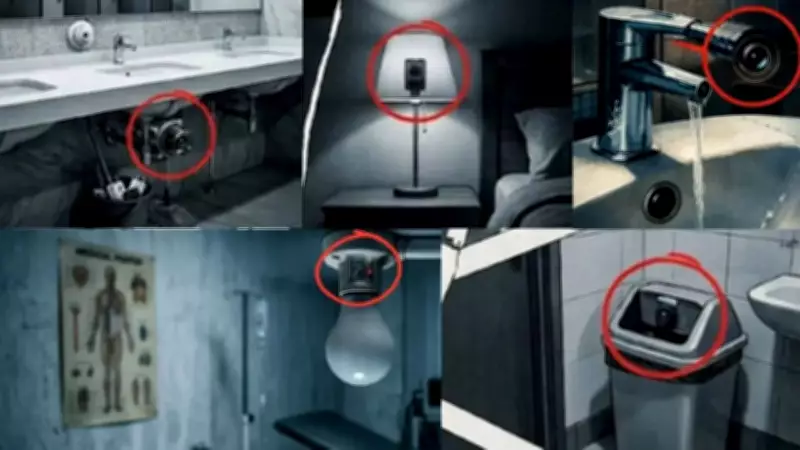
It often begins with a small detail that seems slightly off—a bulb holder that doesn't look quite right, an unusual reflection, or a misplaced object. Then comes the chilling discovery: a hidden camera silently recording what should have been a completely private space. In India's rapidly digitizing urban landscape, the fear is no longer just about being watched in public areas. The new threat emerges where privacy should be most assured—in bedrooms, washrooms, trial rooms, and examination areas.
A Pattern of Violations Across Indian Cities
The disturbing reality is that such surveillance devices are becoming increasingly easy to purchase, install, and misuse. A series of recent incidents across multiple Indian cities highlights how widespread this problem has become, with perpetrators exploiting trust and access to violate personal privacy in spaces meant to be safest.
Rajkot 2026: Doctor's Clinic Becomes Surveillance Zone
In 2026, a particularly alarming case emerged from Gujarat's Rajkot, where an Ayurvedic doctor was arrested for allegedly installing a hidden camera inside his clinic. The device was cleverly concealed behind a bulb holder, recording patients and a fellow doctor during medical examinations. Police investigations revealed the accused used the footage for extortion purposes, with investigators suspecting thousands of video clips had been stored over time.

Multiple Cities, Similar Stories
The pattern repeats across India's urban centers. In Delhi during 2025, a housekeeping employee at a government hospital was arrested for secretly filming inside a women's washroom using a concealed mobile phone over several weeks. That same year in Tamil Nadu's Krishnagiri district, a hidden camera was discovered inside a women's hostel bathroom, leading to the arrest of two individuals—a woman and her boyfriend—for installing the device.
Kochi witnessed a similar violation in 2025 when a hidden camera was found inside a women's restroom at an IT park. The device, discovered beneath a wash basin, was actively recording at the time of detection, prompting police to register a case under voyeurism and Information Technology Act provisions.
Earlier Cases Set the Pattern
The trend was already visible in earlier years. In Bengaluru during 2024, a café employee was caught hiding a phone inside a women's restroom dustbin to record videos, with the device discovered by an alert customer. Meanwhile, in east Delhi's Shakarpur area, a man was arrested for allegedly installing hidden cameras in the bathroom and bedroom of a woman tenant, with devices concealed inside bulb holders and footage stored on memory cards.
Why Private Spaces Are Most Vulnerable
Bathrooms, bedrooms, and trial rooms represent spaces where privacy is typically assumed rather than negotiated. Yet these are precisely the locations where hidden cameras are increasingly being discovered. Investigators note that offenders often exploit positions of trust and access—acting as landlords, employees, maintenance staff, or even acquaintances. The devices themselves are concealed in everyday objects: light bulbs, smoke detectors, wall hooks, chargers, or even mobile phones.
What makes these violations particularly alarming is the intent behind them. In many documented cases, the recordings serve purposes beyond personal voyeurism—they are systematically stored, circulated, or even monetized. Police officers report that victims typically discover these breaches only accidentally, through a misplaced device, an unusual reflection, or suspicious digital activity.
The Accessibility Problem
At the core of this growing crisis lies an uncomfortable truth: hidden cameras are remarkably easy to obtain. Small pinhole cameras—some no larger than a coin—are widely available in electronics markets and across e-commerce platforms. Many are marketed as "security devices" or "nanny cams" but can be easily repurposed for illegal surveillance.

These devices often come equipped with sophisticated features including motion detection, night vision capabilities, remote access via mobile applications, and local storage through memory cards. In the Shakarpur case, police confirmed the accused had purchased "commonly available spy cameras" and installed them without significant difficulty. The regulatory landscape offers little control over the sale of such devices, with virtually no mechanism to track end use or prevent misuse.
Legal Framework and Enforcement Challenges
India does possess legal provisions to address voyeurism and privacy violations. Sections under the Bharatiya Nyaya Sanhita (which replaced the earlier Indian Penal Code) criminalize acts of capturing or disseminating images of private acts without consent. However, enforcement typically activates only after a formal complaint is filed and the offense is officially reported.
Officials acknowledge that while installing hidden cameras in private spaces is clearly illegal, the devices themselves are widely available in markets for legitimate security purposes. This dual-use nature complicates regulation, with action usually taken only when misuse is definitively established during investigation.
The Psychological Impact on Victims
For those who discover they've been recorded, the violation extends far beyond the immediate incident. Victims grapple not just with the knowledge of being recorded, but with the profound loss of control over their personal space and bodily autonomy. Common psychological consequences include heightened anxiety and paranoia, persistent fear that footage might be leaked or circulated, loss of trust in familiar environments, and concerns about social stigma. In numerous cases, the trauma persists long after the perpetrators have been arrested and legal proceedings have concluded.
Why Urban Centers Face Higher Risks
India's urban areas report a disproportionate number of hidden camera incidents for specific structural reasons. High population density, increasing rental living arrangements, shared accommodations, and substantial foot traffic in public facilities all increase exposure to potential offenders. When combined with the rapid proliferation of affordable surveillance technology, the risk multiplies significantly.
Workplaces, educational hostels, paying guest accommodations, shopping malls, and cafés have all become potential sites of vulnerability. As spaces become more connected and accessible, questions of safety and privacy grow increasingly complex.
Awareness as Primary Defense
Security experts emphasize that awareness remains one of the most effective deterrents against hidden camera installations. While not foolproof, simple precautions can significantly reduce risks: regularly checking for unusual objects in private spaces, carefully inspecting suspicious fixtures, being cautious about who has access to personal rooms, and immediately reporting anomalies to authorities.
Ironically, technology itself can aid in detection. Anti-spy camera applications and radio frequency detectors are increasingly being utilized, though their effectiveness varies depending on the sophistication of the hidden devices.
Calls for Stronger Measures
Law enforcement agencies suggest that stricter monitoring of surveillance device sales may become necessary. Some experts have advocated for mandatory registration systems for purchasing surveillance equipment, clearer labeling and tracking of devices, stronger digital privacy legislation, and faster investigation and prosecution protocols.
However, regulation alone may prove insufficient. As surveillance technology continues to become smaller, more affordable, and more accessible, the underlying risk will persist regardless of legal frameworks.
The Path Forward
The hidden camera has transitioned from fictional plot device to widely available tool, making public awareness, personal vigilance, and timely reporting increasingly critical. Security professionals emphasize that stronger safeguards, quicker response to complaints, and better education about identifying suspicious devices can help reduce such incidents.
As technology becomes ever more accessible, the focus must shift toward prevention—ensuring that privacy in everyday spaces is not compromised. The message is clear: in an era of easily available surveillance technology, checking before trusting has become not just prudent but essential for personal safety.