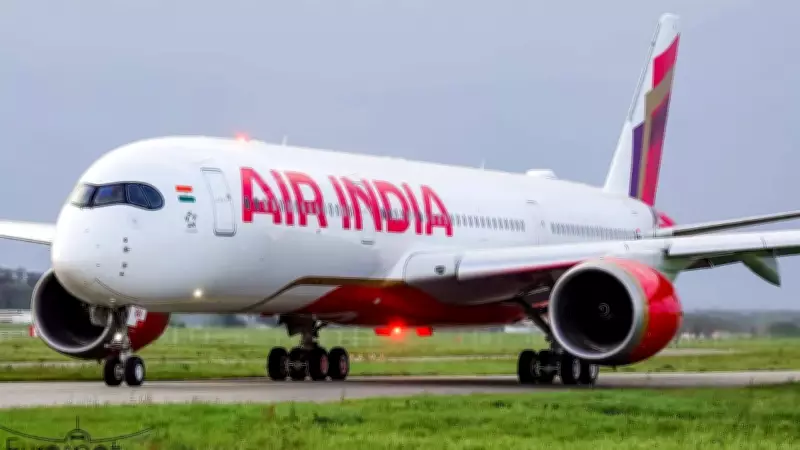
NEW DELHI: An Airbus A321 operated by Air India with approximately 190 people on board suffered a tail strike while performing a go-around — aborting landing and taking off again — at Bengaluru airport on Thursday. The incident occurred when a Boeing 747 jumbo jet had taken off from the same runway just before the Air India flight from Delhi was scheduled to land. The enormous wake turbulence — the aerial equivalent of the impact seen on water when a large ship moves at full speed — generated by the jumbo jet prompted the pilots to opt for a go-around at the last moment to avoid getting caught in the turbulence after touchdown. During this maneuver, the A321's tail scraped the runway.
The aircraft eventually landed safely on its second attempt and has been grounded for inspections. The Directorate General of Civil Aviation (DGCA) has been studying the issue of tail strikes by Indian carriers using the long-fuselage A321 aircraft for some time and has launched a probe into Thursday's case. The pilots involved have been off-rostered pending the outcome of the investigation.
An airline spokesperson stated, “AI2651 operating from Delhi to Bengaluru on May 21 experienced a tail strike during landing. The aircraft landed safely, and all passengers and crew disembarked normally.” The spokesperson added that the return flight from Bengaluru to Delhi was canceled. “Alternative arrangements are being made to accommodate affected passengers at the earliest.”

Wake Turbulence and Safety Measures
To prevent smaller aircraft from being caught in turbulent air caused by larger jets, the International Civil Aviation Organisation (ICAO) prescribes precautions such as increased separation for a smaller jet landing on a runway from which a larger one has just taken off. The incident highlights the critical importance of adhering to these guidelines to ensure flight safety.