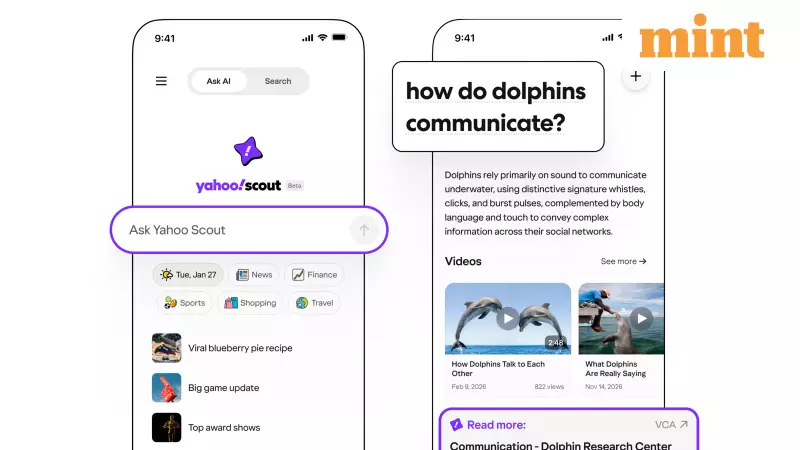
Yahoo Enters AI Search Arena with Scout to Rival Google and Perplexity
In a bold move to redefine the digital search landscape, Yahoo has officially launched Yahoo Scout, its latest AI-powered search engine designed to compete directly with established players like Google's AI Mode and Perplexity. This new "answer engine" aims to transform traditional search results into direct, concise answers by leveraging user data and web content, marking Yahoo's significant entry into the intensifying AI search wars.
What Makes Yahoo Scout a Game-Changer in AI Search?
Yahoo Scout represents a strategic shift from conventional search methods to a more intuitive, answer-focused approach. According to the company, Scout utilizes over 30 years of search history and unique user insights to convert search terms into natural language queries. Instead of presenting users with a list of links, the AI synthesizes information from multiple sources, including the open web, Yahoo's proprietary content, and extensive user data, to deliver clear and direct responses.
The engine is powered by a massive knowledge infrastructure, informed by 500 million user profiles and a knowledge graph spanning over 1 billion entities. This allows Scout to assist users in various practical tasks, such as:

- Understanding upcoming weather patterns before planning a vacation
- Getting detailed information about important sports games or events
- Tracking stock price movements and financial updates after earnings reports
- Comparing products and brands instantly before making purchase decisions
- Fact-checking news stories with authoritative sources
Key Features and Technological Backbone of Yahoo Scout
Yahoo has partnered with Anthropic to integrate the Claude AI model as the primary foundational technology for Scout. Additionally, the company is leveraging its long-standing relationship with Microsoft by using Bing's grounding API to ensure that all answers are backed by credible and authoritative sources from the open web.
One of the standout features of Yahoo Scout is its enhanced shopping capability. The engine distills insights from expert articles and reviews to provide instant brand and product comparisons, complete with shoppable links. This eliminates the need for users to open multiple tabs, streamlining the online shopping experience.
For financial enthusiasts, Yahoo Scout integrates seamlessly with Yahoo Finance, offering one-click access to real-time insights across company news, analyst ratings, financial data, and earnings calls. The feature synthesizes complex financial information into clear analyses, with headlines refreshing every 10 minutes to keep users updated.
Leadership Vision and Future Roadmap
Jim Lanzone, CEO of Yahoo, emphasized the transformative potential of Scout in a recent release. He stated, "Search is fundamentally changing, and our team has been inspired to use our decades of experience and extremely rare assets to create something uniquely useful for Yahoo's hundreds of millions of monthly users."
Lanzone added, "This beta launch is just the starting point. From search to our industry-leading verticals, Yahoo Scout will help our users accomplish their goals online faster and better than ever before." This vision underscores Yahoo's commitment to evolving its search capabilities and enhancing user productivity through AI-driven innovations.
Availability and Expansion Plans
Currently, Yahoo Scout is available in beta version exclusively for users in the United States. Interested individuals can access the new AI search experience by visiting Scout.Yahoo.com or using the Yahoo Search app on iOS and Android devices. The feature is accessible to nearly 250 million Yahoo users in the US, with plans to expand its capabilities and introduce more personalized features in the coming months.
As the AI search competition heats up, Yahoo Scout positions itself as a formidable contender by combining historical expertise, advanced AI models, and user-centric design. Its focus on delivering direct answers rather than links could potentially reshape how users interact with search engines, offering a more efficient and intuitive digital experience.