Upon the death of a wealthy tycoon, his final wishes often take the form of an impressive static monument. The typical structure for posthumous charity by a rich person includes inscribing a family name on a marble entrance, handing a final cheque to a local charitable organisation, and distributing the fortune within a single generation. However, a private fortune can achieve far more than funding a museum wing or a one-off building project. If the capital is deliberately detached from personal vanity and transformed into an active, self-sustaining financial architecture, it can completely transcend the limits of a single human lifespan.
Sir Henry Wellcome's Revolutionary Estate Planning
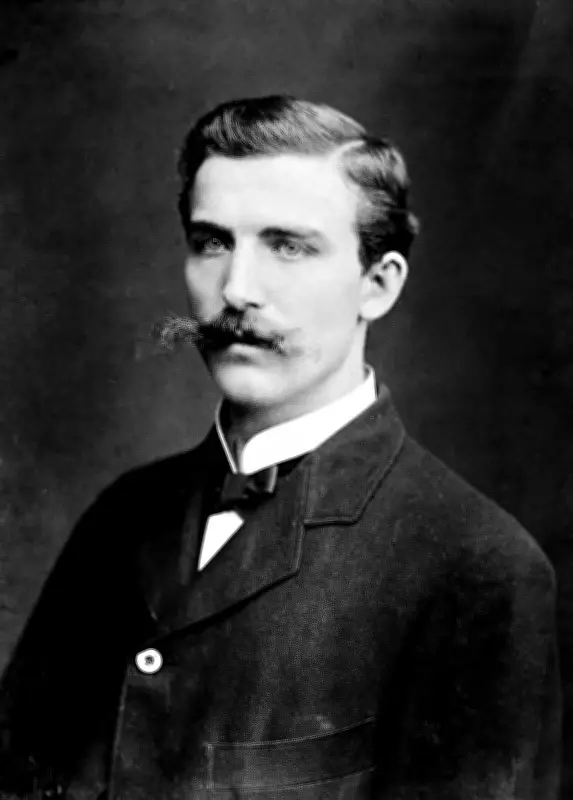
Sir Henry Wellcome fundamentally changed the rules of estate planning when he passed away in 1936, leaving behind a will that consolidated his vast wealth into an independent asset base. This has since grown into a staggering £39.9 billion portfolio, allowing the trust to partner directly with the World Health Organization as an official global health partner. Rather than bequeathing a legacy that would fade away, his death saw the transformation of his huge business empire into an entirely new system for permanent research. By building an adaptable funding mechanism that not only endured beyond the post-war period and navigated the financialisation of the late twentieth century, but now pumps nearly £2 billion per year into the global scientific community, he secured his legacy for hundreds of years to come.
Breaking Down Barriers of Global Health with Adaptable Capital Structures
The real value of one's wealth is not measured by the amount of capital accumulated over a lifetime, but rather by how well such capital can be utilised to address enormous cross-border crises facing humanity. Through developing an adaptive and flexible endowment structure capable of looking decades into the future, one can easily tackle those difficult-to-address volatile health issues ignored by regular markets and governments. According to a detailed study of the institution titled "The Role of the Wellcome Trust in Support of Biomedical Research," this institution was deliberately structured to become a separate and self-operating machine of medical progress. After the death of the founder, the trustees faced complicated legal transitions to secure basic financial resources while continually allocating large amounts of funding to research across generations. This structuring enables the trust to disregard transient tendencies and purposefully fund the basic instruments and expertise indispensable to the survival of contemporary medicine.

By shifting the focus of philanthropic efforts away from being purely commemorative and towards ensuring continued systemic support, this structure has ensured that funding goes much further than the bounds of any conventional laboratory space. Not only does the foundation fund the creation of infrastructure that makes sense of long-term public health trends, but it also preserves history and hosts massive symposia. All this dedication to patient wealth shows that money can indeed be turned into the public's long-term capacities, keeping alive the history of medicine and forging its technological future.
From Private Property to Global Architect of Health Security
The capacity to adapt and evolve across different time periods is what has transformed a historical private fortune into a modern-day cornerstone of international health and safety. With the autonomy and capital necessary to react quickly, such an institution is no longer simply a donor of money but an active player in securing global health. This speed of implementation is highlighted in the document titled "WHO and Wellcome Trust Partner to Fight Epidemics and Antibiotic Resistance." From this example, it is clear that the trust has successfully established a structure where its assets are effectively merged with the defences employed by the WHO to address increasing global threats.

Given that it functions as a stateless actor within an organised framework of interaction with international organisations, the foundation employs its enormous financial resources to co-sponsor emergency response networks and advance sustainable development. Ultimately, such a high degree of system integration creates a new benchmark for wealth management in the contemporary era. It demonstrates conclusively that what determines the actual legacy of colossal private financial assets is not their magnitude, but the completeness of their integration into the machinery of human survival.