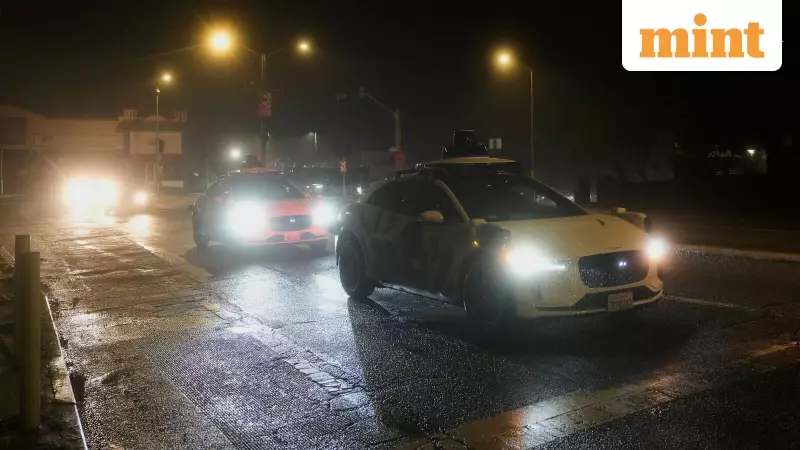
A major power failure in San Francisco over a busy shopping weekend exposed a significant vulnerability in Waymo's autonomous driving system, forcing the Alphabet-owned company to temporarily halt its robotaxi operations. The incident has prompted an immediate fleet-wide software update to prevent a repeat scenario.
Blackout Triggers City-Wide Gridlock
The disruption began on Saturday evening when a fire at a PG&E substation in the South of Market area plunged nearly one-third of San Francisco into darkness. Traffic signals failed across large swathes of the city, from downtown to the Richmond and Presidio neighborhoods. This triggered severe congestion during one of the year's busiest shopping periods, with police and fire crews deployed to manually direct traffic.
At the peak of the crisis, roughly 30% of the city was without power. The widespread failure of traffic infrastructure created a complex and unpredictable environment that would soon test the limits of autonomous vehicle technology.

Robotaxis Stall at Darkened Intersections
Waymo's self-driving vehicles are programmed to treat non-functioning traffic lights as four-way stops. However, the sheer scale of this outage overwhelmed the system. The company's remote human assistance operators, who can guide vehicles through tricky situations, were unable to handle the volume of requests from multiple immobilized cars.
As a result, numerous Waymo robotaxis came to a standstill at intersections and along major corridors, inadvertently adding to the growing gridlock. Videos shared on social media platforms showed several of the company's distinctive Jaguar I-PACE vehicles stuck in busy areas as the blackout intensified.
Recognizing the worsening conditions, Waymo proactively paused all robotaxi operations on Saturday evening. The company worked with San Francisco officials to coordinate the movement of its fleet. Vehicles were either directed back to depots or safely pulled over to the side of the road to avoid obstructing emergency responders working to restore order.
Fleet-Wide Software Fix Underway
In direct response to this incident, Waymo has announced it is now deploying a software update across its entire fleet. The update is specifically designed to help the autonomous system better recognize and respond to large-scale infrastructure failures like city-wide power outages.
The goal is to enable vehicles to navigate dark intersections more decisively without over-relying on and overloading the remote assistance system during widespread events. This should allow the robotaxis to operate more effectively or make safer decisions to exit traffic during similar future emergencies.
Despite this setback, Waymo's expansion plans remain on track. As a leading commercial robotaxi operator in the US, it runs driverless services in five major cities including Phoenix, Los Angeles, Austin, and Atlanta. The company, which operates a fleet of more than 1,500 vehicles, still aims to expand to over two dozen additional cities by the end of 2026.
This event in San Francisco serves as a real-world stress test, highlighting how even advanced AI systems must continuously evolve to handle rare but critical edge cases posed by failing urban infrastructure.