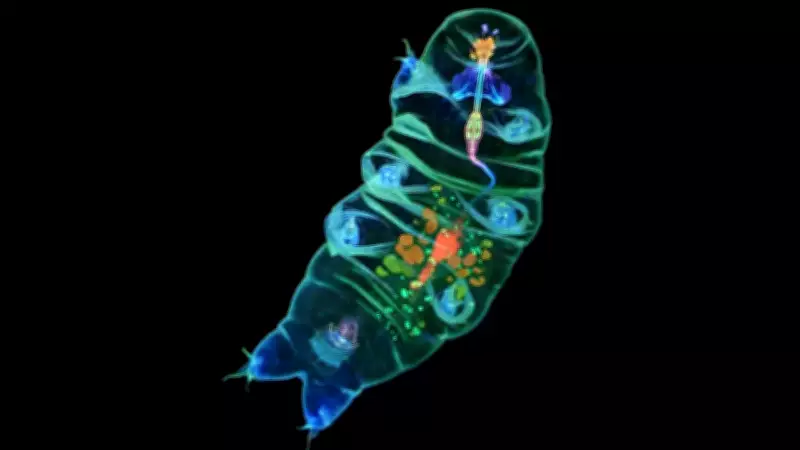
Tardigrades in Space: How Microscopic Water Bears Could Revolutionize Space Travel
If there were ever an animal that seemed specifically engineered for space exploration, it might be the humble water bear. Known scientifically as tardigrades, these microscopic creatures possess survival capabilities that sound like they belong in science fiction rather than reality. They can endure being frozen solid, boiled alive, completely dried out, exposed to intense radiation, and even survive the harsh vacuum of space itself. Given these extraordinary abilities, sending them to the International Space Station almost feels like a routine experiment rather than a groundbreaking mission.
Scientists are not conducting this research merely because it is fascinating, although it certainly is. Their primary goal is to understand how water bears adapt to the unique challenges of microgravity and cosmic radiation. The insights gained could potentially teach us valuable lessons about life under extreme conditions. It is remarkable to consider that organisms smaller than a grain of sand might hold the answers to some of humanity's biggest questions regarding space travel, human health, and survival beyond our planet.
What Exactly Are Water Bears?
Water bears, or tardigrades, are minuscule animals that require a microscope to be observed properly. Once visible, however, they become oddly memorable due to their distinctive appearance. They resemble plump gummy bears equipped with eight stubby legs. While they might look cute, their appearance belies their incredible toughness. These resilient creatures inhabit nearly every corner of Earth, from the highest mountain peaks to the deepest ocean mud, and even in the moss found in your backyard if you examine it closely enough.

One particularly fascinating aspect of water bears is their ability to enter a state of suspended animation. When faced with unfavorable conditions, they can shut down almost all life processes, effectively pausing their metabolism. In this dormant state, they do not eat, move, or exhibit significant metabolic activity. When conditions become favorable again, they simply wake up and resume normal life as if nothing had happened. This remarkable survival mechanism is a key reason why scientists are so captivated by these tiny organisms.
How Do Tardigrades Survive in Space?
As detailed in research by NASA, when water bears encounter extreme environments, they curl up into a compact ball known as a tun. In this form, they dehydrate and protect their cells using unique proteins that appear to be exclusive to their species. These specialized proteins transform the interior of their cells into a glass-like substance, effectively locking essential molecules in place to prevent damage. This process is somewhat analogous to wrapping fragile items in protective material before transporting them.
In the harsh environment of space, where radiation and microgravity can severely damage biological cells, this protective mechanism proves especially valuable. What is truly astonishing is that when water becomes available again, the glassy protection dissolves, allowing the water bear to return to its normal activities without any apparent harm.
Why Are Scientists Sending Water Bears to Space?
Researchers are now dispatching water bears to the International Space Station to investigate how they respond to prolonged exposure to microgravity, including across multiple generations. Some specimens will be preserved after a brief stay, while others will live, feed, and reproduce in space for several weeks. By analyzing changes in gene expression and molecular activity, scientists aim to understand how these animals adapt at a cellular level.
This research extends beyond mere scientific curiosity. Space travel poses significant challenges to the human body, including the weakening of bones, muscles, and immune systems. If water bears possess biological strategies that mitigate damage from radiation or stress, these insights could eventually help protect astronauts during extended missions to destinations like the Moon or Mars.

Have Tardigrades Been to Space Before?
One surprising fact is that water bears have already demonstrated their resilience in space during previous missions. In earlier experiments, they were placed outside spacecraft, fully exposed to the vacuum of space and cosmic radiation, and a significant number survived. This achievement makes them the only known animals to have endured such conditions. Their almost unfair level of resilience continues to intrigue scientists.
Studying tardigrades could also yield benefits here on Earth. Potential applications include improving the preservation of medicines and enhancing crop resistance to drought. There is something profoundly comforting in the idea that solutions to some of humanity's most pressing problems might emerge from such small and unassuming creatures.
Water bears drifting through the International Space Station presents an image that is both absurd and perfectly fitting. These microscopic organisms are quietly teaching us how to survive in the vast and unforgiving universe, offering lessons that could shape the future of space exploration and beyond.