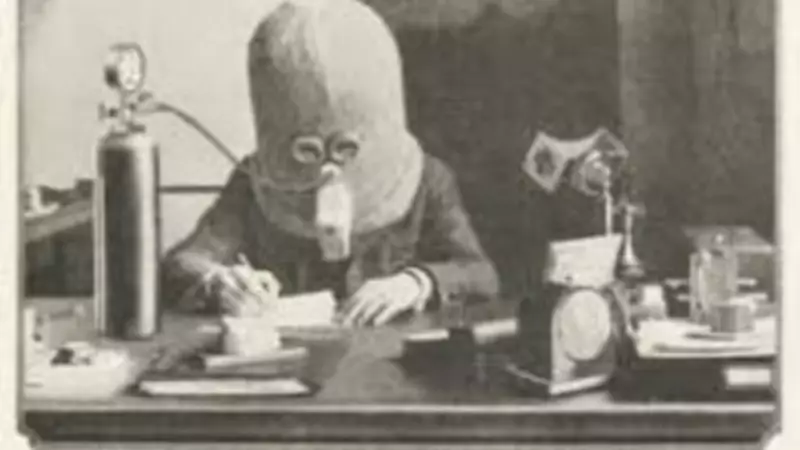
In 1925, long before the era of noise-cancelling headphones and digital detoxes, a peculiar invention called "The Isolator" was conceived by Hugo Gernsback, a prolific inventor and science-fiction writer. This strange helmet, designed to block all outside sounds and visuals, provided air through a breathing tube, offering complete seclusion for enhanced concentration. Nearly a century later, the Isolator continues to fascinate historians, psychologists, and technology enthusiasts worldwide.
Who Was Hugo Gernsback and Why Did He Create the Isolator?
Hugo Gernsback was a successful publishing mogul, inventor, and influential editor of science fiction magazines, earning him the title "Father of Science Fiction." He began his career by creating pioneering magazines like Amazing Stories. According to the University of Minnesota, Gernsback viewed distraction as a major factor reducing intellectual productivity. He envisioned a future where scientific thought could be amplified through mechanical means. The mask was designed to prevent "95 per cent of sound" and reduce the wearer's field of vision. First presented in Science and Invention magazine in 1925, Gernsback stated, "The worker puts on the helmet and is then able to concentrate upon his work."
How the Concept of the Isolator Helmet Works Even Today
The Isolator bore more resemblance to a deep-sea diving helmet than office equipment. It completely covered the head with small eye openings to limit distractions. Oxygen was supplied through a breathing tube due to the helmet's confined nature. The original 1925 description noted several layers of sound insulation material to cut out external noise. Gernsback argued that workers, students, and inventors could work efficiently without disturbance. Although the invention failed commercially, photographs of the helmet circulate online due to its bizarre appearance. Today, people equate it with VR headsets, noise-cancelling headphones, or gadgets designed to minimize digital distractions.

The Isolator Helmet and the Modern Obsession with Productivity
The Isolator may seem ridiculous today, but its underlying concept is strikingly contemporary. Modern workspaces are saturated with discussions about focus, multitasking, exhaustion, and short attention spans. Open-plan offices, incessant alerts, and social media distractions have revived the same anxieties Gernsback expressed a century ago. The American Psychological Association highlights how interruptions and multitasking impact productivity and cognitive functioning. Today, tech companies advertise focus pods, mindfulness apps, and noise-cancelling headphones for the same reasons The Isolator was invented. Thus, the helmet is not merely an oddity from the past; it serves as a reminder that each generation grapples with maintaining focus in a distracting environment.
Why the Isolator Still Captures Public Imagination
The invention's appeal lies in its strangeness; it stands out. Though dramatic and even dystopian-looking, it addressed a crucial question about human concentration in an era of gradual information overload. The history of technology shows that some inventions may fail commercially but leave a cultural mark by contributing to discussions about technology and society. Nearly a century after Hugo Gernsback introduced his concentration machine, the concept remains recognizable. Whether through headphones, quiet rooms, or digital detoxes, people continue seeking ways to tune out the noise around them.
About the Author: The TOI Science Desk is an inquisitive team of journalists ceaselessly delving into discovery to curate captivating science news for The Times of India. They aim to demystify science, making it accessible and engaging for all readers.