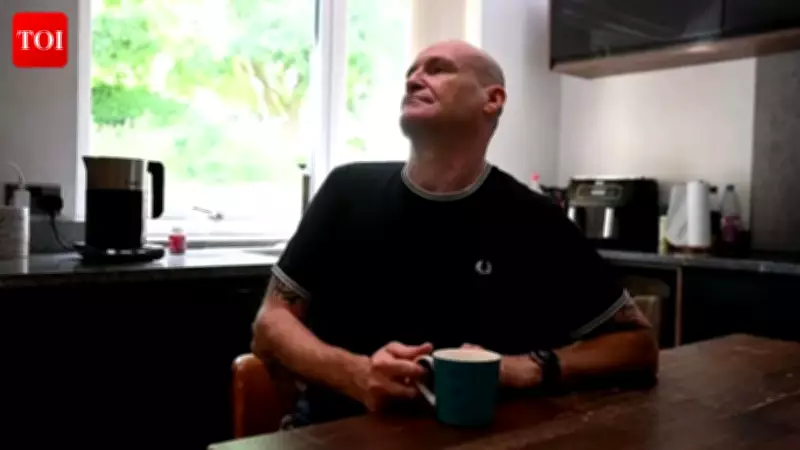
For years, John Granahan, an IT technician from Leeds, attributed his constant shaking to excessive tea consumption, a common habit in Britain. Doctors agreed, blaming caffeine for his tremors. However, after years of uncertainty, Granahan discovered the truth: at just 20 years old, he was diagnosed with Parkinson's disease, a neurological disorder typically associated with older age.
John Granahan's Story: What Happened to Him?
According to People, John's symptoms began at age 13 when he noticed his leg shaking uncontrollably during an English class. "I'll never forget it," he says. "My leg just wouldn't stop. It was totally out of my control." Initially dismissing it, the symptoms worsened, causing him to walk on tiptoes, slouch, and experience more pronounced tremors. By age 18, he sought medical help, but doctors attributed his issues to drinking up to 10 cups of tea daily, prescribing beta-blockers that proved ineffective. "I thought, 'Am I mad? Is it just me?'" Granahan recalls.
His father pushed for further tests through private insurance, leading to a Parkinson's diagnosis when Granahan was only 20.

What is Parkinson's?
Parkinson's disease is a progressive disorder where nerve cells stop producing enough dopamine, a chemical that controls movement. Symptoms include tremors, muscle stiffness, slow movement, balance problems, and coordination issues. While typically diagnosed in people over 50, early onset can occur, as in Granahan's case. Non-motor symptoms may include loss of smell, sleep disturbances, handwriting changes, monotone voice, depression, anxiety, constipation, swallowing difficulties, and fatigue.
John Granahan's Parkinson's Diagnosis: How He Went Through It
Ironically, Granahan felt relief upon diagnosis. "It was the happiest day of my life, as weird as it sounds," he says. "When I didn't know, my mind just went crazy with possibilities. But after I met a kid in hospital who died from a stroke at age 12, Parkinson's didn't seem so bad anymore." Before diagnosis, he barely knew about the disease, associating it with elderly individuals in care homes.
Doctors predicted he would be wheelchair-bound by age 25, but Granahan refused to accept that fate. "No, I won't. I'll do everything in my power not to," he resolved. His motto: never give up. Over the years, he has tried medications and various treatments, experiencing good and bad days. Parkinson's affected his social life, with people mistaking his unsteady gait for drunkenness, even leading to him being turned away from pubs.
In 2024, he underwent brain stimulation surgery, which helped with tremors but left balance issues. "Parkinson's is unpredictable. You're fine one minute, terrible the next," he explains. He manages his condition with medications, adapted routines, and hand controls for driving. Since 2016, he has raised his daughter Olivia alone after her mother's passing, crediting his determination for keeping him going.
Despite the grim prognosis, Granahan has avoided a wheelchair, using a walker occasionally but mostly getting around independently. He continues working in IT, living independently, and even has a mortgage. "People can't believe I've had Parkinson's for 40 years and I'm still working, still driving," he says. "I wish I didn't have Parkinson's, but it's made me who I am. I honestly think it's made me a better person."