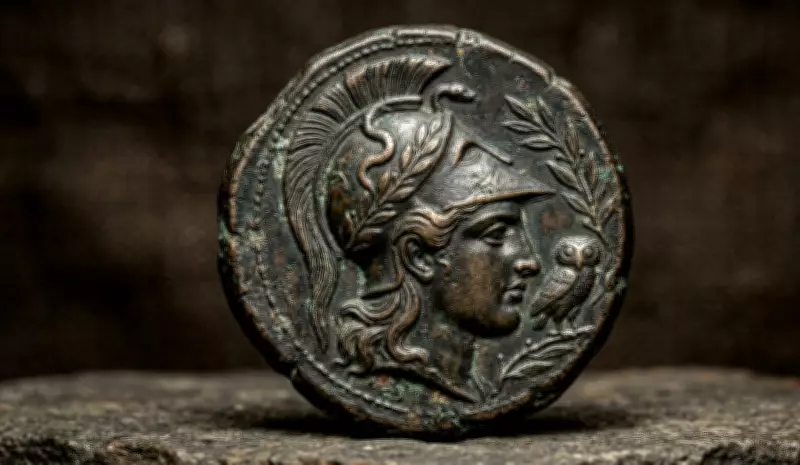
A young history student named Jerome made an extraordinary discovery in the Spandau district of Berlin, unearthing a bronze coin that dates back over 2,300 years to the Hellenistic era. The coin, originating from Ilion (Troy) in modern-day Turkey, features Athena on one side and a spear and spindle on the other. Experts from the State Office for the Preservation of Historical Monuments in Berlin confirmed its authenticity and historical significance.
The Remarkable Journey of the Coin
The coin traveled approximately a thousand miles from the Mediterranean to northern Germany, a journey that researchers are still trying to piece together. During the 3rd century BCE, there were no Greek settlements in Berlin, and local Germanic tribes rarely used Greek currency. The discovery suggests that ancient trade routes connected Europe long before modern times. Amber, known as 'northern gold,' was highly prized in Greece, and the coin may have been exchanged along river networks spanning the continent.
Implications for Historical Interconnectedness
This find highlights Europe's deep historical interconnectedness. The coin, weighing just seven grams, is a testament to the extensive trade and cultural exchanges that occurred during the Iron Age. It challenges assumptions about the isolation of northern Europe and underscores the importance of ordinary people in uncovering history.

Jerome's Discovery and Its Impact
Jerome noticed the coin shard among debris and picked it up, unaware of its significance. His find is the first ancient Greek artifact ever discovered in Berlin, despite extensive post-war excavations. The coin was found in a context with burnt human bones and other fragments, leading experts to believe it was a symbolic gift or souvenir rather than lost currency. Now housed at the Museum of Prehistory and Early History in Berlin, it is on display at the PETRI Berlin archaeology lab.
Inspiring Public Interest in Archaeology
The discovery has sparked interest among locals, who are now searching for artifacts in parks and fields. It emphasizes that significant archaeological finds often occur not in labs but in the field, when someone notices an unusual object. Jerome's find changed his life and highlighted the role of ordinary people in preserving cultural heritage.
Conclusion
The coin serves as a vivid reminder that history is tangible and all around us. It connected Berlin to its ancient past, when Greek seafarers and gods roamed the Mediterranean. This small bronze piece, bearing the image of Athena, endured battles, empires, and centuries of weather, ultimately revealing Europe's shared history.