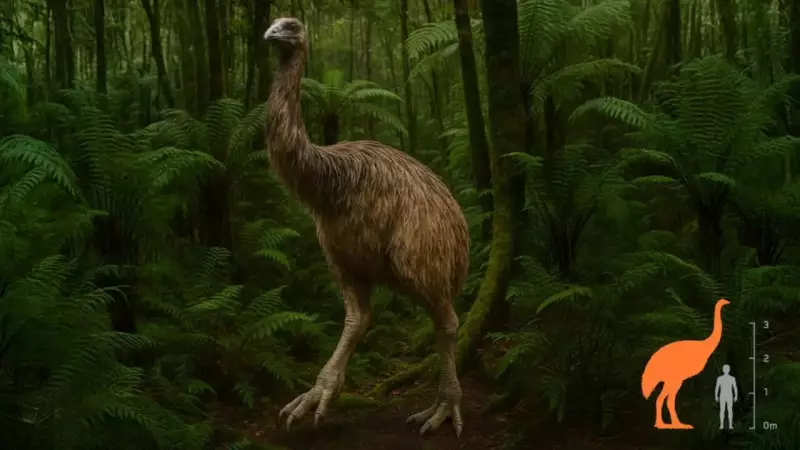
For centuries, the islands of New Zealand were ruled by majestic, giant flightless birds known as moa. These incredible creatures, some standing over three meters tall, vanished from the Earth roughly 600 years ago, not long after human settlement began to radically alter the local ecosystems. Today, the ghost of the moa is stirring once more, not from fossil beds, but from the cutting-edge labs of genetic scientists. A bold proposition is on the table: to use advanced genome editing to not only reconstruct the moa's DNA but to potentially reintroduce birds similar to these lost giants, sparking a complex debate that straddles science, conservation, and culture.
The Genetic Blueprint: Piecing Together a Lost Giant
The foundational step for any de-extinction project is creating a complete genetic map. For the moa, this means extracting severely degraded DNA from fossilised bones that have been exposed to the elements for centuries. Ancient DNA is typically fragmentary and chemically modified, making recovery a monumental task. Leading this charge is Colossal Biosciences, a Texas-based company that has declared its intention to assemble complete genomes for all nine different moa species.
Their strategy involves comparing sequences from fossils with the DNA of the moa's closest living relatives, such as the emu and the tinamou. Modern bird genomes act as a scaffold, allowing scientists to estimate the original moa sequence. Once a draft genome is ready, technologies like CRISPR gene editing could be employed to splice moa-specific sequences into the germline cells of a compatible living bird species. The edited DNA would be introduced into embryos of a close relative, with the hope that the resulting organism exhibits characteristics of the extinct bird. However, the evolutionary gap of several million years and the mystery of moa development pose significant hurdles.

Eggs, Surrogates, and Ecological Integration: The Practical Hurdles
Reviving a bird presents unique challenges distinct from mammals. Birds lay eggs, so the process cannot rely on standard cloning techniques like somatic cell nuclear transfer. A gene-edited embryo must be placed inside an egg and develop naturally, partly in an incubator and partly with a surrogate species. Researchers must solve puzzles of embryonic growth, egg structure, and reproductive timing, complicated by the vast size difference between the giant moa and its smaller living relatives.
Even if a genetically reconstructed bird is born, a bigger question looms: could it restore lost ecosystems? Moa were dominant herbivores that shaped New Zealand's forests for millennia through grazing and seed dispersal. Their disappearance triggered cascading ecological effects. While reintroducing a moa-like bird could help re-establish these lost interactions, today's environment is vastly different, altered by introduced mammals, land use changes, and climate shifts. It is uncertain if a revived species could thrive outside a protected reserve or if it might disrupt species that now occupy its old niche.
Māori Perspectives and the Ethics of Playing 'Bird-God'
The moa is not merely a biological specimen; it holds deep cultural significance for Māori communities, woven into oral histories and traditions. Recognizing this, modern de-extinction efforts are increasingly involving Indigenous groups. Colossal Biosciences, for instance, has formed a strategic partnership with the Ngāi Tahu Research Centre, representing a major Māori tribe of New Zealand's South Island.
This collaboration is crucial for aligning scientific ambition with cultural values and heritage. It raises profound questions about responsibility for extinct species and how cultural narratives intertwine with technological power. The debate also extends to cost and scientific priority. Critics argue that the immense resources and uncertain outcomes of de-extinction could divert funding from conserving currently endangered species. Proponents counter that the research could yield new conservation tools, boost genetic diversity, and inspire public engagement in science and environmental protection.

The quest to bring back the moa is more than a technical puzzle; it is a mirror reflecting our evolving relationship with nature, loss, and the ethical boundaries of science. Whether these giant birds will ever walk the forests again remains uncertain, but the conversation their potential revival has sparked is already reshaping the future of conservation biology.