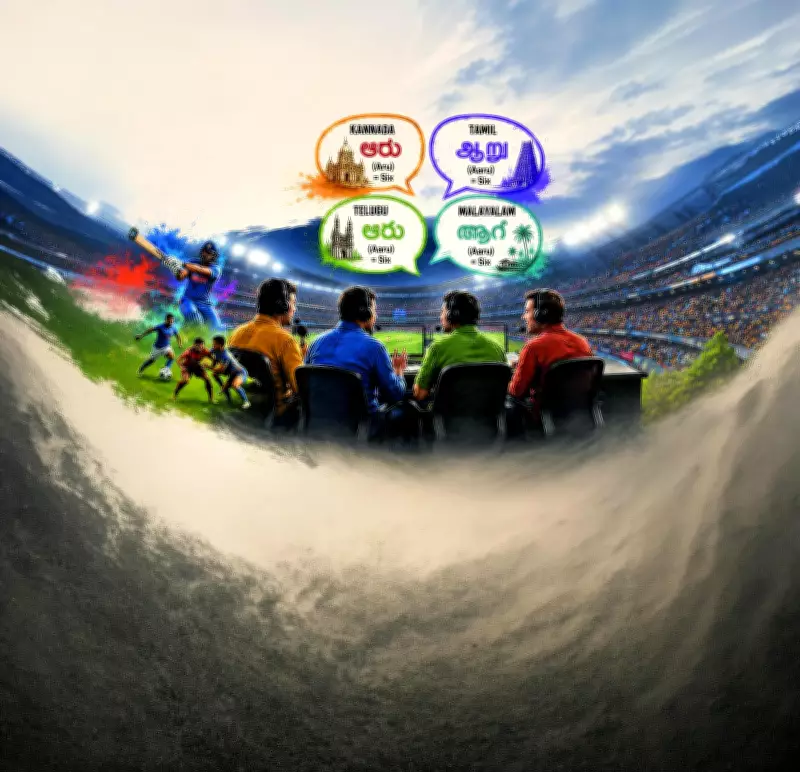
For decades, sport in India came with a familiar soundtrack — English commentary, occasionally accompanied by Hindi. Today, however, a six from Shivam Dube can evoke a dialogue from a Tamil blockbuster, a Sanju Samson century can trigger a Malayalam movie reference, and a last-ball thriller can be narrated in colloquial Kannada. Regional commentary is no longer viewed as an alternative to English coverage. It has evolved into a viewing experience with its own style, identity and loyal fan base. From cricket and football to kabaddi, vernacular broadcasts are helping sports reach audiences far beyond traditional urban centres, while also adding layers of culture, humour and identity.
Relatability Through Colloquial Dialects
Kannada commentator and actor Kiran Srinivas highlights the shift: “For the longest time, commentary was only done in English. The Hindi version got added in recent years and it’s a great move that regional languages also made it to mainstream commentary.” According to him, regional commentary has bridged a significant gap for non-English-speaking audiences. “Karnataka is a huge and diverse state and Kannada commentary makes the game more interesting. We have chosen to speak in colloquial Kannada to make it more relatable to people,” he says. For many viewers, the appeal lies not just in understanding the game but in hearing it explained in a language they think and feel in.
Emotional Connection in Regional Broadcasts
Vishnu Hariharan, who hosts and commentates in Malayalam, Tamil and English across sports ranging from kabaddi to football and cricket, explains that regional commentary is not simply English commentary translated word for word. “Regionalising has created better access for sports enthusiasts. Even people who understand English often prefer regional commentary because it gives a local flavour.” Vishnu notes that while English commentary tends to be more restrained, regional broadcasts allow commentators to connect emotionally with local audiences. “If Sanju Samson is playing, there may be a slight bias because you are creating an identity, but not at the cost of putting down another team. It adds to the commentary,” he says.

Simplifying Match Rules Through Mother Tongue
Tamil presenter and commentator Muthuraman Ramachandran believes regional commentary has played an important educational role. “Earlier, we were used to English and Hindi commentary. I could understand English, but Hindi wasn’t something I was familiar with. If someone like me found it difficult, imagine someone from a rural area aspiring to become a cricketer,” he says. He adds that commentary in one’s mother tongue helps simplify tactics, rules and match situations. “Just as we grew up listening to Harsha Bhogle, a new generation is growing up listening to Krishnamachari Srikkanth and S Badrinath’s Tamil commentary. When something is told to us in a language we know, it becomes easier to understand.”
Local Pop Culture as a Differentiator
One of the biggest differentiators of regional commentary is its use of local pop culture. Sports presenter and commentator Ashwath Mukunthan says, “The vernacular commentary has helped tap more audiences because people love watching in their native language. When I do commentary, I bring in references from Kamal Haasan, Rajinikanth or Vijay films. People connect instantly. It creates nostalgia and humour.” The strategy has produced memorable moments. During an IPL season, Mukunthan compared Shivam Dube’s six-hitting spree to a famous dialogue from the Tamil film Saamy. The nickname stuck. “To this day, Tamil fans call Shivam Dube Aaruchamy,” he says. Similarly, his spontaneous Malayalam line — Adichu keri va chetta — during one of Sanju Samson’s centuries against South Africa went viral across Kerala.

Why Regional Commentary is Winning
- Makes sports accessible to first-generation viewers
- Explains tactics and rules in familiar language
- Brings local culture, cinema and humour into broadcasts
- Creates stronger emotional connections with players and teams
- Appeals to both hardcore fans and casual viewers
- Makes family viewing more inclusive across generations
By the Numbers — The Regional Commentary Boom
1 billion viewers: IPL 2025 reached more than 1 billion unique viewers across television and digital platforms, according to viewership figures released by JioStar.
12 languages: The tournament was available in 12 languages across TV and digital platforms in 2025, up from eight languages a few years ago, according to JioStar's IPL broadcast data.
15–20 million potential viewers per language feed: Media industry estimates cited by sports broadcasters suggest that every additional regional-language feed can unlock 15–20 million viewers from non-English and non-Hindi-speaking audiences.
70–75 minutes average watch time: According to media industry analyses of IPL streaming consumption, free digital access combined with regional commentary has helped push average watch times to 70–75 minutes per viewer per match.
39% rise in South India viewership: After the introduction of dedicated Tamil, Telugu, Kannada and Bengali feeds, Star India reported a 39% increase in IPL viewership in South India, compared to overall national growth of 5.9% (Business Standard, 2018).
Beyond Cricket
Regional commentary is now available across:
- Cricket (IPL, international matches, domestic tournaments)
- Football (ISL and major international events)
- Kabaddi
- Hockey
- Badminton
- Other marquee sporting events on streaming platforms
Inputs by Anna Mathews, Madhu Daithota, Roopa Radhakrishnan