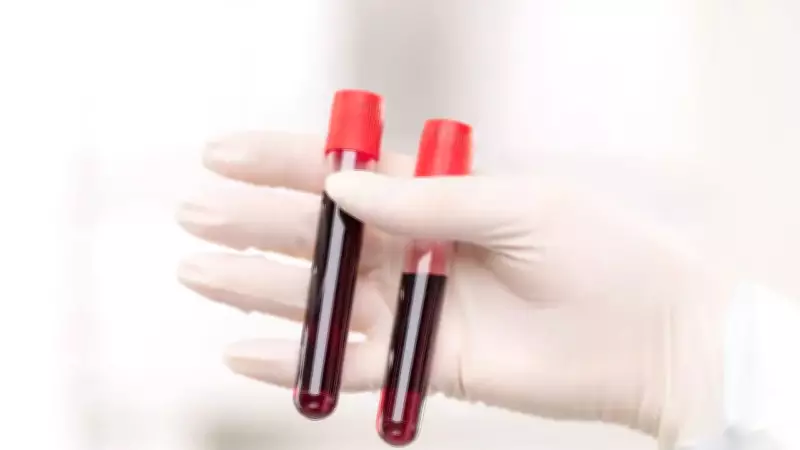
A strange medical finding has emerged from Thailand, drawing attention from the global science community. Researchers analyzing hundreds of thousands of blood samples reportedly discovered a blood type that did not fit known categories. It was not A, B, AB, or O in the usual sense, nor a typical variant. Instead, it appeared to be a hybrid-like blood type, so uncommon that only a handful of people on record carry it.
Discovery of the B(A) Phenotype
The condition, linked to what scientists call the B(A) phenotype, was found in just three individuals out of more than half a million samples. This rarity makes it almost invisible in population terms. Experts suggest it may point to hidden layers of human biology that standard blood tests do not detect. The discovery raises a quiet question: how many more such types are out there, unnoticed?
Routine Screening Uncovers Rare Blood
As reported, the discovery did not come from a targeted hunt for rare blood but from routine screening. Researchers in Thailand examined around 544,000 blood samples collected over several years from both donors and hospital patients. The scale was huge, and most samples behaved as expected. The study, published in Transfusion and Apheresis Science titled A novel allele of B(A) blood group detected in a donor and a patient during a retrospective review of ABO group anomalies in a tertiary hospital, found around 396 patient samples showing ABO discrepancies. This means the red blood cells and plasma did not agree on the blood type result. In most cases, simple explanations like medical treatment effects or temporary changes in blood markers accounted for these discrepancies. However, a few samples stood out. Among them, just three people carried the B(A) phenotype: one patient and two donors. This pattern across different groups made researchers pause, as it is extremely uncommon.

How Red Blood Cell Sugar Markers Determine Blood Type
Human blood types are based on tiny sugar molecules on red blood cells, acting as labels for the immune system. Type A has one structure, type B another, AB carries both, and O has neither. The B(A) phenotype sits awkwardly between categories. It is technically type B blood, but with a twist: a mutation in the ABO gene slightly alters the enzyme responsible for building these surface sugars. As a result, the blood shows faint A-like activity even though it is still classified as B. This leads to what scientists call a discrepancy, where tests do not fully agree on the blood type. Such discrepancies can slow down transfusions while doctors double-check compatibility. Experts suggest this is a case where biology does not fit neatly into the textbook chart.
Hidden Blood Variations May Go Undetected
At first glance, this discovery appears as a scientific curiosity. Blood transfusion systems rely heavily on accuracy. If blood type testing is unclear, hospitals need extra checks, and in emergencies, that delay matters. The discovery of the B(A) blood type shows that standard testing might not catch every variation. Some differences are too subtle, sitting beneath the surface of routine screening. This also raises another idea: if one rare variant exists, others might too. Experts believe there could be more hidden blood types waiting to be identified, especially in large and genetically diverse populations.
Genetic Mutations Behind the Rare Blood Type
After deeper analysis, researchers identified four mutations in the ABO gene among the rare cases. This gene controls the enzyme that builds blood group markers. The changes appear to slightly alter how the enzyme behaves, not enough to switch blood type completely but enough to confuse standard tests. Scientists say this kind of finding helps fill in missing pieces of human biology and supports the idea that blood group systems are more complex than the familiar eight types.